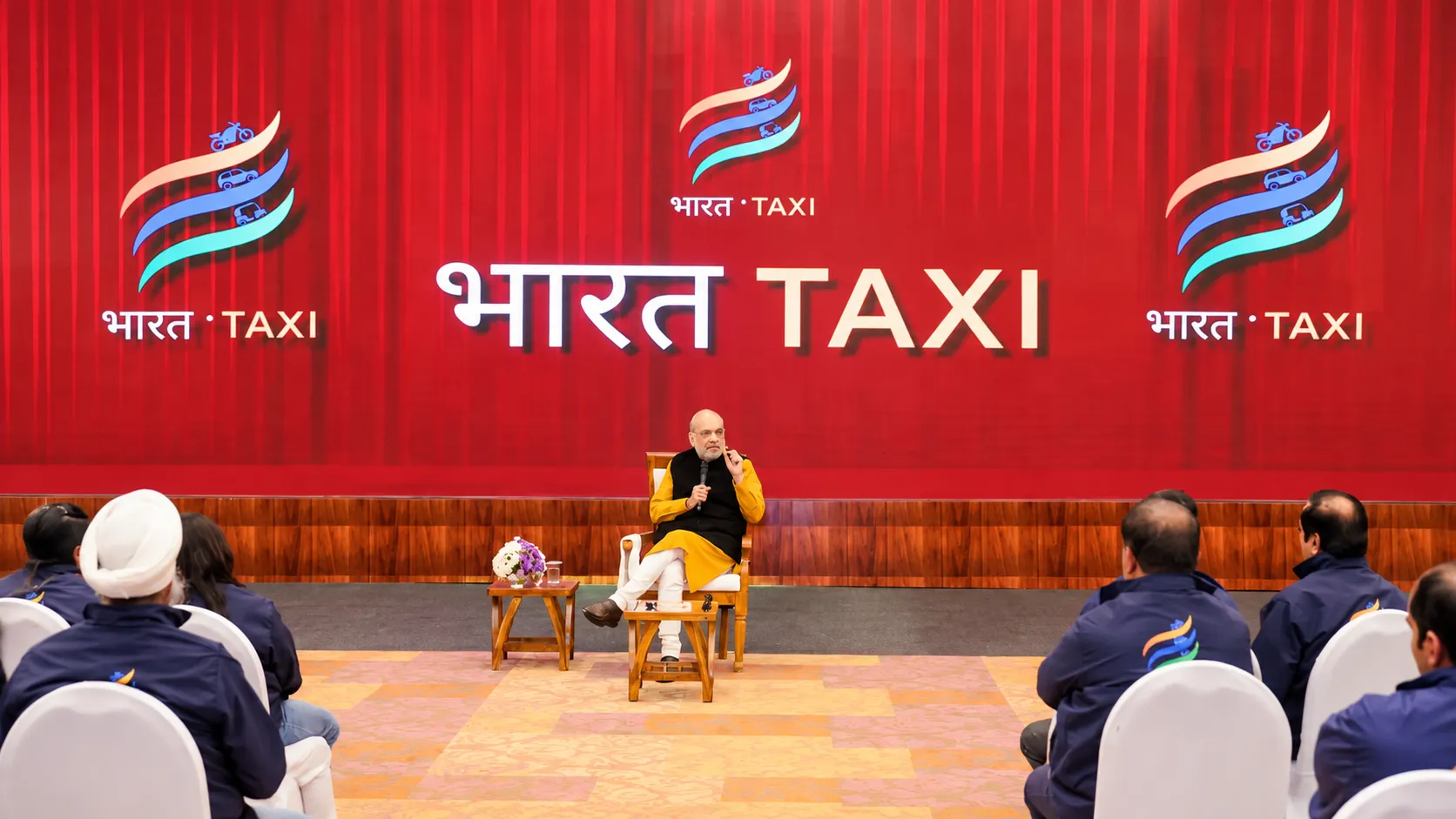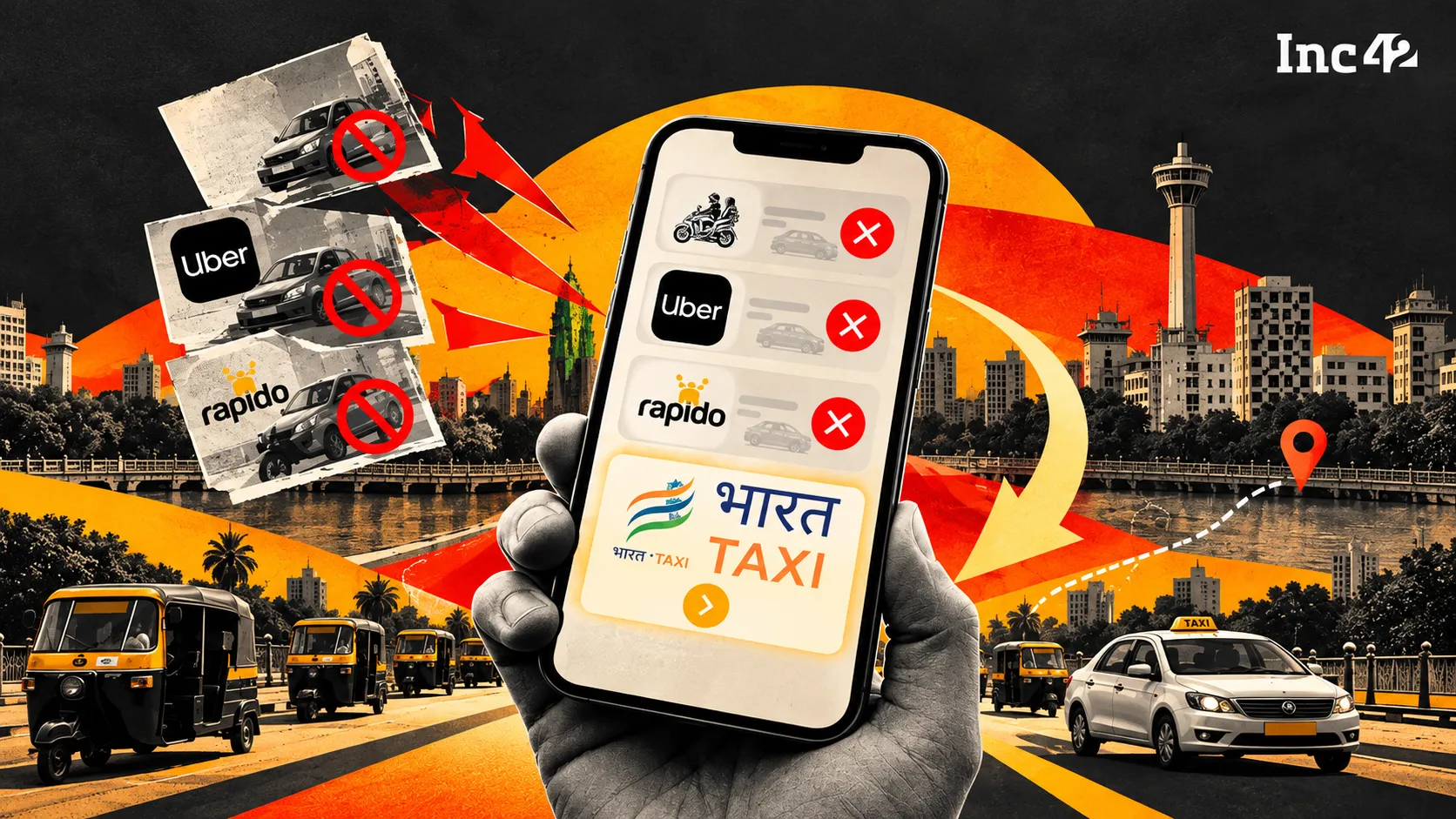
Bharat Taxi arrived with a promise that resonated with India's app-based drivers: no commissions, a share in the platform, and a social security net that private aggregators had never offered. In Gujarat, its rollout has instead been overshadowed by allegations of intimidation. Passengers and drivers in Ahmedabad and Gandhinagar have described groups stopping cabs mid-journey, demanding to know which app was used for the booking, and forcing riders to delete Uber and Rapido from their phones, according to a detailed report by Inc42.
The allegations, which have circulated widely on social media over the past week, have turned what was meant to be a showcase for the cooperative model into a test of whether it can compete without coercion. Bharat Taxi did not respond to Inc42's questions, and police authorities had not responded to detailed queries at the time of publication.
What riders and drivers describe
One passenger arriving in Ahmedabad from Pune told Inc42 that roughly 10 to 15 people surrounded her Uber vehicle near the city's airport. The group asked which platform the ride had been booked on, forced the driver to stop, and took her phone to check that she had deleted Uber and Rapido before allowing the journey to continue.
Drivers describe a different set of pressures. Several reported threats of violence from groups they could not identify, and some alleged thefts after being warned that their vehicles would be vandalised. Others described what they called "honeypot" schemes, in which people booked rides on private apps and then intimidated the drivers who arrived. Many drivers said they were being pushed to quit Uber and Rapido even though bookings on Bharat Taxi were too sparse to replace the income, leaving them at risk of defaulting on vehicle loans.
Rapido confirmed that police and local authorities had intervened in some instances to ensure safety. A separate driver boycott of Uber and Rapido had been reported in the region around 22 September, adding to the sense of a coordinated campaign, although the relationship between the boycott and the alleged intimidation remains unclear.
Confusing signals from uniformed officials
Adding to the confusion, videos circulating online appear to show individuals in police uniforms delivering conflicting messages. In some clips, they appear to encourage adoption of Bharat Taxi; in others, they warn against coercion of drivers and passengers. Without a clear public statement from the authorities, drivers say they are unsure whom to approach and whether complaints will be acted upon. Several told Inc42 that fear of retaliation kept them from going to the police at all.
What Bharat Taxi is
Bharat Taxi is operated by Sahkar Taxi Cooperative Limited, a multi-state cooperative backed by major national cooperative institutions and championed by the Centre as a driver-owned alternative to private aggregators. Its model differs fundamentally from Uber, Ola or Rapido. Instead of taking a commission of 20 to 30 per cent from each fare, it charges no commission. Drivers can become shareholders with a minimum investment of ₹500 for five shares and are meant to share in profits. The platform offers ₹5 lakh of insurance cover and pension benefits, and at launch it said drivers could continue to work on other platforms at the same time.
The pitch has genuine appeal. India has several million app-based drivers and delivery workers, and complaints about commission levels, opaque incentive structures and sudden deactivation are common. Private platforms have experimented with subscription models in response, and Rapido's move to fixed daily or monthly fees for drivers has already reshaped economics in several cities.
The economic reality
The core problem for any new ride-hailing network is liquidity: enough drivers to keep wait times short, and enough riders to keep drivers busy. A zero-commission model can attract drivers, but it does not guarantee demand. Drivers quoted in the report said Bharat Taxi bookings were too few to sustain their earnings, which is why many had continued using Uber and Rapido. If drivers are pressured off the private apps before demand on Bharat Taxi builds up, they lose income and passengers face longer waits.
That is also why coercion, if it is occurring, is so damaging. A marketplace built by forcing users off competing apps does not create genuine demand; it removes choice. Passengers who feel unsafe or harassed are unlikely to become loyal customers of the platform associated with that experience, whatever its intentions.
Cooperatives versus platforms
The Gujarat episode sits within a broader policy debate about the future of India's gig economy. Several states have introduced or proposed laws requiring platforms to contribute to welfare funds for gig workers, and the Code on Social Security includes provisions for platform workers. The government has also backed cooperative alternatives in sectors ranging from dairy to digital commerce, citing the success of models such as Amul.
Cooperative ride-hailing has been tried elsewhere, with mixed results. Driver-owned platforms in some cities around the world have won loyal followings but have struggled to match the technology budgets and marketing reach of global aggregators. Their best chance of success usually comes from genuine cost advantages passed on to riders, strong service quality, and support from local institutions, rather than from restrictions on competitors.
What needs to happen
For Bharat Taxi, the immediate task is to distance itself clearly from any coercive tactics and to state publicly that drivers remain free to use other platforms, as it promised at launch. For the authorities, a clear public statement and visible action on complaints would reassure both drivers and passengers. For Uber and Rapido, the episode is a reminder that political and regulatory risk in India's mobility market is rising, and that driver economics are now a matter of public policy as much as corporate strategy.
For investors and founders in the mobility and gig-economy space, the Gujarat allegations carry a broader lesson. Competition from state-backed or cooperative platforms is no longer theoretical, and it may come with levels of political support that private startups cannot match. At the same time, the market will ultimately reward the platform that offers riders reliable, safe and affordable trips, and drivers a sustainable income. Neither goal is served by fear on the streets.
The coming weeks will show whether the allegations prompt a course correction. If Bharat Taxi can grow on the strength of its zero-commission offer, it could become a meaningful third force in Indian ride-hailing. If the association with intimidation sticks, it risks undermining not only its own prospects but also public confidence in app-based travel across Gujarat, pushing some riders and drivers towards informal, unregulated alternatives.