FundingVenture Capital5 MIN READ

BigHat Biosciences Raises $75 Million, Co-Led by Premji Invest, as Its AI-Designed Cancer Drug Enters the Clinic

San Mateo-based BigHat Biosciences has raised a $75 million Series C co-led by DFJ Growth and Premji Invest, taking total funding to $223 million, as it advances BHB810, which it calls the first AI-designed biologic to reach clinical trials.

By Aravind Kumar · Author25 September 2026New
BigHat Biosciences Raises $75 Million, Co-Led by Premji Invest, as Its AI-Designed Cancer Drug Enters the Clinic

Artificial intelligence has been promising to transform drug discovery for years. A California biotech company says it now has a concrete milestone to show for it — and it has attracted backing from one of India's best-known investment offices.

BigHat Biosciences, based in San Mateo, announced on Thursday, September 24, that it has raised $75 million in a Series C financing round co-led by DFJ Growth and Premji Invest, the investment arm associated with Wipro founder Azim Premji. The round brings BigHat's total funding to $223 million.

New investors Catalio Capital Management, LG Technology Ventures and Sigmas Group joined the round, alongside a long list of existing backers: 8VC, Alexandria Venture Investments, Amgen Ventures, Andreessen Horowitz, Discovery Ventures, GRIDS Capital, Intermountain Ventures, Eli Lilly, Merck Global Health Innovation Fund, Quadrille Capital and Section 32.

A first for AI-designed biologics

At the centre of BigHat's story is BHB810, an antibody-drug conjugate (ADC) directed at CDH17, a protein found on certain gastrointestinal cancer cells. The company says BHB810 is the first AI-designed biologic to reach clinical trials, and the first patient has been dosed in a Phase 1 study in gastric cancer.

Antibody-drug conjugates are among the fastest-growing classes of cancer therapy. They combine an antibody, which recognises a specific target on cancer cells, with a potent drug payload. The antibody guides the payload to the tumour, aiming to kill cancer cells while limiting damage to healthy tissue.

Designing the antibody component is critical. It must bind strongly and specifically to its target, but it must also have the right properties to be manufactured at scale, remain stable in the body and avoid triggering unwanted immune responses. That is where BigHat believes AI can make the biggest difference.

The platform: AI plus the laboratory

BigHat's approach combines frontier AI models with high-throughput laboratory experiments in a continuous loop.

The company's platform uses AI to design candidate molecules, then tests them rapidly in its own laboratories to generate proprietary biological data. That data is fed back into the AI models, which learn and propose improved designs. The company describes this as an autonomous AI and experimental platform, generating what it calls gold-standard biological data at scale.

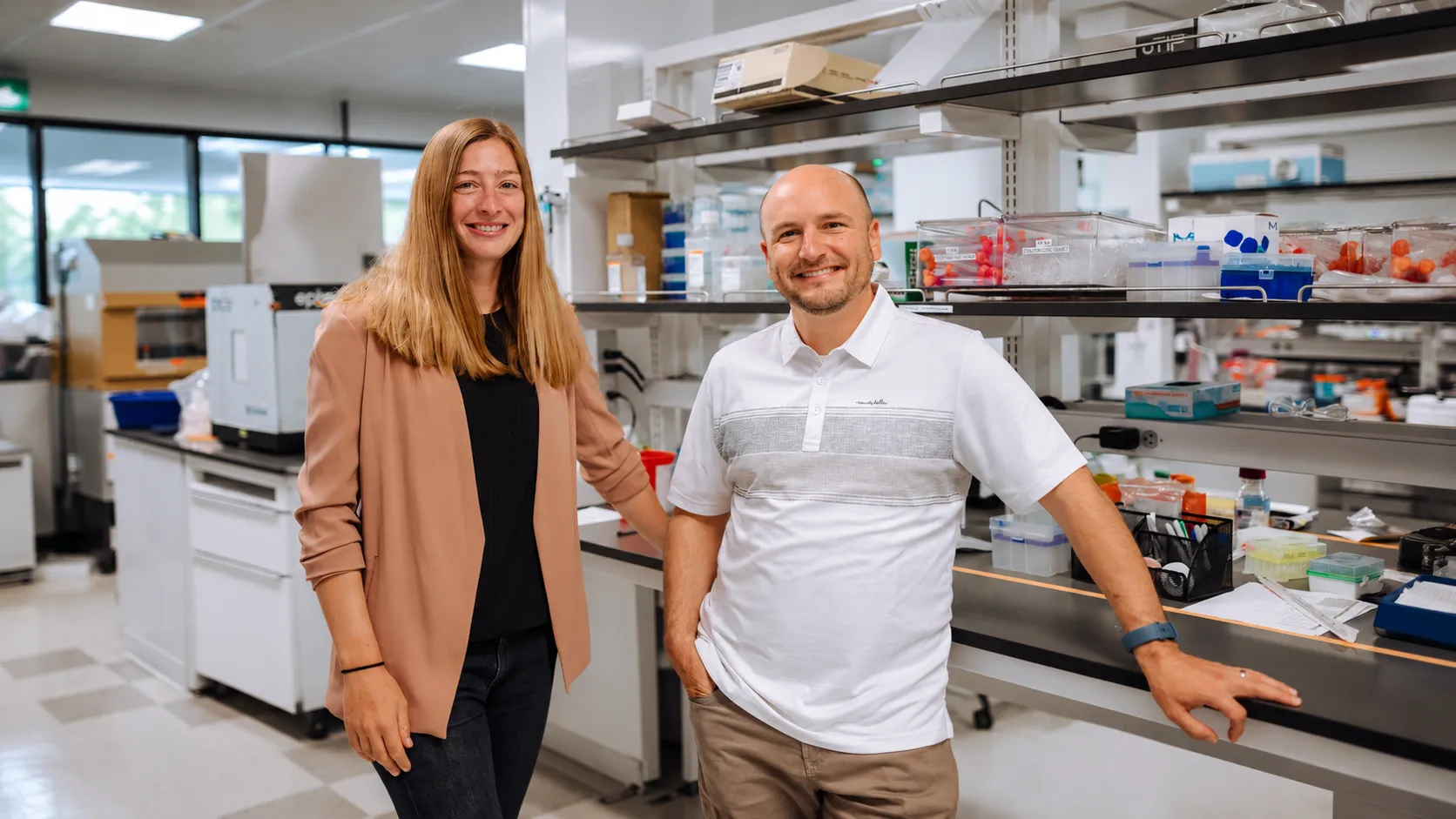
"Our mission is to design transformative therapeutics by combining frontier AI with autonomous generation of gold-standard biological data," said Peyton Greenside, BigHat's co-founder and chief executive.

Investors highlighted the platform's speed. Justin Kao, a partner at DFJ Growth, said BigHat "has uniquely enabled reinforcement learning for molecular design with platform optimized for industry-leading speed".

Why Premji Invest is interested

Premji Invest's participation stands out for Indian readers. Known for backing technology and consumer companies in India and globally, the firm has increasingly invested in healthcare and life sciences.

Marc Martin Casas, a vice president at Premji Invest, explained the firm's thesis. "Biologics rarely fail because they cannot bind a target; they fail because they lack properties that turn a binder into medicine," he said.

His point goes to the heart of drug development. Many antibody candidates can recognise a target in the laboratory, but far fewer have the combination of stability, manufacturability, safety and effectiveness needed to become approved medicines. If AI can help optimise all of these properties at once, it could reduce the time and cost of developing new biologics and improve the odds of success.
“Biologics rarely fail because they cannot bind a target; they fail because they lack properties that turn a binder into medicine.”
— Marc Martin Casas, Vice President, Premji Invest

A growing pipeline

Beyond BHB810, BigHat is developing BHB299, a T-cell engager designed to target solid tumours that express a protein called CEACAM6. T-cell engagers are engineered molecules that bring the body's immune cells into contact with cancer cells so that the immune system can attack them. BigHat describes BHB299 as avidity-driven, meaning it is designed to bind more strongly to cells with high levels of the target, which could help it distinguish tumours from healthy tissue. The programme is nearing the completion of preclinical work, with clinical trials planned for 2027.

The company also has additional preclinical programmes in oncology and immunology.

BigHat has strengthened its leadership as it moves into the clinic. Stefan Weigand, Ph.D., was appointed chief scientific officer in June 2026, and John Corbin, Ph.D., has served as chief development officer since June 2023.

ChatGPT Image Sep 25, 2026, 12_31_50 PM.png

The race to prove AI in drug discovery

BigHat operates in one of the most closely watched areas of biotechnology. Dozens of companies are applying AI to discover and design new drugs, and major pharmaceutical groups have signed partnerships worth billions of dollars with AI-focused biotech firms.

Yet the field has faced a persistent question: can AI-designed drugs actually succeed in human trials? Many AI-discovered candidates are still in early-stage testing, and the industry is waiting for clear evidence that AI can improve success rates, not just speed up early discovery.

That is why BHB810's entry into the clinic matters. It gives BigHat, and the wider field, an opportunity to show that AI-designed biologics can perform in patients. At the Series C stage, BigHat's investment case is increasingly tied to human clinical data rather than to model benchmarks.

The involvement of strategic investors such as Eli Lilly, Amgen Ventures and Merck's Global Health Innovation Fund suggests that established drugmakers see value in BigHat's approach, whether as future partners, acquirers or sources of new drug candidates.

Risks ahead

Clinical development is long, expensive and uncertain. Most drugs that enter Phase 1 trials never reach approval. BHB810 will need to demonstrate safety and signs of efficacy before moving to larger trials, and ADCs in particular must balance potency against toxicity.

AI-driven platforms also face growing competition, with many well-funded companies pursuing similar approaches. BigHat's advantage will depend on the quality of its proprietary data, the speed of its design-and-test loop and, ultimately, the performance of its drugs in patients.

Why it matters

For patients with gastric and other gastrointestinal cancers, which often have limited treatment options, new therapies are urgently needed. Gastric cancer is a significant health burden in many parts of Asia, including India.

For the global biotech industry, BigHat's progress offers an early test of whether AI can deliver on its promise to design better medicines. And for India's investment community, Premji Invest's role in co-leading the round is a sign that Indian capital is increasingly participating in frontier science on the global stage.

TagsBigHat BiosciencesPremji InvestDFJ GrowthAI Drug DiscoveryBiotechAntibodiesAntibody-Drug ConjugateOncologySeries CPeyton GreensideMachine LearningHealthcare

Reader reviews

Sign in to rate and review this article.
Loading reviews…