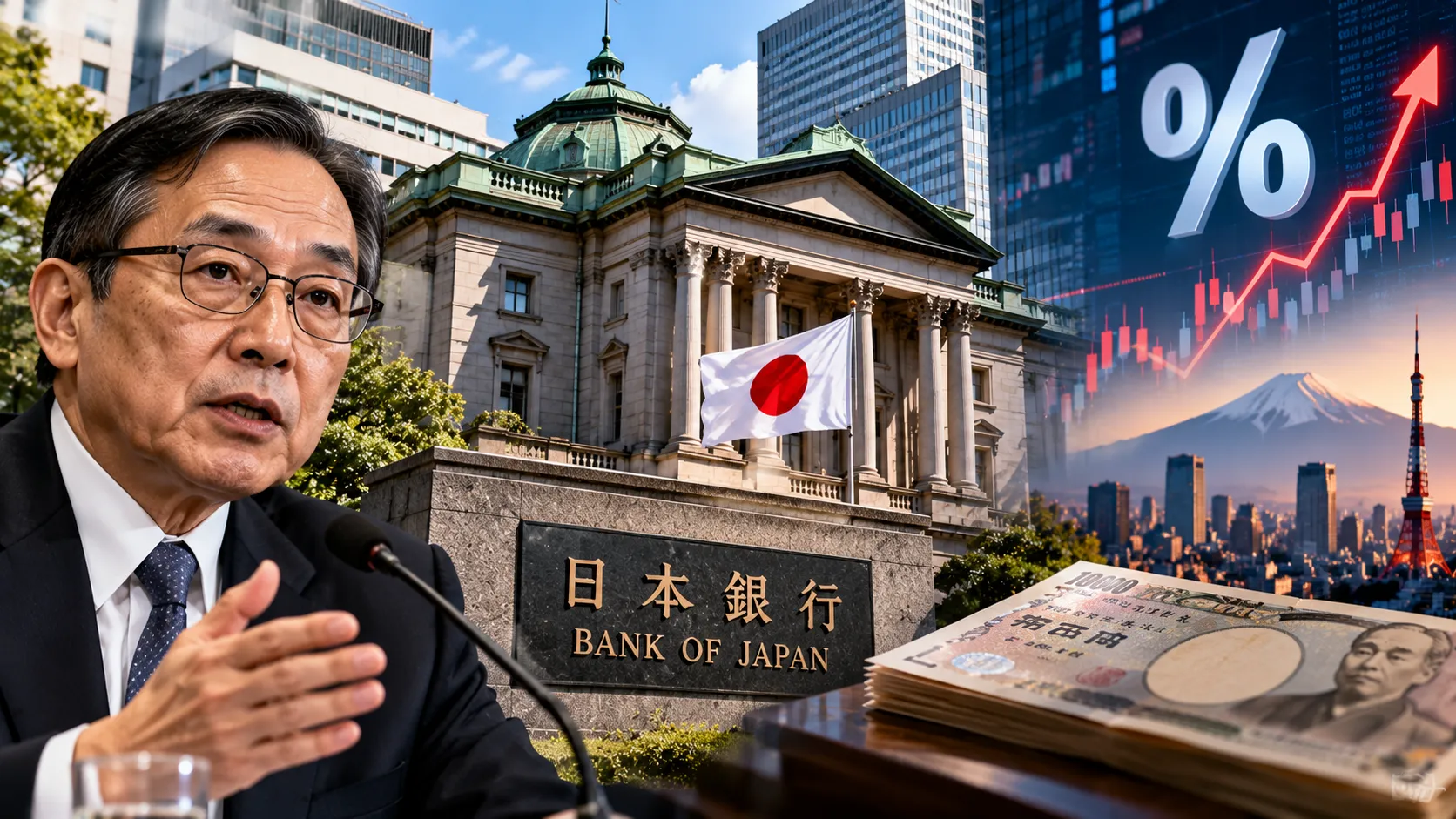
The Bank of Japan is prepared to keep raising interest rates, one of its top officials signalled on Wednesday, October 21, adding to expectations that the world's last major holdout from ultra-loose monetary policy will continue to tighten.
Deputy Governor Ryozo Himino said underlying inflation in Japan is "quite close to 2%," the central bank's target, and that "even after last month's rate hike, financial conditions remain accommodative," Reuters reported. He warned that delaying policy adjustments could risk fuelling inflation.
Himino's comments echo recent remarks by Governor Kazuo Ueda and reinforce the view that the BOJ will continue raising rates gradually, with markets watching its next policy meeting on October 30.
A cautious hawk
Himino's message was that the BOJ is still some distance from a neutral policy stance. Even after last month's increase, which took the policy rate to 1.25%, real interest rates in Japan, adjusted for inflation, remain deeply negative. That means monetary policy is still stimulating the economy, at a time when inflation has persisted above the central bank's target.
The deputy governor also pointed to demand linked to artificial intelligence as a source of upward pressure on prices. Japan's economy has benefited from global investment in AI, particularly through its semiconductor equipment and materials makers, whose products are essential for building advanced chips.
By warning that delaying adjustments could add to inflation, Himino signalled that the BOJ does not want to fall behind the curve, a risk that could force it to raise rates more sharply later.
The end of an era
The BOJ's tightening marks a historic shift. For decades, Japan battled deflation and weak growth, and the central bank kept interest rates near or below zero while buying vast quantities of government bonds. It ended negative interest rates in 2024 and has raised rates several times since.
Japan's inflation has been driven by a combination of factors: a weak yen, which raises import costs; higher energy prices; and rising wages, as companies respond to labour shortages. Annual wage negotiations have delivered the biggest pay increases in decades, a development the BOJ sees as essential for sustained inflation.
The BOJ's challenge is to normalise policy without derailing the economy or triggering turmoil in bond markets. Japan has the highest government debt burden among major economies, and rising interest rates increase the cost of servicing that debt.
The yen and global markets
Himino's comments came as the yen traded at about 158.33 per dollar, near levels that have previously prompted Japanese authorities to intervene in currency markets. A weak yen has been a persistent concern for Japanese policymakers, as it raises import costs and erodes household purchasing power.
Higher Japanese interest rates could support the yen by narrowing the gap with US rates. However, with US Treasury yields above 5% and the Federal Reserve considering further increases, the interest rate gap remains wide.
BOJ policy has significant implications for global markets. For years, investors borrowed cheaply in yen to invest in higher-yielding assets abroad, a strategy known as the carry trade. Rising Japanese rates can prompt investors to unwind those positions, causing sudden swings in global markets, as happened in August 2024.