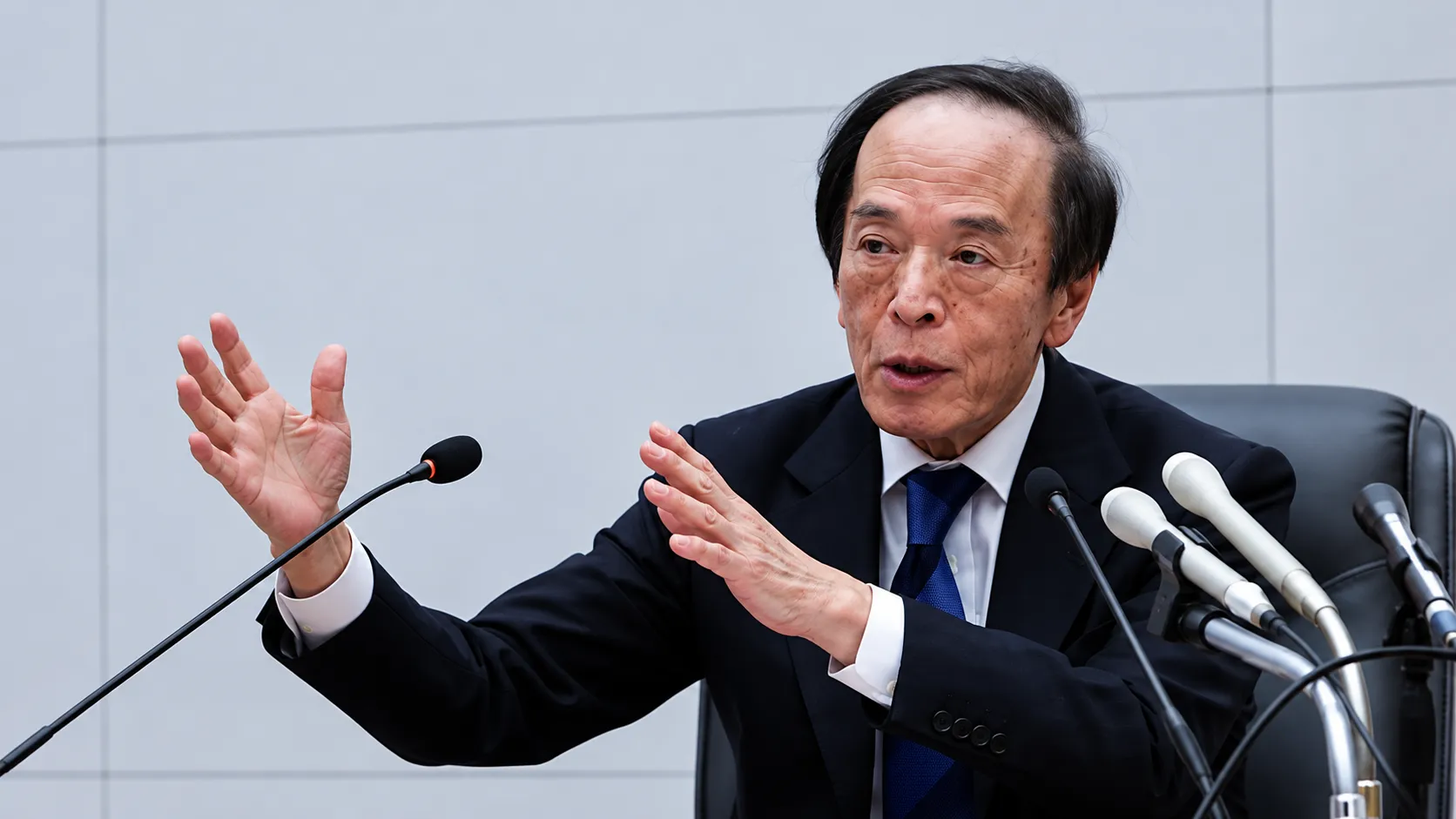
Bank of Japan Governor Kazuo Ueda signalled on Monday, October 19, that Japan is closer than it has been in decades to achieving stable inflation, keeping alive expectations that the central bank will continue raising interest rates in the months ahead.
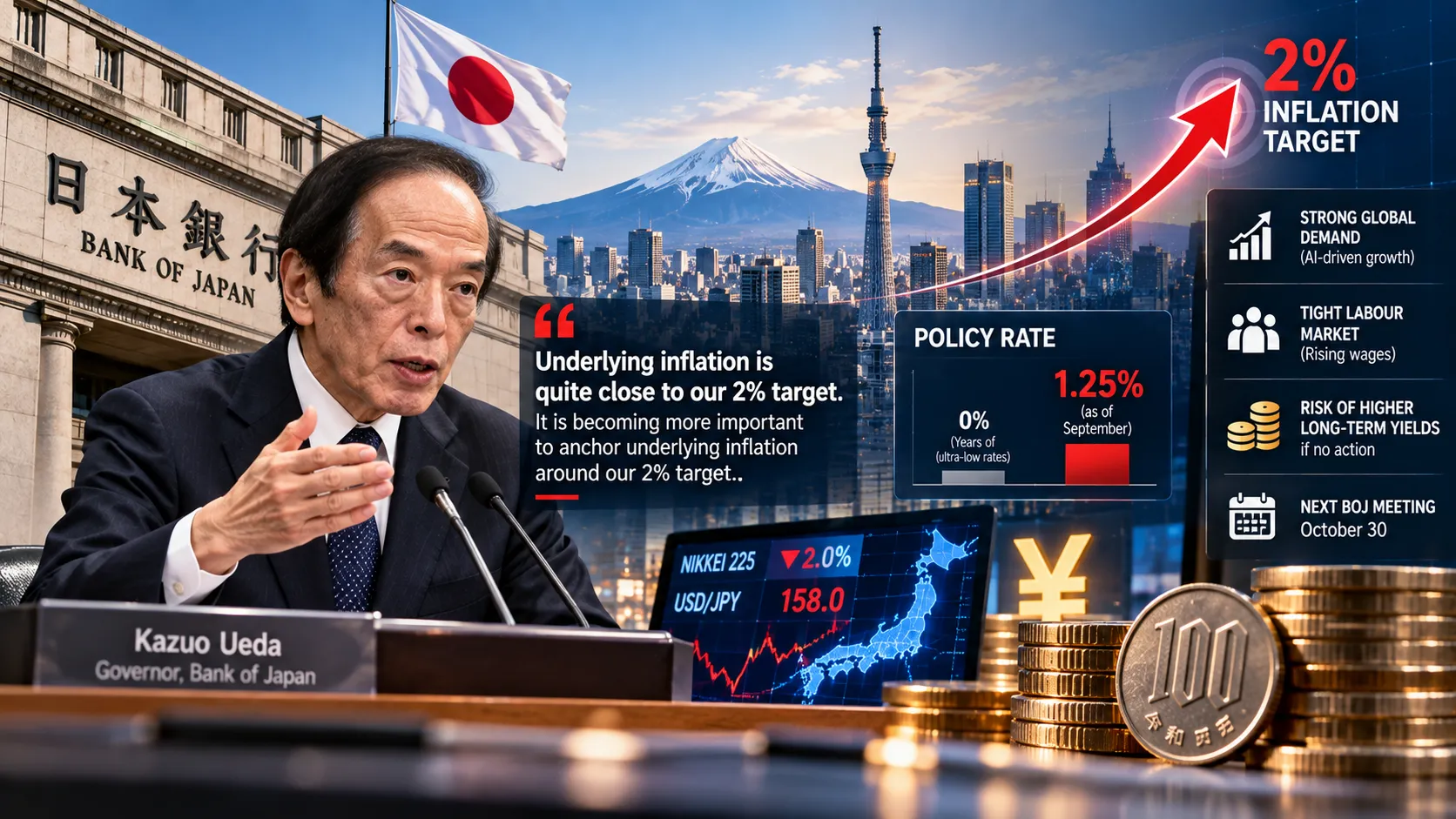
Speaking in parliament, Ueda said Japan's underlying inflation is "quite close" to the BOJ's 2% target, supported by strong global demand linked to artificial intelligence and pressure from a tight labour market. "It is becoming more important to anchor underlying inflation around our 2% target," he said, according to Reuters.
Ueda also issued a warning about the bond market. "Failing to adjust our policy rate appropriately could push up long-term interest rates," he said, a remark that suggests the BOJ sees continued tightening as a way to maintain credibility and prevent a disorderly rise in yields.
Where rates stand
The BOJ raised interest rates in September, taking its short-term policy rate to 1.25%, the highest level in decades for an economy that spent much of the past quarter-century fighting deflation and near-zero or negative rates.
The central bank's next two-day policy meeting concludes on October 30, when it will also publish new forecasts for growth and inflation. Many market participants expect the BOJ to hold rates at 1.25% at that meeting but to leave the door open for a further increase to 1.5% as early as December.
Ueda's remarks will reinforce that view. By emphasising that underlying inflation is close to target and warning of the costs of inaction, he appeared to be preparing markets for further gradual tightening, while avoiding any firm commitment on timing.
Why underlying inflation matters
For years, Japan's problem was that prices would not rise. Even when headline inflation picked up because of higher energy or import costs, the BOJ argued that underlying inflation, driven by domestic demand and wages, remained too weak to justify higher rates.
That has changed. Japanese companies have been raising wages at the fastest pace in decades, driven by labour shortages in an ageing society, and passing higher costs on to consumers. Strong global demand for AI-related products, including semiconductors, electronic components and manufacturing equipment in which Japanese companies play an important role, has also supported corporate profits and investment.
When inflation is driven by wages and domestic demand rather than temporary cost shocks, central banks view it as more durable. That is why Ueda's assessment of underlying inflation carries such weight in the BOJ's policy decisions.
The bond market and Takaichi's spending
Japanese government bond yields have risen in recent months on expectations of further BOJ rate increases and concerns about Prime Minister Sanae Takaichi's spending plans. Takaichi, who took office promising stronger fiscal support for the economy and defence, has favoured expansive fiscal policy, raising questions about Japan's already very high public debt.
Rising yields in Japan have global consequences. Japanese investors are among the largest holders of foreign bonds, and higher returns at home can encourage them to bring money back, adding upward pressure on yields in the United States and Europe. Long-term government bond yields in Japan, the United States and Germany have all reached multi-decade highs this year.


