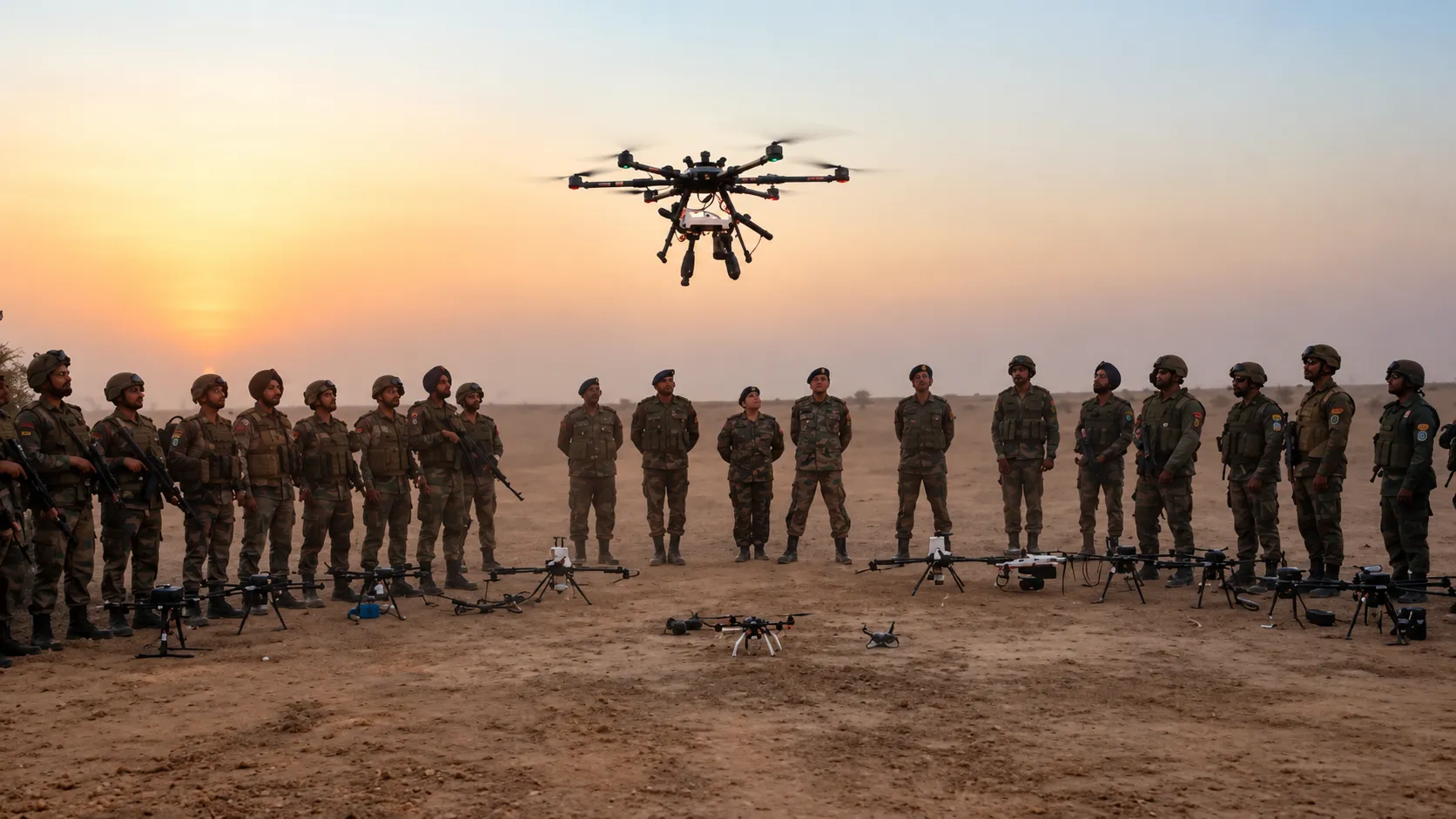
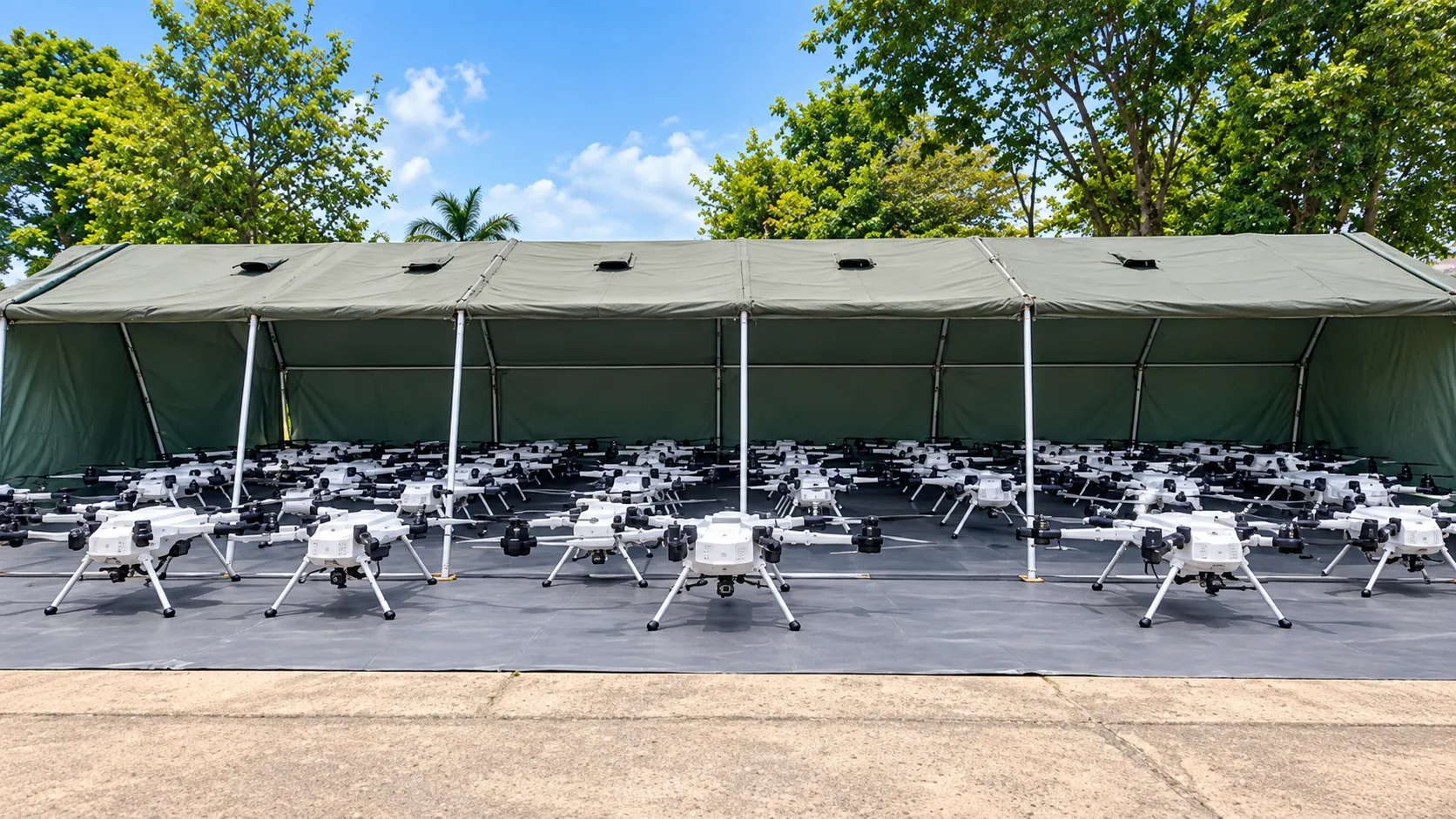
BonV Aero, a drone manufacturer based in Odisha, has supplied 45 unmanned aerial vehicles (UAVs) to the Indian Army's Eastern Command for tactical missions, including the transport of critical supplies and mission-specific payloads. The delivery, reported on 28 September 2026, is one of the more concrete signs yet of the Indian military moving drone logistics from trials into routine use.
For a young company from outside India's traditional aerospace hubs of Bengaluru and Hyderabad, it is also a significant commercial milestone.
Built for heavy loads and thin air
BonV Aero specialises in heavy-payload drones designed to carry meaningful cargo, rather than the small camera-carrying quadcopters used for surveillance. The company has demonstrated its systems carrying a 30-kilogram payload at Umling La in Ladakh, at an altitude of 19,024 feet, one of the highest motorable passes in the world.
That demonstration matters because altitude is the defining challenge for military drones in India. Thin air reduces the lift generated by rotors and the efficiency of motors, while extreme cold drains batteries more quickly. A drone that performs well at sea level can struggle badly in the Himalayas, where much of India's contested border lies.
BonV has conducted trials across a wide range of terrain and climate conditions, including Tawang, Siliguri, Dimapur, Kargil, Dras, Nyoma, Baramulla and Kupwara. The list spans the eastern and northern frontiers, from the forested hills of the north-east to the cold desert of Ladakh and the Kashmir valley. The company has also trained more than 150 Army personnel in Northern Command to operate its systems.
Why the Army wants logistics drones
Eastern Command is responsible for a large and difficult area that includes Sikkim, Arunachal Pradesh and much of north-eastern India, bordering China, Bhutan, Myanmar and Bangladesh. Many forward posts in this region are reachable only by narrow mountain roads, footpaths or helicopter, and weather can cut them off for days.
Supplying those posts has traditionally depended on porters, pack animals, road convoys and helicopter sorties. Each has limitations. Porters and mules are slow and limited in load. Roads are vulnerable to landslides and snow. Helicopters are expensive to operate, are in high demand for other missions and cannot always fly in poor weather.
Heavy-lift drones offer a complementary option. They can move ammunition, rations, medicines, batteries and spare parts over short but difficult distances without risking a helicopter crew. They can also make repeated trips during windows of clear weather.
Satyabrata Satapathy, BonV Aero's co-founder and chief executive, has framed the technology as an addition to existing supply chains rather than a replacement for them.
"Aerial mobility could supplement existing transportation methods in areas where terrain and weather create difficulties for surface-based movement," he said.
Part of a much larger programme
The BonV delivery sits within a broader expansion of drone logistics by the Indian military. The Ministry of Defence has issued a tender for 2,715 logistics drones, indicating the scale of the capability the Army intends to build. That volume would make India one of the largest military users of cargo drones in the world, and it has attracted interest from a growing number of domestic manufacturers.
The Indian government's policy framework supports this push. Import restrictions on foreign drones, a production-linked incentive scheme for drones and drone components, and the defence ministry's preference for domestically designed equipment have combined to give Indian manufacturers privileged access to military demand.


