FundingMarket Data Women6 MIN READ

Elon Musk's Boring Company Hits $20 Billion Valuation While Seeking $4 Billion in Funding

Elon Musk's tunnelling venture The Boring Company has reached a $20 billion valuation as it seeks to raise $4 billion in new funding, extending investor appetite for Musk-affiliated infrastructure ventures.

By Aravind Kumar · Author5 September 2026
Elon Musk's Boring Company Hits $20 Billion Valuation While Seeking $4 Billion in Funding

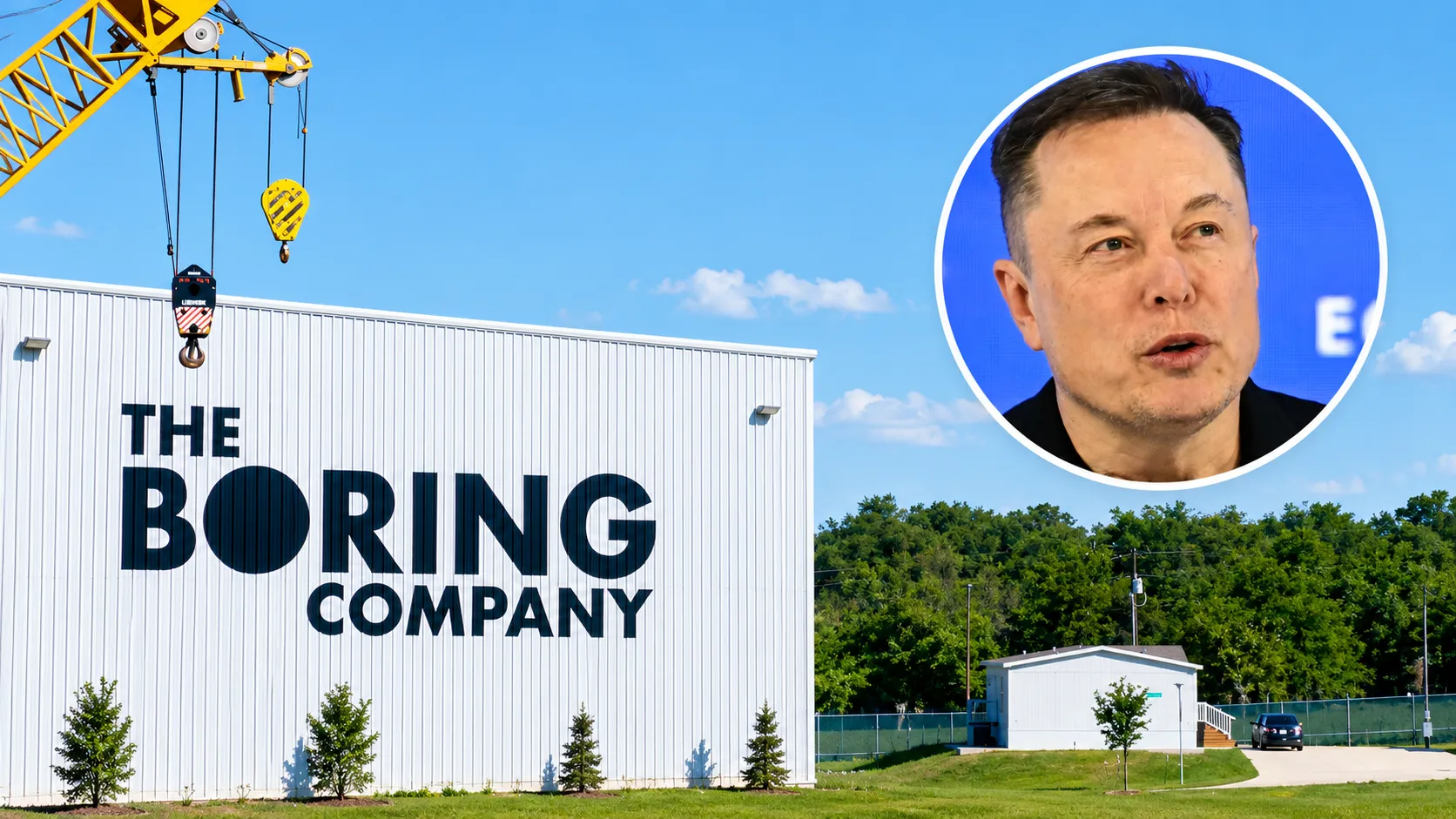
The Boring Company, Elon Musk's tunnelling and underground transportation venture, has reached a valuation of approximately $20 billion as it seeks to raise $4 billion in new funding, according to reports. The valuation milestone places the tunnelling company among a growing roster of Musk-affiliated ventures commanding extraordinary private market valuations, a phenomenon that has become one of the more distinctive features of the current venture capital landscape.

Founded with the ambition of dramatically reducing the cost and time required for tunnel construction, The Boring Company has spent years developing proprietary tunnelling technology aimed at making underground transportation infrastructure, from vehicle tunnels to proposed high-speed transit systems, economically viable at a scale that traditional tunnelling methods have historically struggled to achieve.

The reported fundraising target also arrives amid a broader pattern of extraordinarily large capital raises across infrastructure-adjacent technology categories in 2026, as investors increasingly show willingness to fund extremely long-horizon, capital-intensive ventures provided they carry sufficient technological differentiation and command the kind of investor confidence that has become closely associated with Musk's broader portfolio of companies.

Infrastructure investment professionals note that tunnelling and underground construction technology has historically attracted limited venture capital interest given long development timelines and heavy regulatory dependencies, making The Boring Company's sustained ability to raise capital at escalating valuations a distinctive outlier within the broader infrastructure technology investment landscape, one that professionals in the sector continue to study closely for lessons applicable to other capital-intensive infrastructure ventures.

The reported $4 billion fundraising target represents a substantial capital requirement even by the standards of infrastructure-heavy technology ventures, reflecting the genuinely capital-intensive nature of large-scale tunnelling and underground construction projects, which require significant upfront investment in specialised equipment, engineering talent and pilot project execution before revenue-generating contracts can be secured at meaningful scale.

Investor willingness to back the round at a $20 billion valuation, despite The Boring Company having faced periodic skepticism over the years regarding the commercial viability and pace of its infrastructure projects relative to initial timelines, illustrates the continued premium that private markets are willing to place on ventures associated with Musk's broader portfolio of companies.

Tunnelling technology has historically been considered one of the more difficult categories for venture-style disruption, given the highly specialised, capital-intensive nature of underground construction and the lengthy regulatory approval processes typically required before any tunnel project can begin actual construction in most jurisdictions, factors that have limited the number of well-capitalised challengers attempting to compete directly with The Boring Company's approach.

Comparable infrastructure technology ventures pursuing novel tunnelling or underground construction approaches have historically struggled to attract venture-scale capital given the sector's long development and regulatory approval timelines, making The Boring Company's fundraising trajectory a notable outlier that other infrastructure technology founders continue to reference when pitching their own ventures to prospective investors.

The valuation also reflects a broader pattern across Musk's various ventures in 2026, where companies spanning space technology, artificial intelligence and now tunnelling infrastructure have collectively commanded some of the largest private market valuations in the world, a concentration of capital and investor attention around a single individual's portfolio of companies that remains without close historical precedent in the technology sector.

A $20 billion valuation for a tunnelling company is less about current revenue and more about how much premium private markets now place on Musk-affiliated execution risk.
TIGI Global Funding Desk

For infrastructure investors more broadly, The Boring Company's fundraising success offers a signal that private capital remains willing to fund genuinely long-horizon, capital-intensive infrastructure ventures, provided they are paired with a credible technological differentiation story and, evidently, sufficient investor confidence in the underlying leadership and execution track record.

ChatGPT Image Sep 5, 2026, 03_46_37 PM.png

Previous funding rounds for the company have similarly drawn scrutiny regarding the pace of commercial project delivery relative to announced timelines, a pattern common across several of Musk's ventures where ambitious initial announcements have sometimes taken considerably longer to materialise into operating, revenue-generating infrastructure than original public statements suggested, even as the underlying technology development has continued to advance.

For institutional investors and infrastructure policymakers globally, The Boring Company's continued fundraising success raises broader questions about how private capital markets are pricing execution risk versus technological potential across ambitious infrastructure ventures, a question with implications well beyond any single company given how many other infrastructure technology startups are watching Musk's fundraising playbook closely as a reference point for their own capital-raising strategies.

Whether The Boring Company can convert its expanded capital base into commercially operating tunnel projects at meaningful scale remains the central question investors will be watching closely in the coming years, given that infrastructure ventures of this nature typically face long development and regulatory approval timelines that can test investor patience even when underlying technology and capital availability are not the primary constraints.

As the fundraising process moves toward completion, market attention will likely focus on which specific projects the new capital is earmarked to advance, since concrete, revenue-generating infrastructure contracts would represent a more durable validation of the company's business model than valuation milestones alone.

For infrastructure and construction technology investors more broadly, The Boring Company's continued ability to raise capital at escalating valuations, despite these historical execution timeline questions, illustrates just how much weight private markets currently place on perceived long-term technological potential and founder track record when evaluating infrastructure ventures, sometimes independent of near-term commercial delivery milestones that might weigh more heavily on non-Musk-affiliated companies raising capital in similar categories.

Business leaders in the construction and infrastructure technology sector will likely continue monitoring The Boring Company's project delivery timeline closely, since concrete evidence of commercially operating tunnel projects at meaningful scale would substantially strengthen the case that its technology can be replicated by, or meaningfully compete against, more traditional infrastructure and construction companies operating with fundamentally different capital structures and risk tolerances.

The bottom line for TIGI's readers: The Boring Company's valuation is as much a bet on Musk's execution track record as it is on tunnelling technology itself, and its next funding milestone will hinge on delivering visible, revenue-generating projects.

Analysts covering the broader infrastructure technology sector note that the ultimate test of any tunnelling venture's valuation will come down to a simple, unglamorous metric: cost per mile of usable, revenue-generating tunnel actually delivered to paying customers.

TagsThe Boring CompanyElon MuskInfrastructureFundingUnited StatesTunnelling

Reader reviews

Sign in to rate and review this article.
Loading reviews…