
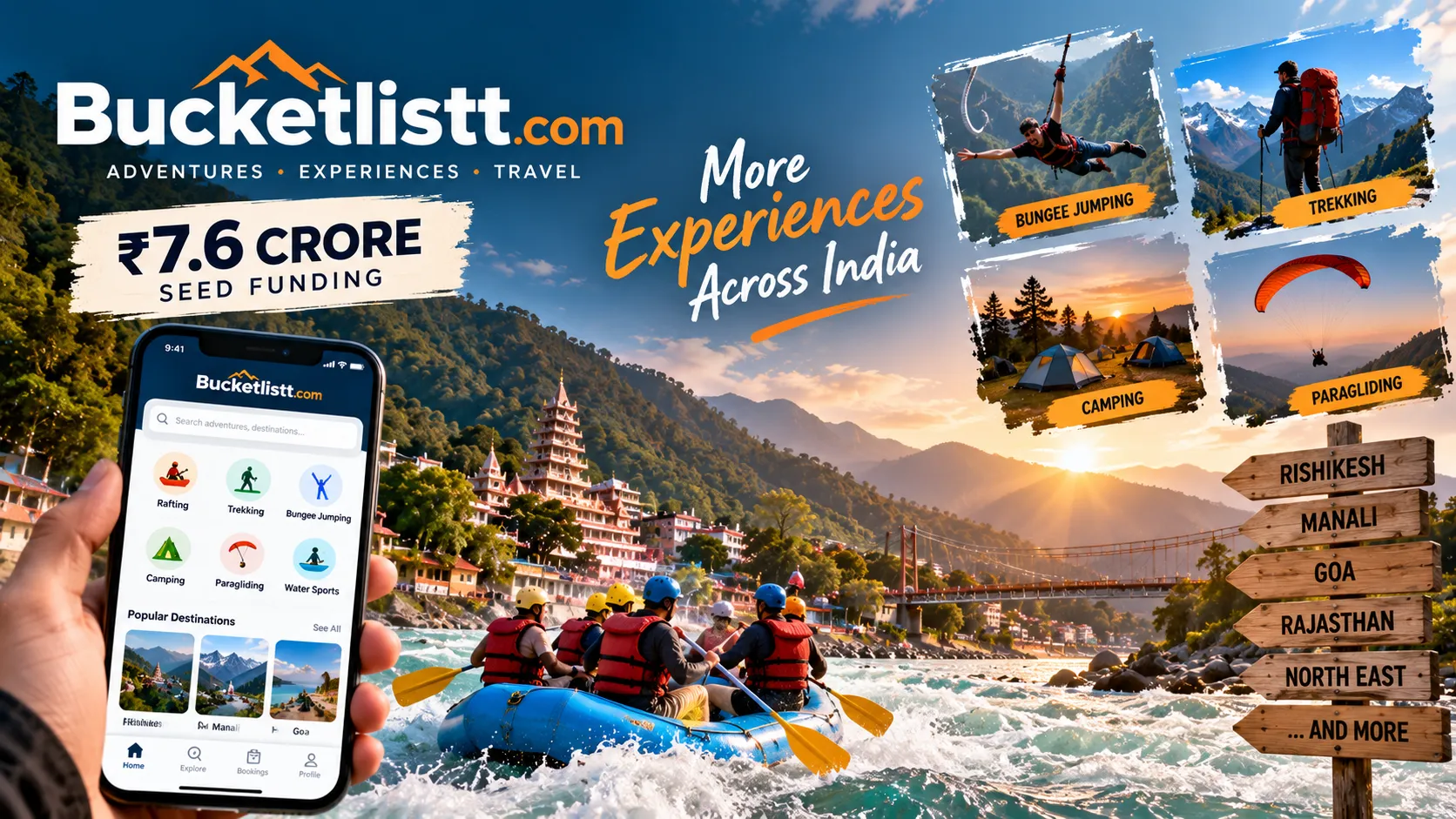
Bucketlistt.com, an Indian marketplace for adventure activities and travel experiences, has raised ₹7.6 crore in a seed funding round as it seeks to expand from its base in Rishikesh to new destinations across the country.
The round, announced on 26 October, was led by Kairon Capital, with participation from Titan Capital, Divisa Family Office and investor Kunal Popat.
The Ahmedabad-based startup was founded by Shubham Makhecha, Nitant Desai and Divyam Shah, who leads technology. It launched in Rishikesh in December 2025 and says it has generated more than ₹22.5 crore in bookings over 10 months.
Building a Marketplace for Experiences
Bucketlistt connects travellers with operators offering activities such as river rafting, bungee jumping, trekking, camping and other adventure and leisure experiences. Rishikesh, on the banks of the Ganga in Uttarakhand, is one of India's most popular adventure tourism destinations, known for white-water rafting and as a spiritual centre.
The company also operates OkGhumo, a platform designed for activity operators, helping them manage bookings and operations. Providing tools for operators can help a marketplace secure supply, standardise quality and gain visibility into inventory.
Experiences have historically been one of the most fragmented parts of the travel industry. While flights and hotels have been digitised by large online travel agencies, activities are often sold by small local operators through word of mouth, roadside agents or informal channels, with limited online booking and variable quality and safety standards.
Funding to Fuel Expansion
The new funding will support the expansion of Bucketlistt's marketplace into new cities and destinations, the company said. Destinations such as Manali in Himachal Pradesh, Goa, Rajasthan and the North East offer large markets for adventure and leisure activities.
Kairon Capital, which led the round, invests in early-stage startups, while Titan Capital, the investment arm of Snapdeal founders Kunal Bahl and Rohit Bansal, is one of India's most active seed investors.
The Experience Economy
Bucketlistt's model taps into a broader shift in how Indians travel. Younger travellers, in particular, increasingly prioritise experiences over traditional sightseeing. Social media has fuelled demand for adventure activities and unique experiences that can be shared online, while rising incomes have made such activities affordable for more people.
Domestic tourism in India has grown strongly, supported by improved connectivity, new airports, better roads and the growth of affordable accommodation. Weekend getaways from major cities to hill stations, beaches and adventure destinations have become common.
Globally, the market for tours and activities is large and has attracted significant investment. Companies such as GetYourGuide, Viator, owned by TripAdvisor, and Klook have built substantial businesses selling experiences online. In India, players such as Thrillophilia and Headout, along with large online travel agencies, compete in the segment.
Safety and Standards
Adventure tourism in India has faced scrutiny over safety. Accidents involving rafting, paragliding and other activities have raised concerns about the training of operators, equipment standards and regulatory oversight. State governments have introduced rules for licensing and safety in adventure sports, though enforcement varies.
For marketplaces like Bucketlistt, curating reliable operators and ensuring safety standards can be both a responsibility and a competitive advantage. Travellers booking online are more likely to trust platforms that vet operators and provide transparency about safety measures and reviews.
The Economics of Experiences
Experience marketplaces typically earn commissions on bookings. Margins can be attractive compared with flights, but individual transaction values are often small, and operations require building relationships with many small suppliers in each destination.
Bucketlistt's reported bookings of more than ₹22.5 crore in its first 10 months suggest strong early demand in Rishikesh. Replicating that success in new destinations will require building operator networks, local marketing and on-ground operations in each location.
Supporting Local Economies
Adventure and experiential tourism can provide significant economic benefits to local communities, creating jobs for guides, instructors, drivers and hospitality workers. Digital platforms that bring more customers to local operators can help small businesses grow, though questions about commission levels and fair terms for operators often arise as marketplaces gain bargaining power.
In regions such as Uttarakhand and Himachal Pradesh, where tourism is a major source of livelihoods, sustainable growth of adventure tourism also requires attention to environmental impacts, including waste, river pollution and pressure on fragile mountain ecosystems.
The Role of Content and Creators
Social media plays an outsized role in how younger Indians choose travel experiences. Videos of rafting in Rishikesh, paragliding in Bir Billing or scuba diving in the Andamans circulate widely on Instagram and YouTube, inspiring trips and shaping expectations. Experience platforms increasingly collaborate with creators to market destinations and activities, and user-generated reviews and videos influence purchasing decisions.
For Bucketlistt, integrating content and community into its platform could help it stand out from larger travel agencies that focus primarily on flights and hotels. Trust is particularly important for adventure activities, where safety and quality vary significantly between operators. Detailed reviews, verified operator profiles and clear information about safety measures can help travellers make informed decisions and give the platform a reputation for reliability that is difficult for informal sellers to match.
The founders' choice to begin in a single destination and build depth before expanding is a common strategy for marketplaces. Concentrating on one location allows a startup to build strong relationships with operators, understand customer behaviour and refine its product before replicating the model elsewhere. Rishikesh, with its heavy footfall of young travellers from Delhi and other northern cities, offered a large and concentrated market in which to prove the concept. Bucketlistt's reported booking volumes suggest that strategy has worked, but each new destination will bring its own operators, seasons and competitive dynamics to master.
What Comes Next
With fresh seed funding, Bucketlistt will focus on expanding to new destinations, building its operator network and growing its customer base. Its ability to standardise quality and safety while scaling across geographies will determine whether it can become a leading platform in India's growing experiences market.
For India's travel startup ecosystem, the round reflects continued investor interest in businesses that capture changing consumer behaviour, as Indians increasingly travel not just to see places, but to do things.


