Burma Burma, the vegetarian restaurant chain that introduced many Indian diners to Burmese food, is preparing to go public. Its parent company, Hunger Pangs, has filed a draft red herring prospectus (DRHP) with the Securities and Exchange Board of India for an initial public offering that combines a fresh issue of shares worth up to ₹150 crore with an offer for sale of up to about 2.8 crore shares by existing shareholders.
The filing, reported on October 17 and 18, also revealed the company's financial performance. Hunger Pangs' revenue grew strongly in the 2025-26 financial year, but its loss widened sharply as it opened new outlets and costs rose faster than sales. In the first quarter of the current financial year, however, the company returned to profitability.
The listing would make Burma Burma one of a growing number of Indian restaurant businesses to tap public markets, at a time when investors have shown interest in consumer companies with strong brands and expansion potential.
Revenue up, profit down
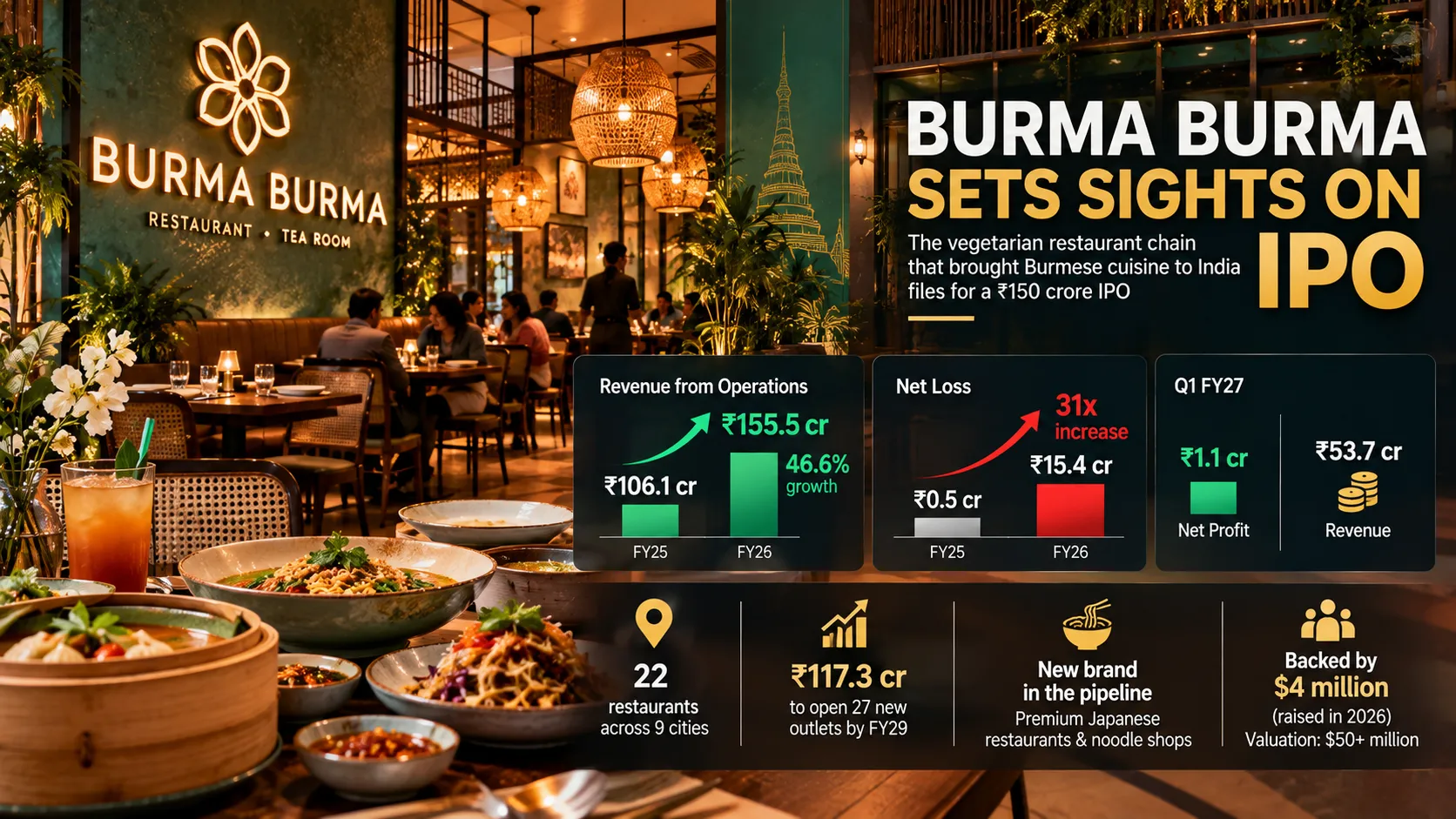
According to the DRHP, Hunger Pangs' revenue from operations rose 46.6% to ₹155.5 crore in FY26 from ₹106.1 crore in FY25. Including other income of ₹1.5 crore, total income was ₹157 crore.
Its net loss, however, widened roughly 31 times to ₹15.4 crore from ₹50 lakh a year earlier. Total expenses rose 61.8% to ₹175.8 crore, outpacing revenue growth. Employee benefit costs climbed 53.3% to ₹50.7 crore, raw materials and kitchen supplies rose 51% to ₹30.4 crore, finance costs increased 70% to ₹6.6 crore, and other expenses grew 54.6% to ₹48.8 crore.
At the operating level, the business remains profitable. EBITDA rose 20.2% to ₹25.7 crore from ₹21.4 crore. The gap between positive EBITDA and a net loss reflects depreciation and finance costs linked to new restaurants, many of which take time to reach full maturity.
A return to profit in Q1
The most recent figures are more encouraging. In the quarter ended June 2026, Hunger Pangs reported a net profit of ₹1.1 crore on operating revenue of ₹53.7 crore, with total expenses of ₹55.2 crore. The profit was helped by deferred tax credits of ₹1.98 crore. EBITDA for the quarter was ₹11.4 crore, a margin of 21.3%.
If sustained, that quarterly run rate would suggest annual revenue well above FY26 levels, reflecting the contribution of outlets opened during the previous year.
The Burma Burma story
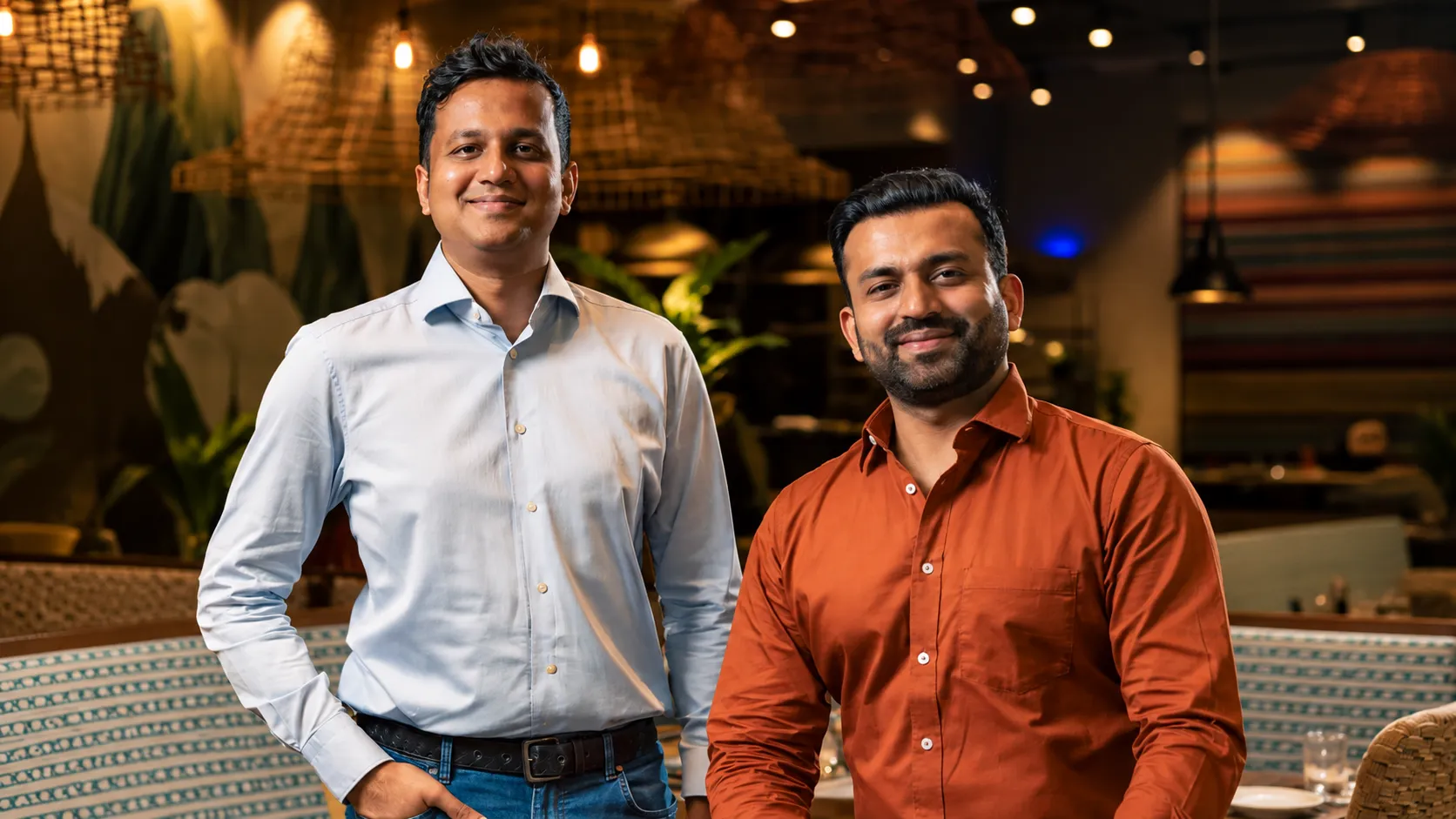
Burma Burma was founded in 2013 by Ankit Gupta and Chirag Chhajer, who set out to build a restaurant brand around Burmese cuisine, which was then largely unknown in India. The chain's vegetarian menu, tea room format and design-led interiors helped it stand out in a crowded casual dining market.
As of the end of July 2026, Hunger Pangs operated 22 restaurants across nine cities, including Mumbai, Bengaluru, Hyderabad, Kolkata and Delhi NCR. Earlier in 2026, the company raised $4 million at a valuation of more than $50 million.
Its competitors include Asian cuisine chains such as Mainland China, Mamagoto, Yum Yum Cha and Berco's.
Expansion plans and a Japanese brand
Hunger Pangs plans to use ₹117.3 crore of the fresh issue proceeds to open 27 new company-owned outlets by FY29, more than doubling its current network. The remainder will go towards general corporate purposes.
The DRHP also reveals plans for a new brand. The company says it has conceptualised "a premium casual dining chain of Japanese restaurants and noodle shops," influenced by Buddhist traditions. Expanding into a second cuisine would allow Hunger Pangs to use its experience in design, sourcing and operations to build a multi-brand restaurant business.
A busy pipeline for consumer IPOs
The filing comes as India's IPO market has remained active despite volatility in secondary markets. Restaurant and food service companies have used public markets to fund expansion, joining quick-service chains, cafe operators and consumer brands that have listed in recent years. Foreign portfolio investors have been net sellers of Indian equities in 2026, but data shows they have been buying selectively into consumer services, including restaurants.
However, investors have also become more discerning about profitability. Restaurant chains face high fixed costs for rent and staff, intense competition and sensitivity to discretionary spending. Food inflation in India has been elevated, which raises raw material costs and can weigh on consumer demand.
For Burma Burma, the key questions for investors will be the profitability of its new outlets, its ability to maintain the dining experience as it scales, and whether its niche cuisine can support a much larger national footprint. The planned Japanese brand adds an element of diversification, but also execution risk.
Why restaurant IPOs are back
India's listed restaurant sector has grown over the past decade, with quick-service chains, cafe operators and casual dining companies tapping public markets. These businesses have benefited from rising incomes, urbanisation and a young population that eats out more often, as well as the growth of food delivery platforms that extend restaurants' reach beyond their dining rooms.
Investors, however, have learned to distinguish between growth and profitable growth. Some restaurant stocks have struggled after listing as same-store sales slowed and costs rose. That has made public market investors more focused on metrics such as revenue per outlet, restaurant-level margins and the payback period on new stores, all of which will be closely scrutinised when Hunger Pangs seeks investors for its offering.
What comes next
SEBI will review the draft prospectus before the company can set a price band and launch the offer. The timing of the IPO will depend on regulatory approval and market conditions.
The selling shareholders in the offer for sale were not named in reports, and the size of the overall issue will depend on the price at which shares are sold.
For India's restaurant industry, Burma Burma's IPO will be a test of how public investors value a premium, design-led casual dining brand. If the offer is well received, it could encourage other restaurant companies that have built strong brands over the past decade to consider listing. For now, Hunger Pangs has shown that it can grow revenue rapidly. The next challenge is to prove that it can turn that growth into consistent profit.
Hunger Pangs' journey from a single Burmese restaurant in Mumbai to a prospective listed company also reflects how Indian diners' tastes have broadened. Regional and international cuisines that were once niche now attract mainstream audiences in large cities, creating room for specialised brands to scale nationally.