
Oct 8 — Zach Yadegari, the teenage co-founder of calorie-tracking app Cal AI, has raised $10 million for his next venture: Persona, a personal AI assistant that can order food, book travel and handle email, paired with a wearable band.
The round was led by Vine Ventures, with participation from Cory Levy, founder of the Z Fellows programme, and Collective Global.
The raise comes just months after MyFitnessPal acquired Cal AI in March 2026. MyFitnessPal told TechCrunch that Cal AI had generated more than $30 million in annual revenue in under two years — a striking result that made Yadegari one of the most closely watched young founders in consumer technology.
Key facts at a glance
• Founder: Zach Yadegari, 19, co-founder of Cal AI
• New company: Persona, a personal AI assistant
• Funding: $10 million led by Vine Ventures, with Cory Levy (Z Fellows) and Collective Global
• Hardware: $179 wearable band, expected to ship in December
• Current product: free beta over iMessage with a few thousand users
• Capabilities: ordering food and rides, note-taking, travel booking, answering questions and emails
• Privacy approach: not always listening; activated by button or wrist flick; data encrypted in transit and at rest
• Cal AI exit: acquired by MyFitnessPal in March 2026; more than $30 million in annual revenue in under two years
From Cal AI to Persona
Cal AI let users track calories by photographing their meals, using AI to estimate nutritional content. The app grew rapidly and overtook MyFitnessPal in app store rankings, prompting the older company to acquire it. The size of that offer persuaded Yadegari and his co-founders to sell.
After the acquisition, the team continued to develop Cal AI within MyFitnessPal. Yadegari left in June and moved directly to his next idea. He is building Persona with a co-founder who has not yet been publicly named.
His entrepreneurial track record began early. Yadegari started his first business in ninth grade and sold it for $100,000 at the age of 16.
What Persona does
Persona is designed as a personal assistant that takes action rather than simply answering questions. It can order food or rides, take notes, book travel, and answer questions and emails. It currently operates as a free beta over iMessage, with what the company describes as "a few thousand beta users".
The product's distinctive element is hardware. Persona will offer a $179 wearable band, expected to ship in December. Users activate the assistant by pressing a button or flicking their wrist. A companion app is also in development. The band has already generated "five figures in preorder revenue", according to the company.
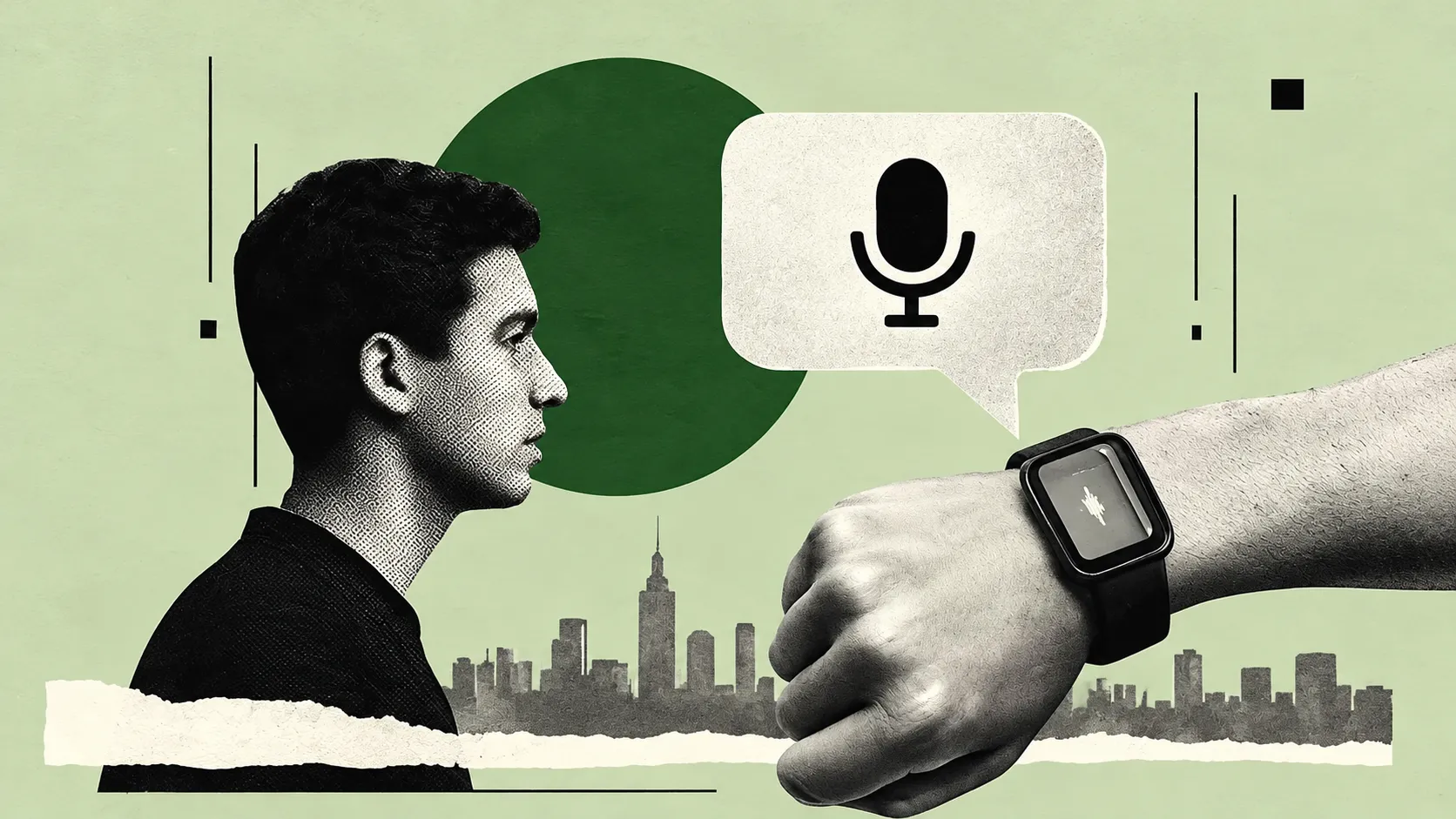
Not always listening
Persona invites comparison with Bee, the AI wearable that Amazon acquired in 2025, but it takes a different approach. Bee was designed to be "ambient", continuously listening and recording to build context. Persona is not: it only activates when the user chooses.
That design reflects growing sensitivity about privacy in AI wearables. According to Yadegari, Persona's AI model runs in the company's cloud rather than on the device, and user data is sent there for processing. Data is encrypted in transit and at rest, users can delete their data, and Yadegari says conversations will not be sold to advertisers or data brokers.


