
When a customer spots an unfamiliar charge on a card statement and disputes it, a complex process begins behind the scenes. Banks must investigate the claim, decide whether to refund the customer, gather evidence from merchants and comply with strict regulatory timelines. Increasingly, they must also work out whether the customer is telling the truth. A startup that uses AI to manage this process has raised fresh funding from investors including two of the biggest names in American consumer finance.
Casap has raised a $56 million Series B round led by Base10 Partners, with strategic investment from Synchrony, one of the largest issuers of store-branded credit cards in the United States, and Experian, the credit reporting company, according to reports on Wednesday, October 28. The round brings Casap's total funding since 2023 to about $90 million.
What Casap does
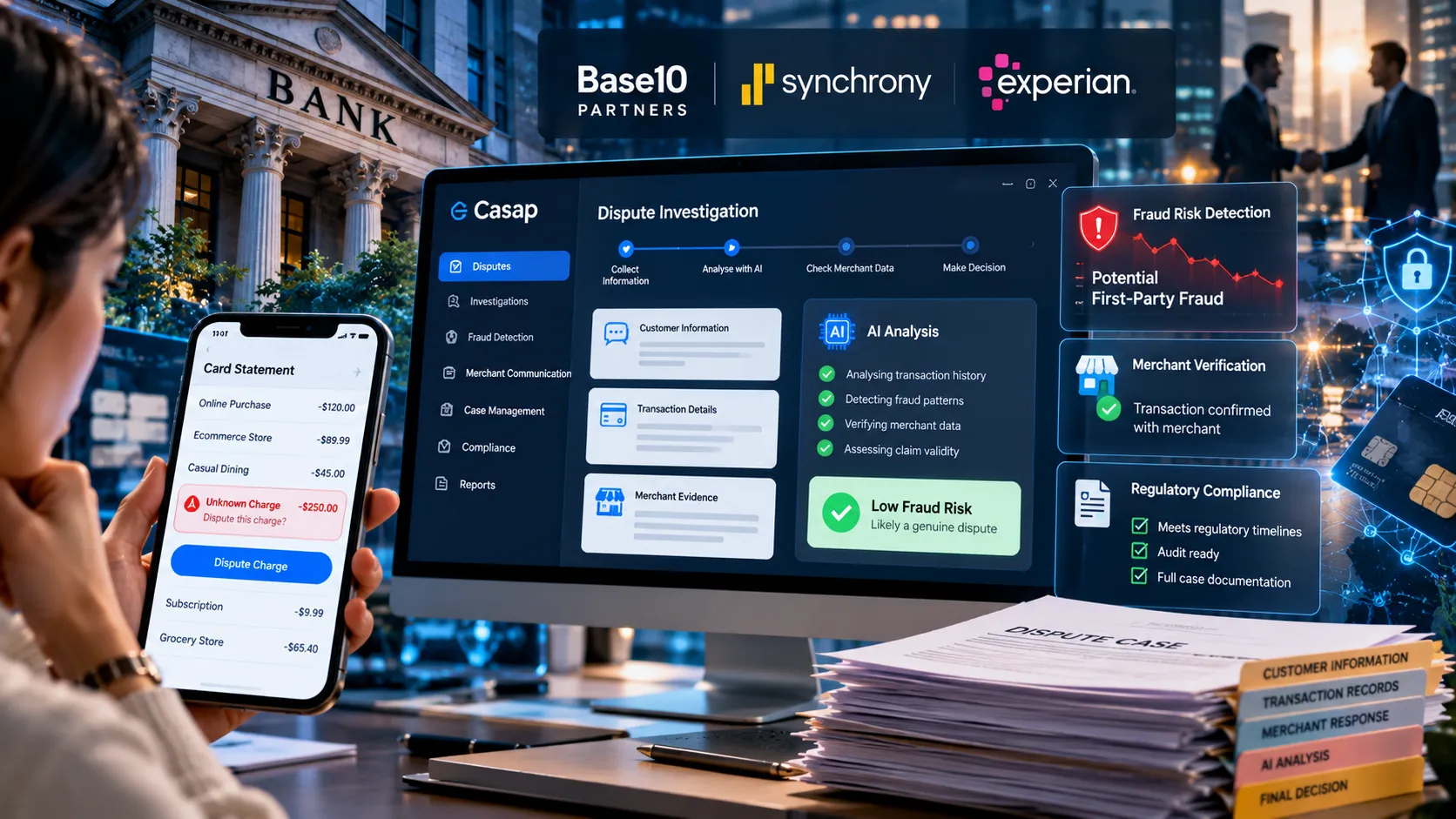
Casap provides software that helps banks, card issuers and fintech companies handle payment disputes. Its platform uses AI to collect information from customers, assess claims, detect potential fraud, communicate with merchants through card networks and manage the case through to resolution.
Disputes are expensive and labour-intensive for financial institutions. Each case may require several staff members to review documents and transaction records, and banks face penalties if they fail to meet deadlines set by regulations and card network rules. In the United States, for example, Regulation E sets out how banks must handle disputes involving electronic fund transfers.
The rise of first-party fraud
A growing challenge for banks is first-party fraud, sometimes called "friendly fraud", where customers dispute legitimate transactions to obtain refunds. Examples include customers who claim not to have received goods that were delivered, or who dispute purchases they made and later regretted.
First-party fraud is difficult to detect because the customer is the genuine account holder, and banks must balance the need to prevent abuse against the risk of treating honest customers unfairly. Casap says its platform has helped clients reduce losses from first-party fraud by up to 51%. That figure is reported by the company and has not been independently verified.
Why Synchrony and Experian matter
The participation of Synchrony and Experian is significant. Synchrony issues credit cards for many major retailers and handles large volumes of disputes, giving it direct experience of the problem Casap is trying to solve. Strategic investment from a large card issuer suggests confidence in the product and may also lead to deeper commercial collaboration.
Experian, as one of the three major credit bureaus in the United States, holds vast amounts of data on consumer credit behaviour. Its involvement could help Casap improve fraud detection by drawing on broader data about consumer behaviour, subject to privacy and regulatory constraints.
Base10 Partners, which led the round, is a venture capital firm that invests in companies automating sectors of the real economy, including financial services.
AI in financial services
Casap's funding reflects a broader trend of banks using AI to automate back-office operations. Banks are deploying AI for customer service, fraud detection, compliance, loan processing and document review, aiming to reduce costs and improve customer experience. Disputes are a natural fit because they involve large volumes of unstructured information, such as customer descriptions, receipts and correspondence, which AI models can now process effectively.


