One of the founders who helped bring Indian healthcare online is now betting that the next big shift will be from treating illness to catching it early.
Cent, a Bengaluru-based preventive healthcare startup, has raised $15 million, about ₹143 crore, in a Series A round co-led by Blume Ventures and existing investor South Park Commons, the company announced on Tuesday, October 27. The round includes both equity and debt, though the split was not disclosed.
Individual backers include Arun Sarin, the former chief executive of Vodafone, and Srinivas Narayanan, a former B2B chief technology officer at OpenAI. Cent previously raised a $5 million seed round from OneFlow Holdings and South Park Commons, taking total disclosed funding to $20 million.
At the same time, Cent announced the acquisition of Medsee, an AI-powered radiology reporting platform founded by Chitra Singh. Terms were not disclosed.
The founders
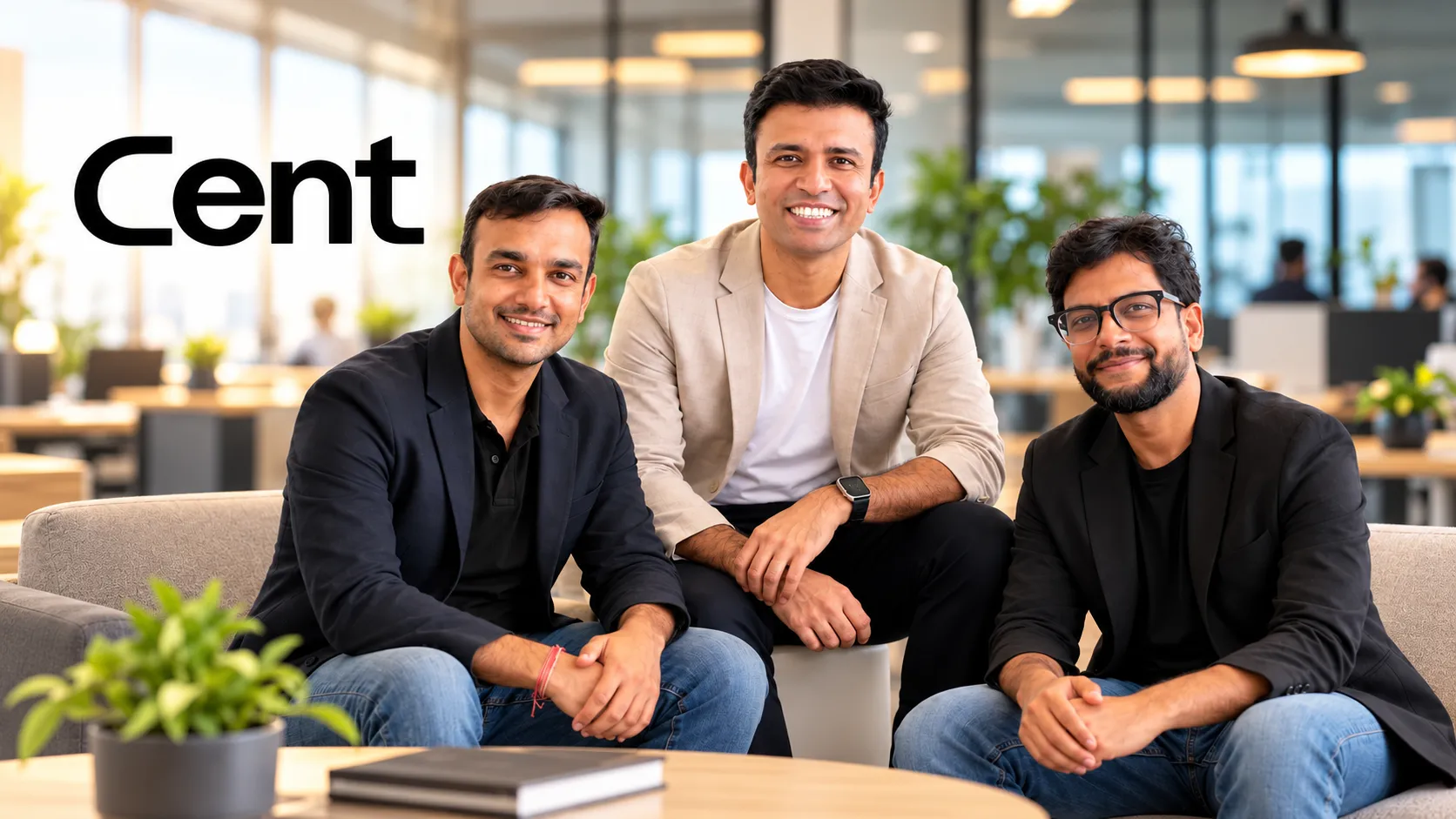
Cent was founded in 2025 by Shashank ND, Anshul Khandelwal and Arpit Garg. Shashank co-founded Practo, one of India's best-known health technology companies, which built platforms for booking doctor appointments, online consultations and clinic management. He later founded OneFlow Holdings.
Khandelwal was previously chief marketing officer at Ola Electric, while Garg led product at eyewear company Lenskart. The team combines healthcare, consumer marketing and product experience.
What Cent offers
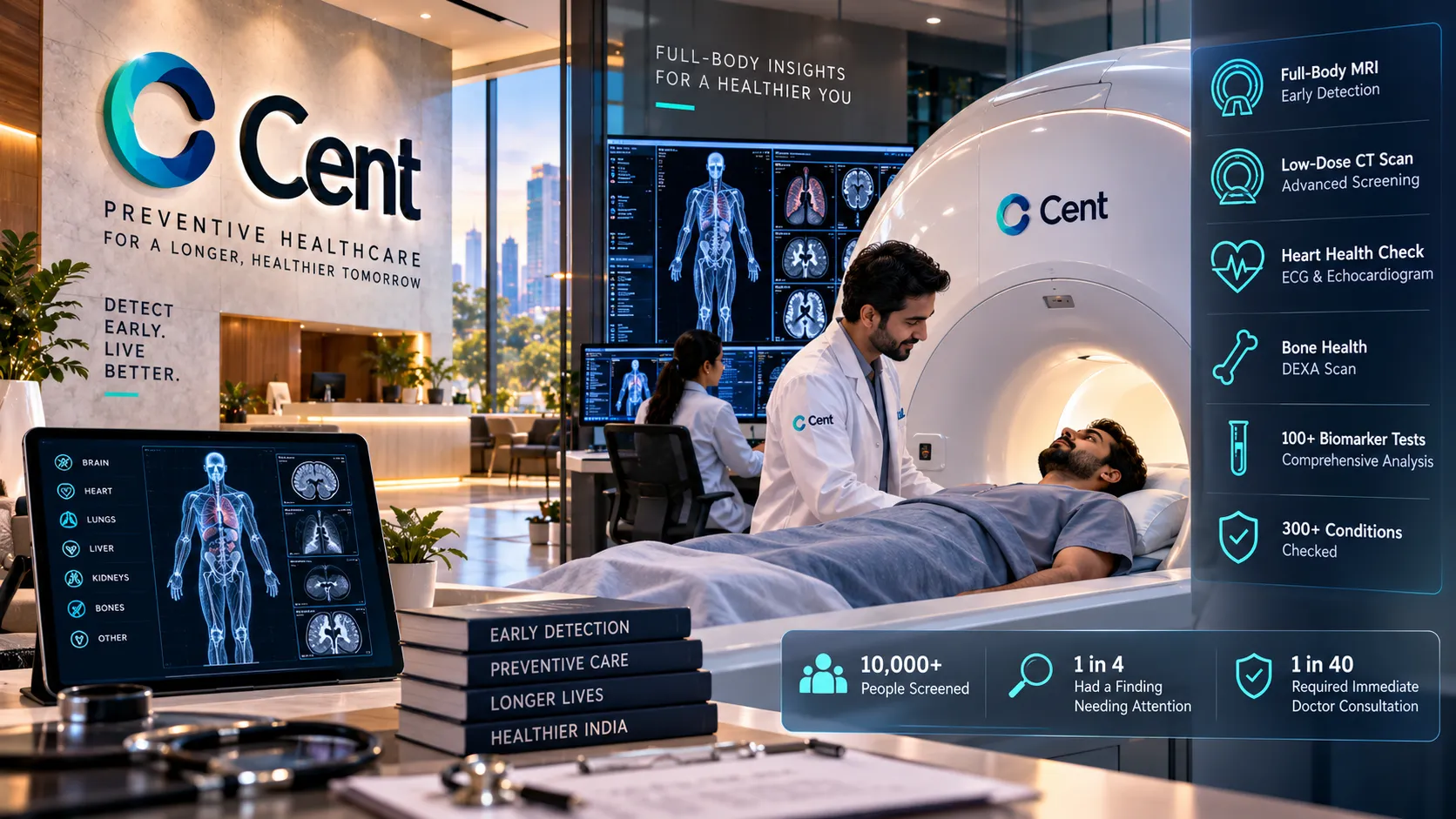
Cent's core product, Cent Check, is a roughly two-hour health screening for people without symptoms, priced at ₹27,500. It includes a full-body MRI, a low-dose CT scan, a DEXA bone-density scan, an electrocardiogram, an echocardiogram and tests for more than 100 biomarkers. The company says the screening checks for more than 300 conditions.
Cent operates centres in Bengaluru, Mumbai and Delhi NCR, as well as working with partner diagnostic labs.
The company says it has screened about 10,000 people over the past year. According to its own figures, one in four had a finding that needed attention, and one in 40 required an immediate consultation with a doctor. Cent has not published independent outcome data.
Why buy Medsee
The acquisition of Medsee addresses one of the key bottlenecks in imaging-based screening: the time and expertise required to interpret scans. A full-body MRI generates hundreds of images that must be reviewed by a radiologist, and India, like many countries, faces a shortage of radiologists.
Medsee's software drafts structured reports and flags findings for radiologists to review, aiming to speed up the process and improve consistency. Integrating it into Cent's operations could allow the company to scale screenings without a proportional increase in radiologist time.
Where the money goes
Cent plans to use the funding for hardware, AI and clinical research, and hiring. Expensive imaging equipment such as MRI machines represents a major cost for any screening business, which may explain the use of debt alongside equity.
The company has set ambitious long-term goals, targeting 10 million scans by 2035 and aiming to save one million lives through early detection.
The preventive health debate
Full-body screening for people without symptoms is a growing market globally, with companies in the United States and elsewhere offering similar services to health-conscious consumers. Proponents argue that early detection of conditions such as cancer, heart disease and metabolic disorders can save lives and reduce treatment costs.
However, medical experts have raised concerns about such screenings. Scans of healthy people often reveal incidental findings that turn out to be harmless but can lead to anxiety, further tests and unnecessary procedures. Medical guidelines in many countries do not recommend full-body MRI screening for the general population, preferring targeted screening based on age, risk factors and family history.
Cent will need to demonstrate that its screenings lead to better health outcomes and that it manages incidental findings responsibly, which may require publishing clinical data over time.
India's health challenge
India faces a rising burden of non-communicable diseases, including diabetes, heart disease and cancer, which are often diagnosed late. Many Indians do not undergo regular health checks, and access to advanced diagnostics is limited outside major cities.
Preventive health services have grown in India, with diagnostic chains and health technology platforms offering health check packages. Cent is positioning itself at the premium end of this market, targeting affluent, health-conscious urban consumers who can afford comprehensive screening.
Investor confidence
The participation of Blume Ventures, one of India's most active early-stage investors, and the return of South Park Commons signal confidence in the founding team. Healthtech has been a selective area for investors in recent years, with funding concentrated in companies that show clear revenue models and paths to scale.
The road ahead
Cent's challenges include building awareness among consumers who feel healthy, ensuring consistent quality across centres, managing the high cost of imaging equipment, and earning the trust of the medical community. Its success will depend on demonstrating value to customers and, eventually, on showing that early detection translates into better outcomes.
The economics of full-body screening
Comprehensive screening relies on expensive equipment, particularly MRI and CT machines, which can cost crores of rupees each, along with skilled technicians and radiologists. To make the economics work, operators need to keep machines busy and process scans efficiently. Software that speeds up reporting, such as Medsee's, can improve throughput and reduce the cost per screening.
At ₹27,500, Cent's screening is priced well above standard health check packages offered by diagnostic chains, which often cost a few thousand rupees. The company is betting that a segment of consumers will pay a premium for more comprehensive imaging.
Shashank ND's second act
Practo, which Shashank co-founded in 2008, grew into one of India's best-known healthtech platforms, offering doctor discovery, appointment booking, teleconsultations and software for clinics. His move into preventive screening reflects a belief that the next phase of healthcare innovation will focus on keeping people healthy rather than treating them after they become ill.
Competition in preventive health
Cent competes with diagnostic chains that offer health check packages, hospital groups with executive health programmes and other startups offering at-home testing and wellness services. Its emphasis on advanced imaging and AI-assisted reporting is intended to differentiate it at the premium end.
What comes next
With new funding and Medsee's AI capabilities, Cent plans to expand its centres, invest in research and build its team. Its progress will be watched as a test of whether premium preventive screening can become a large business in India, and whether technology can help make such services more accessible over time.