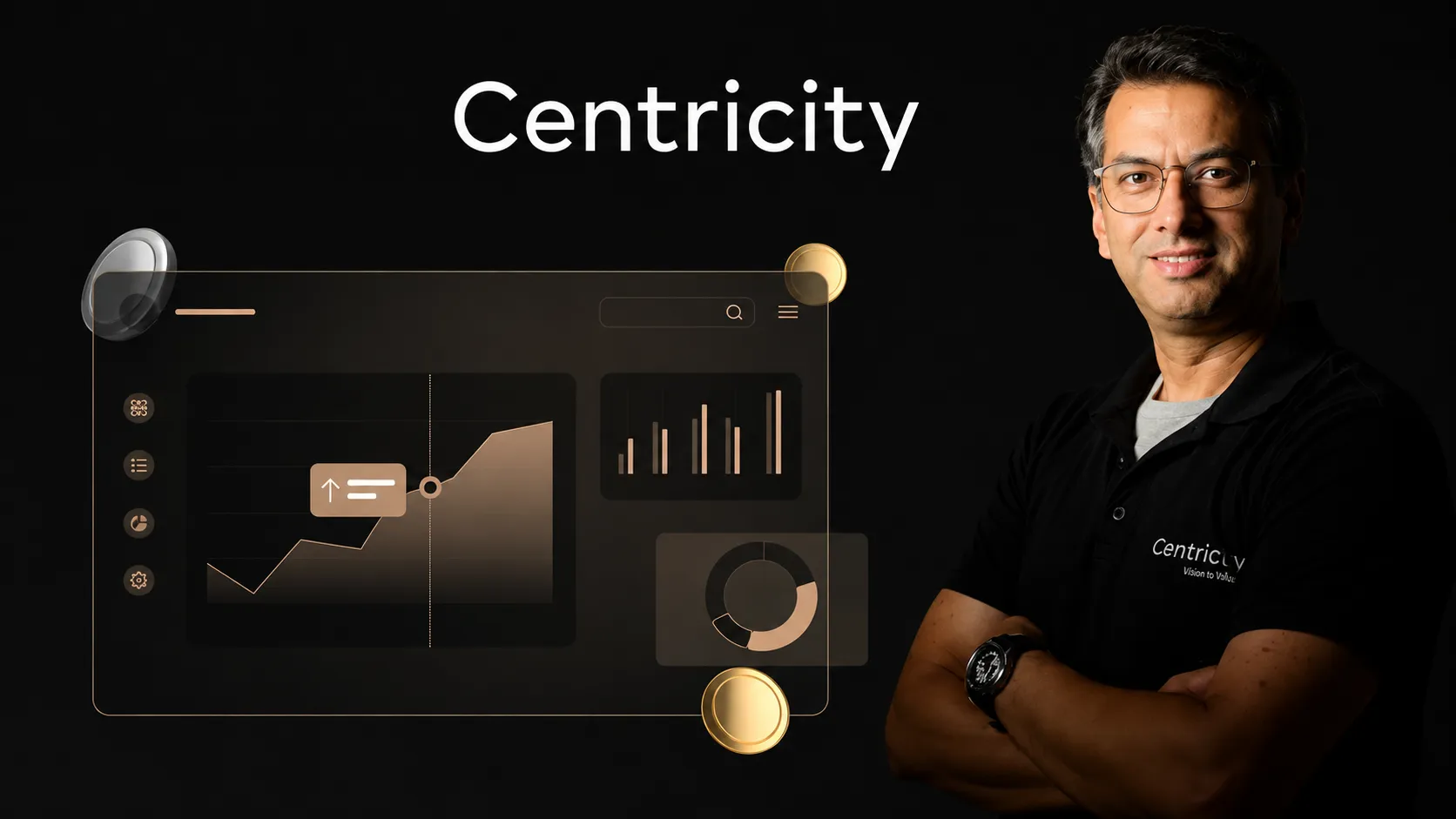
Centricity, an India-based wealth management platform built for finance and investment professionals, has reportedly closed a funding round worth approximately $33 million, according to details disclosed this week. The round adds to a steady stream of capital flowing into India's wealthtech sector, a category that has attracted increasing investor attention as the country's base of investable household and institutional wealth continues to expand rapidly.
Unlike consumer-facing investment apps that target retail investors directly, Centricity positions itself as infrastructure for the professionals who serve them — wealth managers, financial advisors and investment consultants who require sophisticated portfolio management, reporting and client servicing tools to operate efficiently at scale. This business-to-business orientation within wealthtech has increasingly appealed to investors seeking exposure to India's wealth management growth story without taking on the customer acquisition costs and regulatory complexity that characterise direct-to-consumer investment platforms.
India's wealth management industry has undergone significant structural change over the past several years, driven by rising financialisation of household savings, growing appetite for equity and alternative asset investments beyond traditional instruments like fixed deposits and gold, and a new generation of affluent and mass-affluent investors more comfortable engaging with digital-first advisory platforms. This shift has created substantial demand for the kind of technology infrastructure that firms like Centricity aim to provide — tools that allow wealth management professionals to serve a growing client base without proportionally scaling headcount.
The fresh capital is expected to support continued platform development and market expansion, as Centricity looks to deepen its penetration among India's fragmented wealth management ecosystem, which spans large institutional players, independent financial advisors and boutique family-office style operations. Investors backing this round are likely underwriting a thesis that technology-enabled efficiency gains for wealth professionals will become an increasingly important competitive differentiator as India's asset management and advisory industry matures and consolidates around firms capable of serving clients with greater sophistication and personalisation.
The round also reflects broader momentum in India's fintech infrastructure category through 2026, where investors have shown a preference for business-to-business platforms serving established financial institutions and professionals over purely consumer-facing plays, given the more predictable revenue models and stickier client relationships typically associated with enterprise software. As India's wealth management industry continues to professionalise and digitise, platforms like Centricity are likely to remain an active area of investor interest in the quarters ahead.
India's wealth management opportunity has been reshaped substantially by demographic and economic shifts over the past decade. A rapidly expanding base of high-net-worth and mass-affluent individuals — driven by strong equity market performance, growing entrepreneurial wealth creation and rising urban incomes — has significantly outpaced the capacity of India's traditional wealth advisory industry, which has historically remained heavily concentrated among a relatively small number of established private banks and boutique family-office operations serving India's wealthiest families. This capacity gap has created substantial opportunity for both new-generation independent financial advisors and the technology platforms built to serve them.
Centricity's positioning as infrastructure for the professionals serving this expanding wealth base, rather than as a direct-to-consumer investment app, reflects a considered strategic choice that has increasingly appealed to investors wary of the customer acquisition costs and regulatory complexity associated with consumer-facing investment platforms. Building technology for financial professionals instead allows a company to benefit from the same underlying wealth-creation trend while relying on advisors' existing client relationships and regulatory registrations, rather than needing to build trust and acquire individual retail customers directly — a materially different, and often less capital-intensive, growth model.
The wealthtech infrastructure category has also benefited from growing regulatory clarity around India's investment advisory industry, as the Securities and Exchange Board of India has progressively tightened registration and disclosure requirements for financial advisors and portfolio managers over recent years. This regulatory tightening has, somewhat counterintuitively, benefited well-designed compliance-aware technology platforms, since advisors facing more stringent reporting and client-disclosure obligations have increasingly sought out purpose-built software rather than relying on generic spreadsheets and manual processes that struggle to keep pace with evolving compliance requirements.
As Centricity deploys its fresh capital toward product development and market expansion, its progress will offer a useful signal for how quickly India's fragmented wealth advisory ecosystem is willing to modernise its technology infrastructure — a transition that, if it accelerates as investors are betting, could meaningfully reshape how millions of Indian investors interact with financial advisory services over the coming years.
The round also lands amid an active period for India's wealthtech funding more broadly, with several competing platforms targeting adjacent segments of the wealth advisory technology stack having raised capital through 2026. As competition intensifies for advisor and institutional wealth-management customers, the ability to demonstrate genuine product differentiation and measurable client outcomes is likely to increasingly separate the eventual category leaders from a growing field of well-funded but less differentiated wealthtech infrastructure providers.
For India's broader startup funding environment, rounds of this size in the business-to-business fintech infrastructure category continue to demonstrate that investor capital, while more selective than during the peak years of the previous funding cycle, remains readily available for companies that can articulate a clear, defensible value proposition tied to structural, long-term shifts in how Indian wealth is managed and advised upon — a bar that Centricity appears to have cleared with this latest funding milestone.
As India's mutual fund and portfolio management services industries continue expanding their reach beyond traditional metropolitan strongholds into tier-two and tier-three cities, platforms like Centricity that can help independent advisors in these emerging markets operate with institutional-grade sophistication stand to benefit from a genuinely national growth opportunity, one that extends well beyond the more saturated, intensely competitive wealth management landscape of India's largest metropolitan centres.
As the platform scales, its ability to maintain the trust of the wealth management professionals it serves will remain paramount, given that any technology handling sensitive client portfolio and financial data operates under a particularly high bar for security, reliability and regulatory compliance. Centricity's continued investment in these foundational trust elements, alongside its product roadmap, is likely to determine how effectively it converts this fresh funding into durable market leadership within India's increasingly competitive wealthtech infrastructure category.