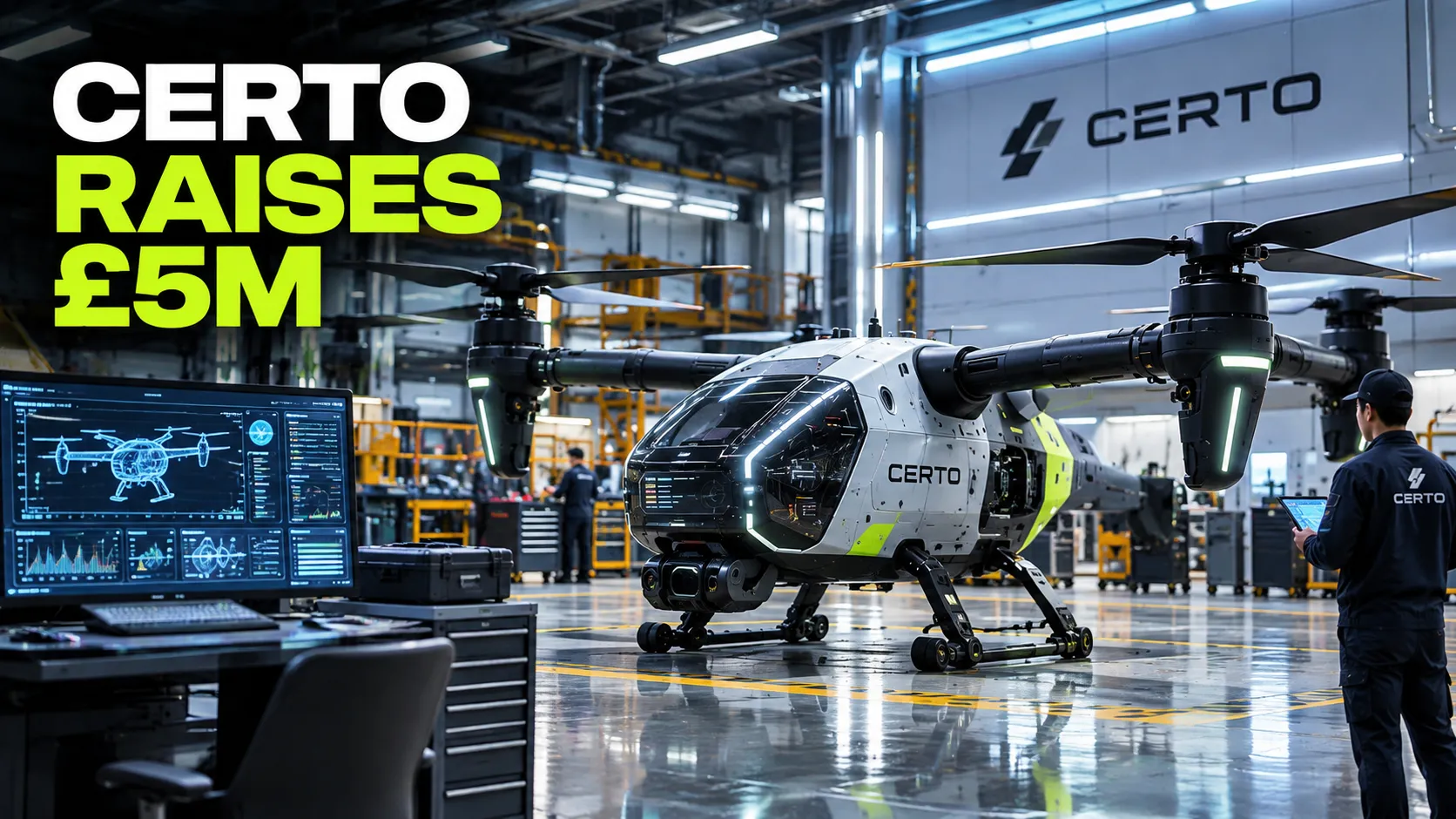
Certo Aerospace, a British company developing large autonomous aircraft, has raised £5 million to move its flagship Capstone system from engineering prototype towards repeatable production, as demand grows from militaries and logistics operators for drones that can carry far more than a camera.
The funding came from new and existing shareholders, whose names were not disclosed, according to an announcement reported in the first days of October. It follows more than £3 million in equity that the company raised in April 2025, bringing its disclosed equity funding to at least £8 million, excluding government support.
Based in Frome, Somerset, in south-west England, Certo is building Capstone, a 600-kilogram-class autonomous coaxial vertical take-off and landing aircraft. The company will use the new capital to accelerate development and prepare for manufacturing.
The round is small by the standards of defence technology, a sector that has attracted large venture investments over the past two years. But it marks an important transition for a company that has already proved its aircraft can fly and now has to prove it can build them reliably.
Between a drone and a helicopter
Capstone occupies a space between conventional drones and crewed helicopters. Most commercial drones are small multirotor craft that carry light payloads over short distances. Capstone is much larger and uses a coaxial design, with two main rotors stacked on the same axis and spinning in opposite directions. That arrangement removes the need for a tail rotor, makes the aircraft more compact for its lifting capacity and allows it to carry far heavier loads than a typical commercial drone.
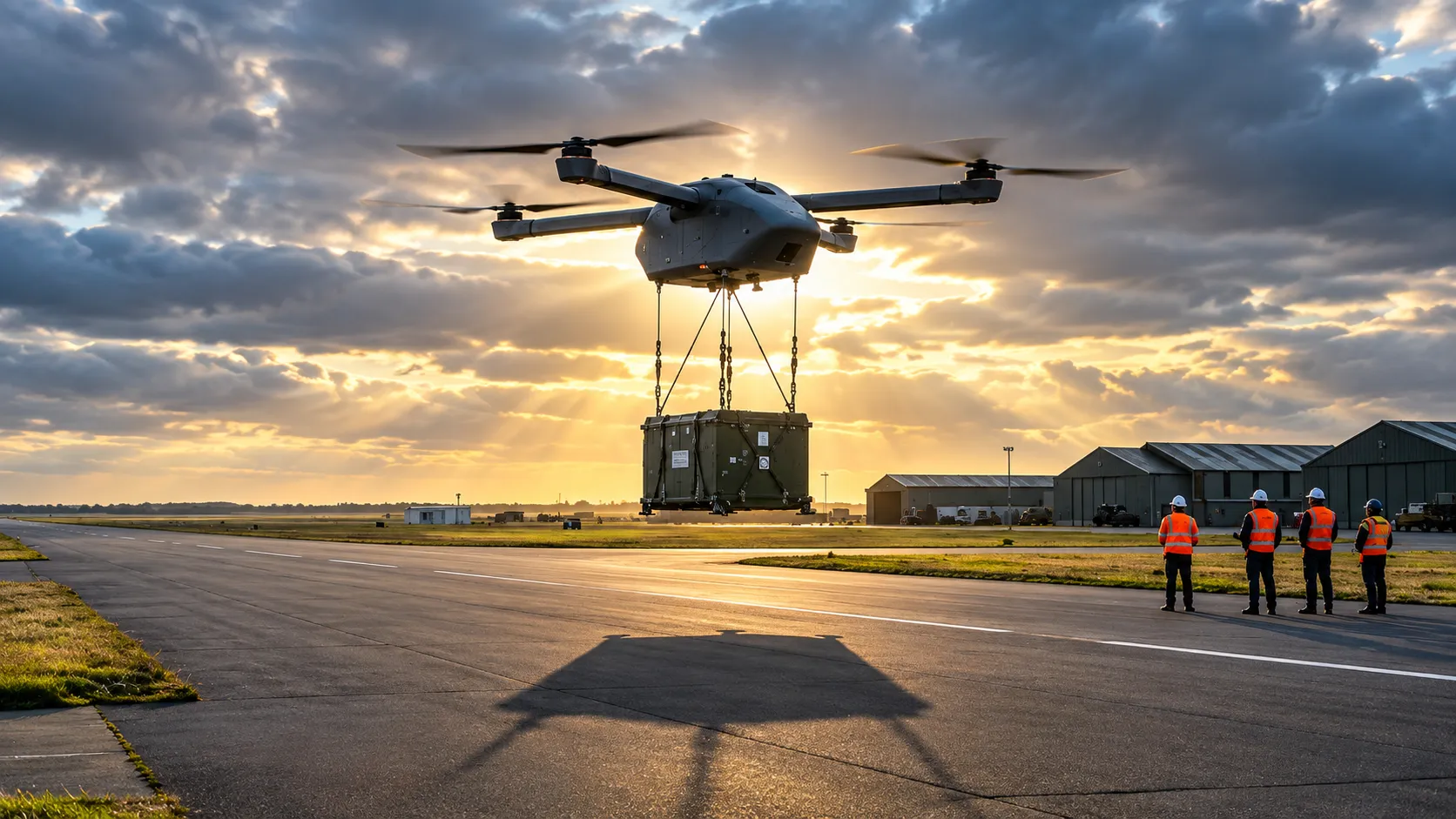
Certo is positioning the aircraft for a wide range of missions: logistics resupply, casualty evacuation, maritime operations, disaster response, construction and defence. In each case, the appeal is the ability to move significant cargo without putting a pilot at risk or requiring a runway.
Crucially, Capstone has moved beyond computer renderings and controlled laboratory tests. The aircraft has been flying since 2023 and has operated under authorisation from the UK Civil Aviation Authority. It has taken part in UK Ministry of Defence trials.
The BAE Systems connection
Certo has also attracted the attention of Britain's largest defence company. BAE Systems is working with Certo through FalconWorks, its advanced technology and innovation unit. The collaboration includes work on Project NYX, a British Army effort focused on next-generation autonomous aircraft.
For a small startup, partnerships with large defence primes are significant. They provide access to military customers, integration expertise and credibility with procurement officials who are often wary of buying from young companies. They can also be a pathway to larger contracts if programmes move from experimentation into procurement.
The hard part: manufacturing
The company's new funding is best understood as industrialisation capital rather than another research cheque. Getting a prototype to fly is one milestone. Building multiple aircraft to identical standards is a far harder one.
That transition involves qualifying suppliers, controlling tolerances on rotors and transmissions, documenting maintenance procedures, meeting customer requirements and passing certification gates. Each step requires engineering discipline and money. Aerospace history is full of companies that produced impressive demonstrators but struggled to turn them into products that could be built, certified and supported at scale.
Hardware-intensive companies also face a different investment curve from software startups. They cannot ship a new version overnight, and every iteration requires physical testing. For investors, the value of each funding round is measured by how much technical or manufacturing risk it removes. Certo's earlier funding helped pay for flight trials; this round is intended to move the programme towards repeatable production.
Why heavy-lift autonomy matters now
Militaries have been rethinking their use of unmanned systems after recent conflicts showed how drones can transform the battlefield. Much of the attention has focused on small attack and reconnaissance drones, but logistics may be where autonomous aircraft have some of their most valuable uses. Moving ammunition, fuel, medical supplies and spare parts to front-line units is dangerous for crewed vehicles and helicopters. Autonomous aircraft that can make those runs reduce risk to personnel and can operate more flexibly.
European governments have also committed to increasing defence spending. NATO members agreed in 2025 to a target of 5% of GDP for defence and security-related spending by 2035, and the UK has pledged to raise its own defence budget. That creates opportunities for defence technology startups, though procurement processes remain slow and competitive.
Civilian applications add to the market. Disaster response agencies need ways to deliver supplies to areas cut off by floods, earthquakes or wildfires. Offshore energy operators need to move equipment to platforms and wind turbines. Construction companies and remote communities can benefit from aerial delivery where roads are poor or non-existent. The economics of heavy-lift autonomy are also attractive to military planners for another reason: cost. Crewed helicopters are expensive to buy, operate and maintain, and they require highly trained pilots. An autonomous aircraft that can perform routine resupply missions could free scarce helicopters and aircrews for tasks that require human judgement, while lowering the cost per delivery.
The regulatory path
Commercial use of large autonomous aircraft will depend on regulators. Aviation authorities around the world are working out how to certify uncrewed aircraft that operate beyond visual line of sight, share airspace with crewed traffic and carry significant loads. Certo's experience operating under Civil Aviation Authority authorisation gives it a foundation, but broader commercial operations will require further approvals.
The UK has positioned itself as a supportive environment for drone innovation, with regulatory sandboxes and government-backed programmes. Military customers can sometimes move faster than civilian ones, because operations take place in segregated airspace, which is one reason many autonomous aircraft companies target defence first.
Global relevance
Certo's progress will be watched by the growing number of countries building domestic drone industries, including India, where unmanned aerial systems have become a strategic priority for the armed forces and where companies such as ideaForge supply surveillance drones to security agencies. Heavy-lift autonomous logistics is an area where many nations are still early, and partnerships between startups and established defence manufacturers are shaping how the market develops.
For now, Certo has £5 million and a clear task: turn a flying prototype into an aircraft it can build again and again. If it succeeds, Capstone could become one of the first heavy-lift autonomous aircraft in regular service. If it cannot, it will join the long list of promising aerospace demonstrators that never reached production.