FundingAnalysis5 MIN READ

C.H. Robinson Agrees $5.8 Billion RXO Takeover, Betting AI Can Squeeze Profits From a Brutal Freight Market

C.H. Robinson will buy truck brokerage RXO in a cash-and-stock deal worth about $5.8 billion, promising $300 million of cost savings by applying its AI-driven operating model to a larger network.

By Shaym Kumar · Author6 October 2026New
C.H. Robinson Agrees $5.8 Billion RXO Takeover, Betting AI Can Squeeze Profits From a Brutal Freight Market

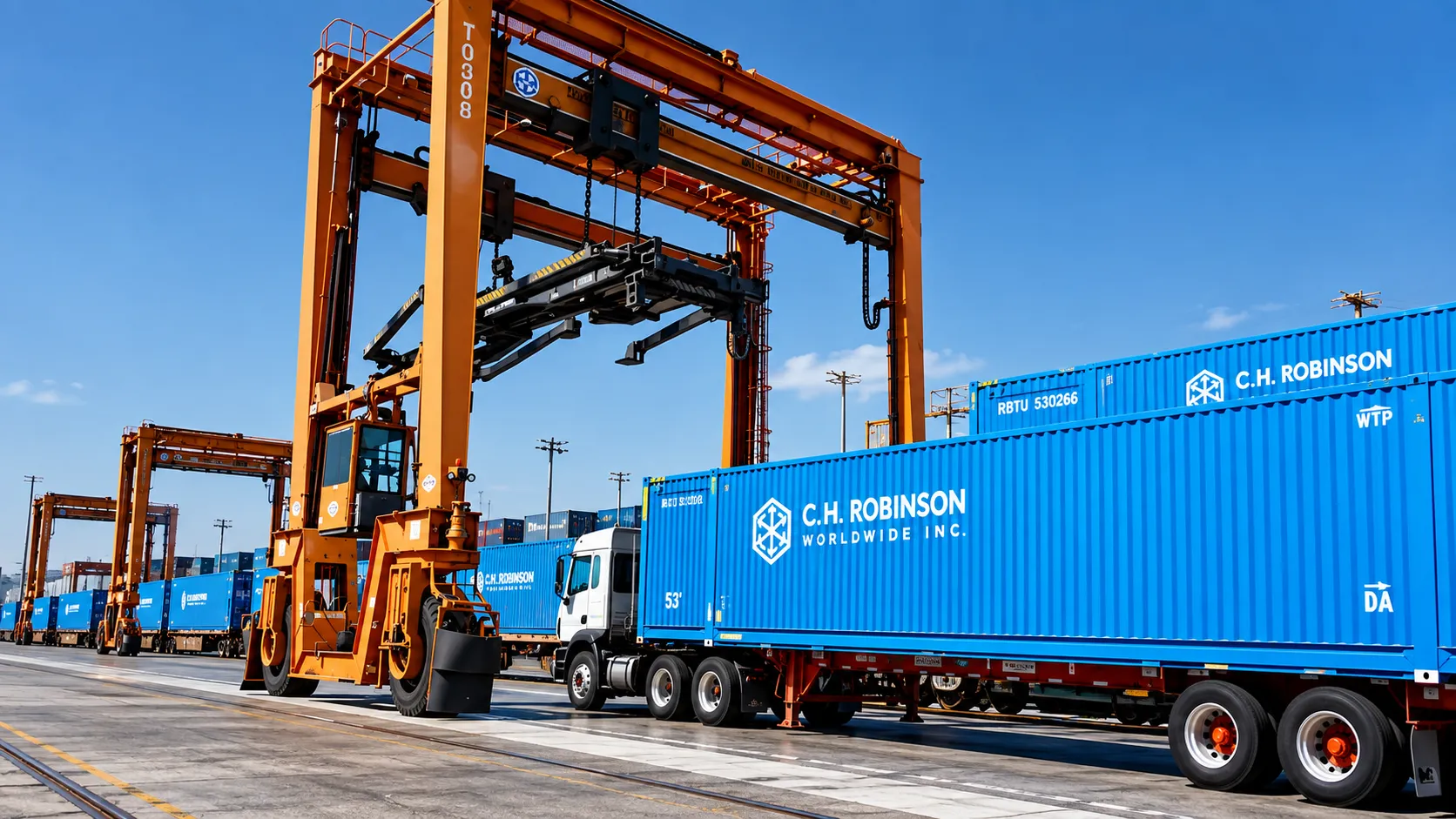
C.H. Robinson Worldwide, North America's largest freight brokerage, has agreed to acquire rival RXO in a cash-and-stock transaction valued at about $5.8 billion, a deal built on the proposition that artificial intelligence can turn scale into substantially higher profits in one of the most cyclical corners of the transport economy.

Under the terms announced on 5 October 2026, RXO shareholders will receive $17.25 in cash and 0.0856 of a C.H. Robinson share for each RXO share they own, an implied consideration of $30.25 per share. That represents a premium of 29% to RXO's closing price on Friday, 2 October, and 27% to its 90-day volume-weighted average price. Shareholders can elect all-cash or all-stock consideration, subject to proration designed to keep the overall mix at roughly 57% cash and 43% stock.

Once the transaction closes, expected in the first half of 2027, RXO shareholders will own about 11% of the combined company, which will have an enterprise value of more than $25 billion. RXO's shares rose about 23% on the news.

The AI thesis

At the heart of the deal is what C.H. Robinson calls its Lean AI operating model. Over the past several years, the Minnesota-based company has used artificial intelligence and automation to transform how it quotes prices, matches loads with carriers, schedules appointments and handles routine customer interactions, tasks that in freight brokerage have traditionally required large teams of people working the phones and email.

The company says that model has made its operations significantly leaner. It now intends to apply the same approach across RXO's business, and expects to extract $300 million of cost savings within two years of closing, according to Bloomberg. That synergy target is central to the investment case, because it would substantially improve the profitability of a business that has struggled in recent years.

Chief executive Dave Bozeman described the deal as a major unlock for shareholders, customers and employees. The company said that combining networks would also improve service for shippers, by giving them access to more carrier capacity and a broader range of services.
787a3596-489d-4c4c-a643-d38ec265cd48.png

What RXO brings

Charlotte, North Carolina-based RXO became an independent public company in 2022 and is an asset-light, technology-enabled provider of truckload brokerage, managed transportation and last-mile delivery. In 2024 it expanded significantly by acquiring Coyote Logistics, another large brokerage, adding volume and customers.

RXO is expected to generate about $6.8 billion in gross revenue in 2026, with truck brokerage accounting for about 73% of the total and last-mile delivery about 19%, according to industry analysis. Its last-mile business, which delivers heavy goods such as furniture and appliances to homes, serves retailers and ecommerce companies, which represented roughly 37% of its 2025 revenue.

C.H. Robinson, by comparison, had forecast about $18.4 billion in gross revenue for 2026, with its North American Surface Transportation division contributing about 73% and global freight forwarding about 18%. RXO will be folded primarily into that North American division. The combined company is projected to generate more than $25 billion in gross revenue, with last-mile delivery representing about 5% of the total.

A tough market for brokers

The deal comes against a difficult backdrop for the freight industry. North American trucking has endured an extended downturn, with excess capacity pushing down rates and squeezing the margins that brokers earn between what shippers pay and what carriers receive. RXO reported annual losses in 2024 and 2025, although it beat profit expectations in its most recent quarter thanks to improved pricing.

“In freight brokerage, scale has always mattered. C.H. Robinson is betting that AI now makes scale far more profitable than it used to be.”
— TIGI Analysis

In such conditions, scale and efficiency become decisive. Larger brokers can offer shippers more reliable capacity and spread technology investments across more transactions. Consolidation has therefore been a recurring theme in the sector, and this deal creates a dominant player in North American truck brokerage.

Pricing and shareholder support

On a trailing basis, the price represents a high multiple of RXO's depressed earnings. One merger arbitrage analysis put the deal at nearly 50 times RXO's EBITDA, a figure that reflects how weak the company's profits have been during the freight downturn rather than an ambitious valuation of a healthy business. The real valuation case depends on whether C.H. Robinson can deliver its targeted savings and whether freight markets recover.

The transaction has secured important support. MFN Partners, which owns about 17% of RXO, has agreed to vote its shares in favour. Orbis Investments, described as RXO's largest shareholder, has also endorsed the deal, with its portfolio manager saying it offers substantial cash today and continued ownership in a combined platform with significant upside. A termination fee of $175 million would be payable by RXO to C.H. Robinson in certain circumstances.

Morgan Stanley advised C.H. Robinson, while Goldman Sachs served as financial adviser to RXO and Paul, Weiss, Rifkind, Wharton & Garrison as its legal counsel.

Regulatory and integration questions

Given the combined company's size in North American brokerage, regulators may examine the deal's impact on competition. However, freight brokerage remains highly fragmented, with thousands of operators, which may limit antitrust concerns. Integration risk is arguably the larger issue. Combining two large brokerages involves merging technology systems, carrier networks and sales teams, and customer relationships can be lost if service slips during the transition.

C.H. Robinson's argument is that its AI-driven platform will make integration smoother, because much of the work can be standardised and automated. Investors will be watching closely to see whether that claim holds up in practice.

Shippers will be a key constituency. Large retailers and manufacturers often spread their freight across several brokers to secure capacity and negotiate better rates. Some may welcome the combined company's scale and service range, while others may seek to diversify their brokerage relationships to avoid excessive dependence on a single provider. How C.H. Robinson manages those customer relationships during integration will influence whether the deal delivers the revenue it expects as well as the cost savings.

Wider lessons for global logistics

The transaction is a striking example of how artificial intelligence is reshaping traditional industries far from the technology sector. Freight brokerage is a business of relationships, information and coordination, precisely the kinds of tasks where AI is proving capable of large productivity gains. If C.H. Robinson can show that its model generates substantially better returns when applied to an acquired business, it could prompt a wave of similar consolidation across logistics, both in North America and in other large freight markets.

For logistics operators in markets such as India, where freight brokerage and trucking remain fragmented and digitisation is accelerating, the deal offers a glimpse of how technology could reshape industry structure. For now, the immediate test is closer to home: delivering $300 million of savings and reviving profitability in a freight market that has yet to turn decisively.

TagsC.H. RobinsonRXOMergers and AcquisitionsFreight BrokerageLogisticsSupply ChainTruckingLast MileArtificial IntelligenceLean AIGlobal MarketsDeal Analysis

Reader reviews

Sign in to rate and review this article.
Loading reviews…