TechFuture Tech7 MIN READ

China's Humanoid Robot Industry Raises $13 Billion as Race for AI Brains Accelerates

Chinese embodied AI companies raised 93.5 billion yuan (about $13 billion) across 322 deals in the first half of 2026, five times the previous year, according to data firm ITjuzi cited by Reuters on November 2. Having mastered robot hardware, firms such as Unitree, UBTech, X Square, Galaxea and Spirit AI are now racing to build the AI "brains" that let humanoids think, learn and work.

By Aravind Kumar · Author2 November 2026New
China's Humanoid Robot Industry Raises $13 Billion as Race for AI Brains Accelerates

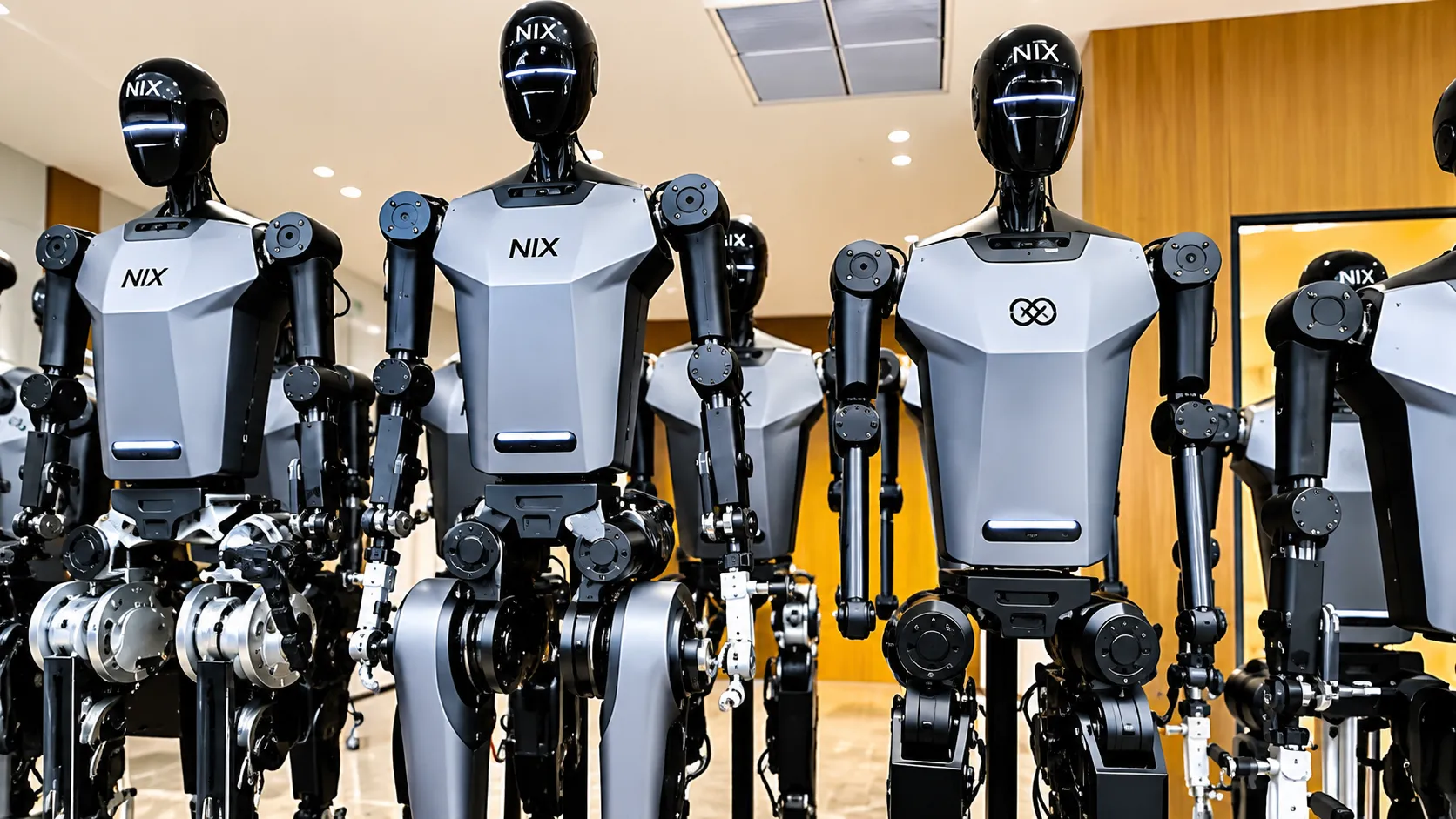
China's humanoid robots can already run, dance, flip and box. Videos of machines from companies such as Unitree performing acrobatics have gone viral around the world, and Chinese manufacturers now produce robot bodies at a scale and cost that few rivals can match. But the industry's next challenge is far harder: giving those bodies the intelligence to do useful work in the real world.

Investors are betting heavily that China can meet that challenge. Chinese embodied artificial intelligence companies raised 93.5 billion yuan, or about $13 billion, across 322 deals in the first half of 2026, five times the amount raised a year earlier, according to data research firm ITjuzi, cited by Reuters on Monday, November 2.

The surge in funding marks a shift in where the industry believes value will be created. "The margin won't come from the hardware but from the brain," said Dermot McGrath, founder of Shanghai-based technology consultancy ZenGen Labs, summarising the conclusion many companies have reached, according to Reuters.

From bodies to brains

For the past several years, Chinese robotics companies focused on mastering the physical side of humanoid robots: motors, joints, sensors, batteries and the control systems that allow machines to balance and move with agility. China's vast manufacturing ecosystem, particularly its supply chains for electric vehicles and consumer electronics, gave it a powerful advantage in producing these components cheaply.

The result is that Chinese humanoid robots have become significantly cheaper than many Western alternatives, and Chinese companies have shipped a large share of the humanoids sold worldwide.

But a robot that can perform a backflip is not necessarily able to fold laundry, sort parts on a production line or assist an elderly person at home. Such tasks require the ability to perceive the environment, understand instructions, plan actions and adapt to unexpected situations, capabilities that depend on artificial intelligence rather than mechanical engineering.

"The brain is indeed the weakest link in the complete robotics stack," said Gao Yang, co-founder of Spirit AI, according to Reuters.

The new robotics unicorns

The race for robot brains has created a new generation of highly valued Chinese startups. X Square, Galaxea and Spirit AI have each reached valuations of roughly $3 billion, according to company disclosures cited by Reuters. Galbot raised 2.5 billion yuan, about $362 million, from the National AI Industry Fund, while the Beijing Innovation Center raised 700 million yuan, about $100 million, with backing from search giant Baidu, according to reports cited alongside the Reuters story.

These companies are building foundation models for robots, often called vision-language-action models, which combine the ability to understand images and language with the ability to generate physical actions. The goal is to create general-purpose robot intelligence that can be applied to many tasks and many types of robot, rather than programming each robot for each job.

"We want robots to shift from being driven by code to being driven by common sense," said Yang Qian, co-founder and chief operating officer of X Square, according to Reuters.

The war for talent

The competition for AI talent has become intense. Hong Kong-listed UBTech, one of China's best-known humanoid robot makers, advertised a chief scientist role overseeing AI model development with pay of up to 124 million yuan, or about $18 million, according to Reuters. The figure illustrates how scarce and valuable expertise in robot AI has become.

Unitree, the Hangzhou-based company whose agile, relatively affordable robots have made it one of China's most prominent robotics brands, has about 30 researchers developing AI that can predict how objects will behave, according to the report.

Data is the new bottleneck

Training robot AI requires vast amounts of data on how the physical world works and how tasks are performed. Unlike language models, which can learn from text scraped from the internet, robot models need data about physical movements, forces and interactions, which is far scarcer.

Chinese companies are pursuing different strategies to gather it. Spirit AI has hired around 1,000 people to record everyday and industrial activities, according to Reuters, creating datasets of human movements that robots can learn from.

Ant Group's robotics unit, Robbyant, said it had trained a model on 160,000 hours of material, including 50,000 hours of human-guided robot movement, and had trained software on 20 robot configurations from 17 brands, according to the report. Training across many different robot designs is intended to produce AI that can work on a variety of machines.

"Data quality is more important than data diversity, and more important than simply collecting data at massive scale," Yang Qian of X Square said.


“The brain is indeed the weakest link in the complete robotics stack.”
— Gao Yang, Co-founder, Spirit AI
c7e4edd9-17ce-422a-b7ee-7fb4befc8d60.png

Faster deployment

For industrial customers, a key measure of progress is how quickly robots can be set up to perform new tasks. DexForce says it can prepare some industrial tasks for deployment within six to eight hours and reports success rates above 99.9% in specified precision operations, according to Reuters. Traditional industrial robots often require weeks or months of programming by specialists for each new task.

Rapid deployment could make robots economical for a much wider range of applications, including smaller production runs and tasks that change frequently.

The American benchmark

Chinese companies face strong competition from American AI labs focused on robotics. Startups such as Physical Intelligence and Skild AI have raised large sums to build general-purpose robot intelligence, while Tesla is developing its Optimus humanoid and Figure AI is deploying humanoids in factories.

US startup Generalist says its GEN-1.5 model completed about 60% of simple tasks after watching a demonstration lasting just three to 12 seconds, according to Reuters. "The leading American labs are setting a demanding benchmark, particularly in how quickly robots can acquire and reuse skills," said Georg Stieler, a robotics consultant.

The contest mirrors the broader US-China rivalry in artificial intelligence, with each side drawing on different strengths: American companies on frontier AI research and computing power, Chinese companies on manufacturing scale and cost.

The chip constraint

A major challenge for Chinese robotics companies is access to advanced AI chips. US export controls restrict sales of Nvidia's most powerful processors to China, limiting the computing power available for training large AI models and for running them on robots. Zhu Mingxuan, who leads development of JoyIn Technology's Aether robot AI, warned that chip shortages will become a serious problem as robots become more powerful, according to Reuters.

Chinese companies are turning to domestic chips from companies such as Huawei, as well as optimising their models to run more efficiently on less powerful hardware. China has also recently proposed export controls on 23 AI technologies, from model weights to computing clusters, reflecting how strategically important the sector has become.

Funding pressures

Despite the surge in private investment, the industry also faces a squeeze on IPO funding, according to Reuters. Several Chinese robotics companies have pursued listings in Hong Kong and on mainland exchanges, but the pace of listings and investor appetite can fluctuate. Companies burning cash on research and talent need continued access to capital until they can generate significant revenue.

Government backing

Beijing has made embodied AI and humanoid robots a strategic priority, identifying them as key future industries. Local governments in cities such as Beijing, Shanghai, Shenzhen and Hangzhou have offered subsidies, created industrial parks and established investment funds to support robotics companies. The involvement of the National AI Industry Fund in Galbot's financing illustrates the role of state capital.

China's ageing population and shrinking workforce add urgency to the push. Robots are seen as a way to sustain manufacturing output and provide care for elderly people as the working-age population declines.

Why it matters for India

India's manufacturing ambitions and its large engineering talent pool give it a stake in the global robotics race. Indian robotics startups are developing automation for warehouses, manufacturing, agriculture and healthcare, and global companies are exploring India as a base for robotics engineering. However, Indian robotics funding remains a fraction of China's.

China's rapid progress in humanoid robots could also affect India's competitive position in labour-intensive manufacturing. If robots become cheap and capable enough to perform assembly work, the advantage of low labour costs, which India hopes to use to attract factories, could diminish over time. Indian policymakers and businesses will need to consider how automation fits into the country's manufacturing strategy.

What comes next

The coming years will show whether Chinese companies can match their dominance in robot hardware with leadership in robot intelligence. The winners will be those that can combine high-quality data, efficient AI models and access to computing power, while turning impressive demonstrations into reliable products that customers will pay for. With $13 billion raised in just six months, investors are betting that China's humanoid robots are about to get much smarter.

Tagshumanoid robotsChina roboticsembodied AIphysical AIUnitreeUBTechX SquareGalaxeaSpirit AIGalbotAnt GroupRobbyantDexForceAI modelsrobot learningNvidia chipsexport controlsTesla OptimusIndia roboticsinvestors

Reader reviews

Sign in to rate and review this article.
Loading reviews…

