FundingMarket Data Women6 MIN READ

China's Industrial Profit Growth Slows to 4.2%, the Weakest This Year, as AI Gains Fail to Offset Weak Demand

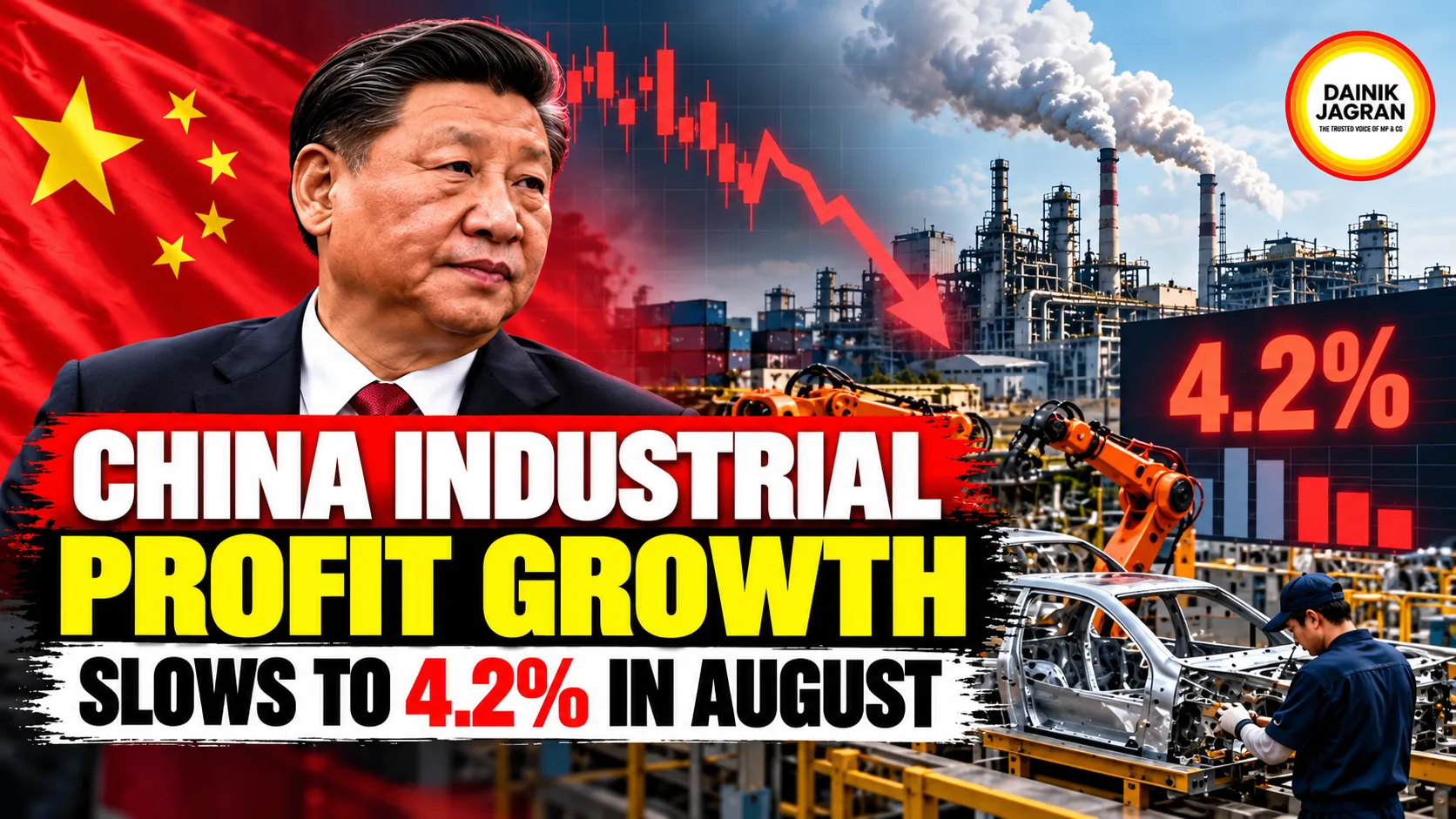
Profits at China's large industrial firms rose 4.2% in August, the weakest monthly gain of 2026 and down from 11.2% in July. Year-to-date growth eased to 15.7%, the fourth straight month of slowing, as soft consumption and rising energy costs offset AI-driven strength in electronics.

By Nisha Omkumar · Author28 September 2026New
China's Industrial Profit Growth Slows to 4.2%, the Weakest This Year, as AI Gains Fail to Offset Weak Demand

ChatGPT Image Sep 28, 2026, 10_48_33 AM.png

China's industrial recovery is losing momentum. Profits at the country's large industrial companies rose 4.2 per cent in August from a year earlier, the National Bureau of Statistics said on Monday, the weakest monthly increase this year and a sharp slowdown from 11.2 per cent growth in July. According to Bloomberg, it was the smallest gain since profits fell in November last year.

For the first eight months of 2026, industrial profits rose 15.7 per cent, easing from a 17.6 per cent increase in January to July. That marked the fourth consecutive month in which the year-to-date growth rate has slowed, from a peak of 24.7 per cent reached in April. The cumulative figure came in slightly below a Bloomberg Economics forecast of about 16 per cent. The statistics bureau's figures cover firms with annual main business revenue of at least 20 million yuan, around $3 million.

A recovery with two speeds

The headline numbers for 2026 still look strong by recent standards. Industrial profits grew only 0.6 per cent in 2025, the first annual increase after three consecutive years of decline, and they surged 15.2 per cent in the first two months of this year. The problem is the composition of that growth.

Much of the improvement has come from a narrow set of sectors tied to artificial intelligence and electronics. In the first seven months of the year, profits in the electronics sector more than doubled from a year earlier, contributing 9.3 percentage points of the overall growth, according to NBS statistician Yu Weining. Profits in the integrated circuit industry, including computing and memory chips, rose roughly 18.5-fold and accounted for more than 80 per cent of the increase in electronics. Mining profits also rose strongly, helped by higher commodity prices.

Outside those areas, the picture is weaker. Many manufacturers, from consumer goods to building materials, face soft domestic demand, intense competition and aggressive price-cutting. China's official manufacturing purchasing managers' index pointed to contraction in both July and August, and economic growth in the second quarter slowed to its weakest pace in more than three years.

Energy costs and weak consumers

Two forces stand out in the August slowdown. The first is energy. Oil prices have traded above $100 a barrel for much of September because of the conflict involving Iran and disruption in the Strait of Hormuz, and elevated prices through the summer have raised input costs for Chinese manufacturers. China is the world's largest crude importer, and although it has built large strategic reserves and diversified suppliers, higher fuel and feedstock costs squeeze margins across chemicals, transport and heavy industry.

The second is weak household demand. Retail sales growth slowed further in August, and the slump in urban investment deepened. The property sector, once the engine of Chinese growth, remains in a prolonged downturn, weighing on household wealth and confidence. Industrial output was supported by exports, which have remained resilient despite trade tensions, but exports alone cannot sustain profits when domestic prices are falling.

Producer prices tell a similar story. Factory-gate prices in China have been under downward pressure for much of the past three years as capacity additions in manufacturing outpaced demand, and although higher commodity prices have lifted some input costs this year, many manufacturers have been unable to pass those increases on to customers. The result is a squeeze on margins from both directions: costs rising with energy, and selling prices held down by competition. That combination helps explain why the August profit figure slowed so sharply even as output held up.


“China's factories are split in two: those riding the AI boom, and those fighting price wars in a weak domestic market.”
— TIGI Analysis

Global ripples

China's industrial strength has international consequences. The European Central Bank said last week that China's move into higher-value manufacturing is squeezing European firms out of global markets, particularly in machinery and transport equipment, with German companies among the hardest hit. China is also importing fewer European goods as its own production grows. Cheaper Chinese exports can help lower goods prices abroad, but they also intensify competition for manufacturers in Europe, Asia and elsewhere.

For India, China's industrial trajectory matters in several ways. Indian manufacturers compete with Chinese firms in sectors from steel and chemicals to electronics and solar components, and Chinese overcapacity has periodically led to surges of low-priced imports that prompt anti-dumping investigations. At the same time, Indian electronics assembly and pharmaceutical manufacturing depend on Chinese components and ingredients. Slower Chinese demand can soften commodity prices, which benefits importers such as India, but weaker Chinese profits can also push exporters to cut prices further in overseas markets.

Policy response

Economists widely expect Beijing to rely more heavily on stimulus to stabilise corporate profitability. The options include additional fiscal spending on infrastructure and consumption support, targeted measures for the property sector and further monetary easing. The government has also sought to discourage what officials describe as disorderly competition, particularly in industries such as electric vehicles, solar panels and batteries, where price wars have eroded margins.

That creates a policy tension. Measures that support demand could revive profits across a broad range of industries. Measures that curb overcapacity could improve margins in some sectors while reducing output and investment in others. Investors are watching closely to see which approach dominates in the fourth quarter.

Beijing's room for manoeuvre is larger than that of many economies. Government bond yields remain low, inflation is subdued, and the central bank has scope to ease further. The constraint is less about capacity than about priorities, and about the willingness of policymakers to shift support from production towards households after years of favouring investment-led growth.

Market reaction

Chinese equities fell on Monday, with the CSI 300 index down 1.24 per cent in early trade, though the decline also reflected broader Asian weakness driven by oil prices and expectations of further US interest-rate increases. The offshore yuan was steady at around 6.7252 per dollar, suggesting currency markets did not see the data as a sign of acute stress.

For global investors, China's profit data reinforce a theme visible across markets this year: companies exposed to AI hardware demand are thriving, while those dependent on consumer spending and traditional industry are struggling. China's factories are, in effect, split in two: those riding the AI boom, and those fighting price wars in a weak domestic market.

What to watch

The next monthly profit release, covering September, will show whether August was a temporary dip or the start of a more sustained slowdown in the technology-led recovery. Investors will also watch for any policy announcements from Beijing, particularly on consumption support and property, and for signs of how Chinese exporters respond to softer margins. For the rest of the world, from Germany's machine builders to India's steelmakers, the direction of China's industrial economy remains one of the most important variables in global trade.

TagsChinaIndustrial ProfitsNational Bureau of StatisticsChinese EconomyManufacturingSemiconductorsAIStimulusEnergy CostsExportsPrice WarsAsia Markets

Reader reviews

Sign in to rate and review this article.
Loading reviews…