Chinese artificial intelligence models have moved from the margins to the majority on two of the world's most widely used developer platforms in less than a year, a shift driven by lower prices and rapidly improving performance that is now drawing scrutiny in Washington.
On OpenRouter, a marketplace that lets developers route requests across models from different providers, Chinese models accounted for 57–67% of tokens processed in the week of September 14, according to data shared with CNBC and reported on Saturday. In February, their share was 6–13%. On Vercel, a cloud platform widely used by developers to build and deploy applications, the share of Chinese models rose to 55% in August from 11% in January.
Tokens are the units of text that AI models process, and token volume is one of the clearest available measures of how much models are actually being used in production. The data suggest that, at least among developers building on these platforms, Chinese models have become a default choice for a large share of work.
Price and performance
The explanation offered by the platforms themselves is straightforward. "Chinese models are becoming capable enough for more tasks at a much lower cost," Harpreet Arora, head of agentic infrastructure at Vercel, told CNBC. "Once a model meets the quality bar for the job, that price difference becomes compelling."
Peter Walker, head of insights at OpenRouter, said Chinese open-source models released this year have reached a level where they can handle advanced agent-style tasks, particularly in coding. Developers of models from DeepSeek, Z.ai and Alibaba have released new versions in 2026 that significantly improved performance on such tasks.
The cost gap can be large. Earlier this year, AI assistant startup Lindy AI said switching from Anthropic's models to DeepSeek had cut its inference costs by 90%, and industry participants have described open-weight Chinese models as 60–90% cheaper than leading US offerings for comparable workloads. Many of these models are released with open weights, meaning companies can download and run them on their own infrastructure or through third-party providers, giving them additional flexibility on cost and control.
The platforms stress that US frontier models still lead on most benchmarks and continue to attract more overall spending. Arora said companies still turn to top US models for harder, more complex tasks. The pattern that emerges is one of segmentation: businesses use cheaper Chinese models for high-volume, routine work and reserve expensive frontier models for problems where quality justifies the price.
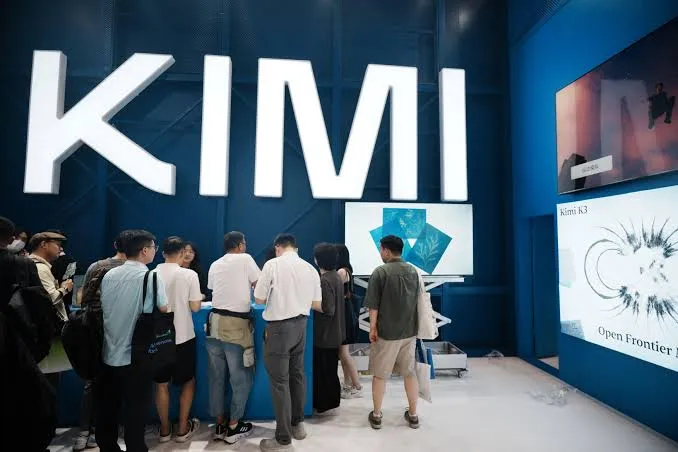
Usage on OpenRouter is concentrated in a few Chinese providers. DeepSeek became the single largest vendor on the platform this summer, handling about 17.6% of routed tokens in a typical week, according to reports in July, with Alibaba's Qwen models accounting for 13.9%. Moonshot AI's Kimi K3, released in July with claims that it could compete with the strongest US models, briefly rattled AI and chip stocks, echoing the market reaction to DeepSeek's breakthrough the previous year.
The Global South leads adoption
The geography of adoption is striking. According to OpenRouter, companies in what it defines as the Global South, a group of 82 countries across Central and South America, Africa and Asia, used Chinese models for 67% of their tokens. About half of all tokens on OpenRouter are used by companies in the United States.
"Southeast Asia in particular may see significant uptake of Chinese AI models given the close economic and cultural linkages plus growing digital infrastructure," said a researcher at the Center for a New American Security, quoted by CNBC. For price-sensitive markets, a model that is good enough and much cheaper can make the difference between deploying AI at scale and not deploying it at all.
This has direct relevance for India, where startups building AI products for domestic and export markets are highly sensitive to inference costs. India is also pursuing its own sovereign AI efforts through government-backed programmes and domestic developers. The rise of low-cost open-weight models from China gives Indian companies more options, but also raises questions about data governance, security and long-term dependence that policymakers and enterprises will need to weigh.
Washington takes notice
The shift has alarmed US policymakers. Two committees of the US House of Representatives are investigating the impact of rising adoption of Chinese models. The United States has sought to preserve its lead in AI by restricting Chinese companies' access to the most advanced chips through export controls. Officials are concerned that Chinese developers may be narrowing the gap by accessing Nvidia chips remotely through overseas data centres, or by using a technique known as distillation, in which one model is trained to imitate the outputs of another.
Treasury Secretary Scott Bessent said earlier this year that the administration could sanction foreign models found to have been built using stolen American technology. The Trump administration is also reported to be considering bans on Chinese open-weight models and on certain Chinese components used in US data centres.
AI featured prominently in talks between Trump and Chinese President Xi Jinping during Xi's state visit to Washington this week. The two sides were reported to have agreed to open a communication channel on AI, though the broader technology rivalry remains unresolved.
A contest over the open ecosystem
The data point to a strategic dynamic that goes beyond any single model. US companies have led at the frontier, investing heavily in the most capable closed systems. Chinese developers have focused on releasing highly capable open-weight models at low prices, winning the loyalty of developers who build on top of them. If those developers standardise their tools and workflows around Chinese models, switching back could become harder, even if US models remain more capable.
For businesses, the immediate calculation is practical: performance, price, reliability and compliance. For governments, the calculation is strategic, involving security, supply chains and technological influence. How the United States responds, whether through restrictions, incentives for open US models or broader diplomacy, will shape the choices available to developers around the world, including in India and across the Indian diaspora's technology networks.