The United States is in the middle of the largest build-out of computing infrastructure in its history, and Chinese manufacturers want a share of it. Companies that make prefabricated data centres, power equipment and other components see American demand for AI capacity as their biggest opportunity. But their ambitions are running into growing concern in Washington about security and dependence on China for critical infrastructure.
The tension came into focus this week as Chinese President Xi Jinping made a state visit to Washington, where AI was a prominent topic in his talks with President Donald Trump. According to CNBC, which reported on Chinese suppliers' ambitions on Saturday, the Trump administration is considering bans on Chinese open-weight AI models as well as new restrictions on certain types of Chinese data centre components.
Demand on a different scale
The numbers explain the attraction. The United States had 5,427 AI data centres in 2025, compared with 449 in China, according to figures cited by CNBC. US technology giants are expected to spend about $765 billion on AI infrastructure this year, and that figure could reach $1 trillion next year. China's government, for its part, has planned about $295 billion in data centre investment over a five-year horizon.
The gap reflects differences in how AI is being monetised. "Chinese companies just are not generating as much revenues from their AI services," said Jeffrey Ding, a professor at George Washington University who studies China's technology sector. "There is not as much demand for the AI services." For Chinese hardware makers, that means the domestic market, while large, cannot match the scale of spending in the United States.
Speed as a selling point
One of the companies seeking to capitalise is Brightray, a Singapore-registered AI infrastructure company that uses Chinese manufacturer PrefabDC as its sole supplier. PrefabDC builds prefabricated data centres, modular units that are manufactured in factories and assembled on site.
"We can see very big potential in the U.S. market," said S.K. Lee, Brightray's global vice president. "The China market is equally important, but we can see that there's a stronger demand in the U.S."
Speed is the main pitch. A conventional US data centre can take two to three years to build. Brightray says its prefabricated approach can cut construction time by at least 50%. In a market where developers are racing to bring capacity online and where delays in power and construction have become a major source of risk, that promise is valuable. This week alone, Oracle issued a force majeure notice relating to power delays at its $165 billion Stargate campus in New Mexico, and data centre developer Crusoe cancelled a $1.25 billion turbine order as it rethought its power strategy.
Already embedded in the supply chain
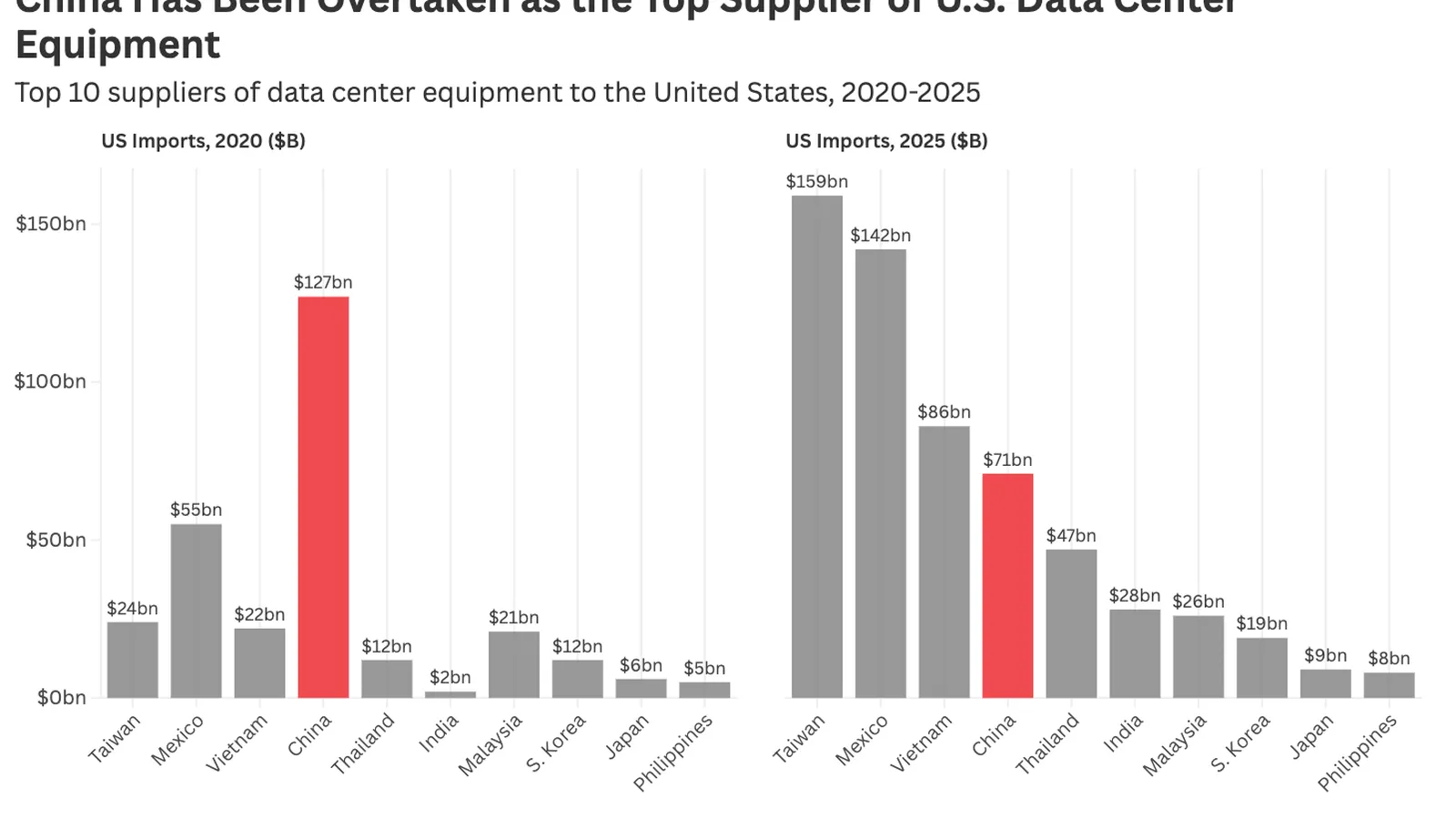
Chinese companies are not newcomers to American data centres. China is already a significant supplier of transformers, batteries and fibre-optic cables used in US facilities. "China is definitely very important towards the U.S. supply chain for data centers at the moment," said Benjamin Boucher, an analyst at energy research firm Wood Mackenzie.
That dependence is precisely what concerns policymakers. Transformers and batteries are essential to keeping data centres running, and shortages of electrical equipment have become a bottleneck for the entire AI build-out. American officials and the security establishment worry that relying on Chinese suppliers for this equipment could create cybersecurity risks and give Beijing leverage over infrastructure that the United States regards as strategically vital to its competition with China in AI.
The US has already moved to limit Chinese access to advanced AI chips through export controls. Reports earlier this year indicated that officials were drafting a ban on certain Chinese devices in data centres, and the administration is now weighing whether to extend restrictions to more categories of components. At the same time, Chinese AI models are gaining ground among developers worldwide: on the OpenRouter platform, Chinese models accounted for 57–67% of tokens used in mid-September, prompting investigations by two US House committees.
A delicate diplomatic moment
The timing is sensitive. During Xi's visit, the two countries extended their trade truce and were reported to have agreed to open a communication channel on AI. Both sides have an interest in stabilising relations. But technology and infrastructure remain areas where security concerns are likely to override commercial considerations, particularly as AI becomes central to economic and military competition.
For Chinese suppliers, that creates uncertainty. Companies may seek to structure their businesses through third countries, as Brightray's Singapore registration illustrates, or to focus on components that are less likely to be restricted. For American developers, the question is whether the cost and speed advantages of Chinese equipment are worth the regulatory and security risks, and whether alternative suppliers can scale quickly enough.
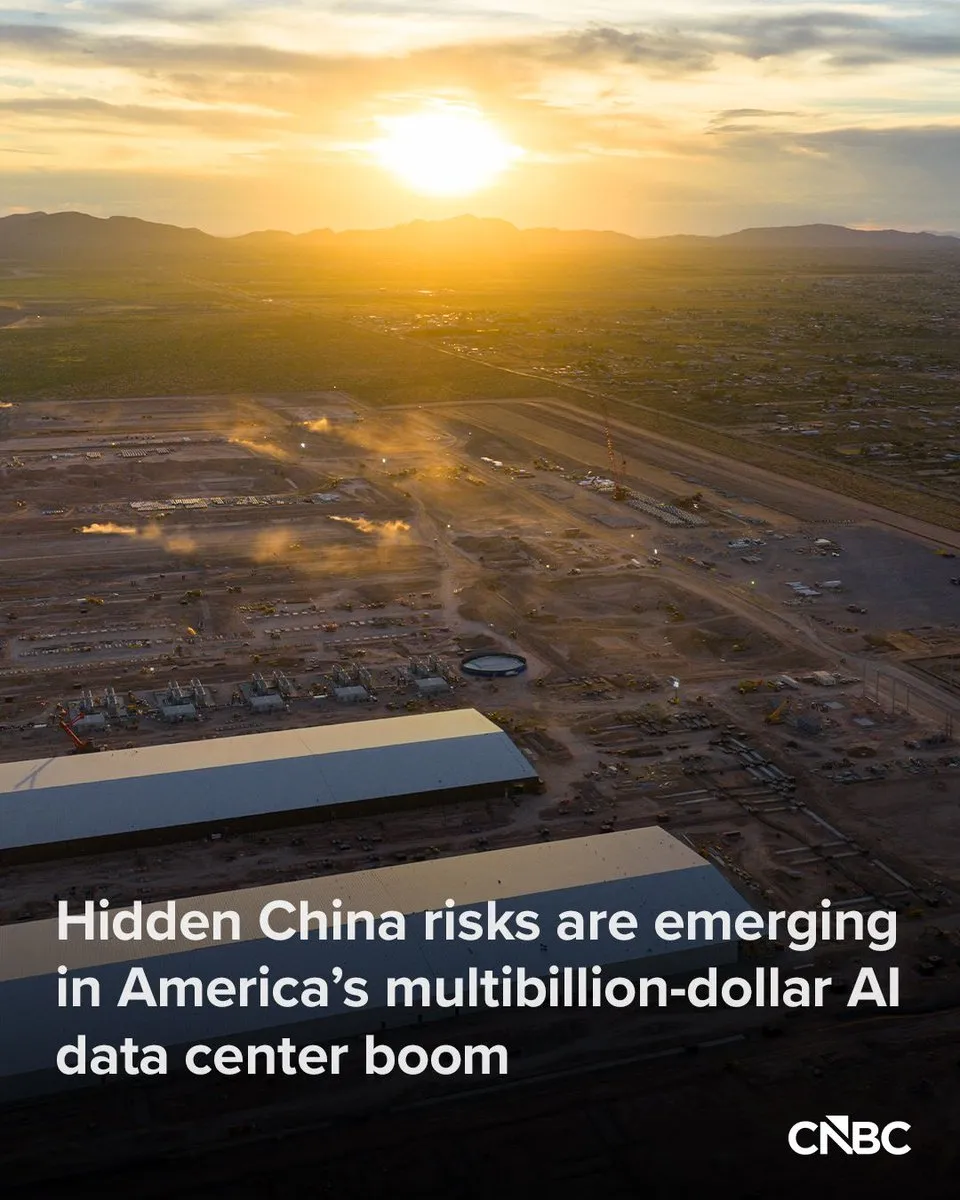
Prefabrication also changes where the value is created. When a data centre is built largely in a factory and shipped as modules, a greater share of the engineering, assembly and quality control happens in the manufacturer's home country rather than on the construction site. That can lower costs and speed up delivery, but it also concentrates more of the critical infrastructure's design and components in the hands of the supplier, which is exactly the kind of dependence US officials have become wary of. CNBC reported earlier this month that such hidden China risks were already emerging across America's multibillion-dollar AI data centre build-out.
Implications beyond the US
The debate has implications for other countries building AI infrastructure, including India, which is expanding data centre capacity rapidly and is seeking to position itself as a trusted alternative in global technology supply chains. As Washington tightens rules on Chinese equipment, suppliers from India and other partner countries could find new opportunities, particularly in electrical equipment, cables and construction services, provided they can match the scale and speed that AI developers demand.
The AI boom is often described as a contest over chips and models. The story of Chinese data centre suppliers shows that it is equally a contest over the physical infrastructure, from transformers to prefabricated halls, on which those chips run. Decisions made in Washington in the coming months will shape who builds that infrastructure, and at what cost.