
ColibriTD, a Paris-based quantum software startup, has raised €4 million in seed financing led by Earlybird Venture Capital, with additional participation from SymbiaVC and Medin VC. Earlybird had previously invested €1 million at the pre-seed stage, bringing its total disclosed backing of the company to at least €5 million as ColibriTD pushes to commercialise a distinctly pragmatic approach to an often speculative corner of deeptech investing.
The company builds software for multiphysics simulation using what it calls its H-DES hybrid differential equation solver, targeting the partial differential equations that underpin simulation problems across aerospace engineering, fluid mechanics, semiconductor design, energy systems and quantitative financial modelling. Rather than positioning itself as a quantum hardware company — the more capital-intensive and technically fraught segment of the quantum computing industry — ColibriTD has deliberately focused on the software layer that could benefit from quantum-inspired or quantum-assisted computation without requiring the company itself to build or operate quantum processors.
That hardware-agnostic strategy reflects a calculated bet on the current state of quantum computing commercialisation: rather than waiting for large-scale, fault-tolerant quantum computers to become widely available — a milestone many researchers believe remains years, if not decades, away — ColibriTD is building software designed to work across multiple emerging quantum architectures, potentially capturing commercial value from quantum-assisted computation before the underlying hardware fully matures.
The company says it has already completed projects spanning defence, aerospace, space, semiconductors, nuclear energy, automotive engineering and finance — an unusually broad customer base for a seed-stage startup, suggesting genuine near-term commercial demand for its simulation capabilities even in advance of large-scale quantum hardware availability. That breadth also reflects the genuinely cross-industry nature of the underlying mathematical problem ColibriTD is addressing: partial differential equations govern physical and financial systems across an enormous range of industries, making the addressable market for improved simulation capability correspondingly broad.
Quantum computing investment has often been characterised by long timelines to commercial return and correspondingly patient capital requirements, making ColibriTD's approach — generating near-term revenue through classical and hybrid simulation services while quantum hardware capability continues to mature — an increasingly common strategy among quantum-adjacent startups seeking to avoid the extended, capital-intensive development cycles associated with building quantum hardware directly.
If quantum computing does deliver commercial advantages before large-scale, fault-tolerant machines become widely available — an outcome some researchers believe increasingly plausible for narrow, well-defined problem classes rather than general-purpose computation — software companies like ColibriTD that have built translation layers capable of working across multiple competing quantum hardware architectures could occupy a particularly valuable position within the emerging quantum computing value chain, analogous to how software abstraction layers have historically captured significant value across previous computing hardware transitions.
Earlybird's continued investment across both the pre-seed and seed rounds signals sustained conviction in ColibriTD's technical roadmap and commercial trajectory, a pattern of investor continuity that can prove particularly valuable for deeptech startups navigating the technically complex, longer-than-average diligence processes that quantum-adjacent investments typically require from venture capital firms without deep in-house quantum computing expertise.
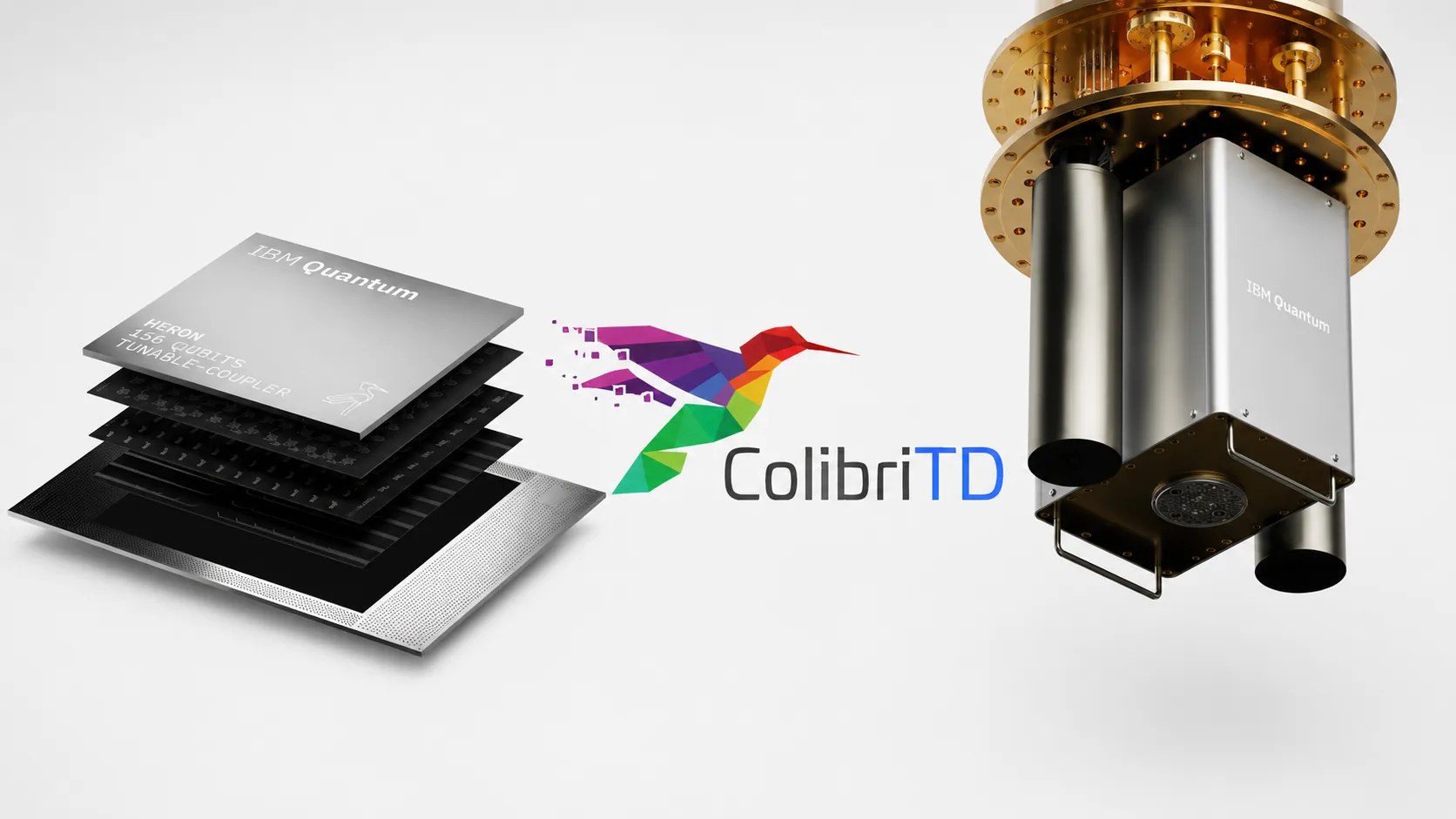
As ColibriTD deploys its fresh seed capital, the company's ability to convert its diverse existing project pipeline into recurring commercial contracts, rather than one-off consulting-style engagements, will likely determine whether it can build the kind of scalable software business that justifies further venture investment as quantum computing hardware — and the broader market's understanding of where genuine near-term quantum advantage lies — continues to mature.
France's broader quantum computing ecosystem has grown considerably in recent years, benefiting from sustained government investment through the country's national quantum strategy alongside a growing cluster of quantum hardware and software startups clustered around Paris and Saclay. ColibriTD's emergence from within this ecosystem reflects both the depth of quantum-adjacent technical talent the country has cultivated and the increasingly software-oriented commercial strategies many European quantum startups are pursuing, in contrast to the more hardware-centric approaches that have historically characterised much of the American quantum computing industry.
The distinction between quantum simulation software and quantum hardware development carries meaningful implications for capital efficiency and time-to-revenue. While quantum hardware companies typically require hundreds of millions of dollars and many years before achieving commercially meaningful qubit counts and error rates, software companies like ColibriTD can generate revenue immediately by applying quantum-inspired algorithms and classical-quantum hybrid computation to real industrial simulation problems, even using today's limited, noisy quantum hardware or purely classical computation where quantum advantage has not yet been definitively established.
SymbiaVC and Medin VC rounding out the seed round's investor base alongside Earlybird provides ColibriTD with a syndicate spanning both dedicated deeptech expertise and broader European venture capital networks, a combination that could prove valuable as the company seeks to expand its customer base across the diverse set of industries — from nuclear energy to automotive engineering — that its simulation technology already claims to serve.
Looking beyond its current seed-stage funding, ColibriTD's longer-term commercial trajectory will likely be shaped by how quickly genuine quantum hardware advances translate into measurable computational advantages for the specific classes of industrial simulation problems the company targets. Should meaningful quantum advantage materialise for even a narrow subset of these applications within the next several years, ColibriTD's hardware-agnostic software layer would be well positioned to capture disproportionate commercial value, having already built customer relationships and domain expertise well ahead of that inflection point.
The company's cross-sector customer base also provides a useful hedge against the inherent uncertainty of quantum computing's commercialisation timeline: revenue diversified across defence, aerospace, semiconductors, nuclear energy, automotive engineering and finance means ColibriTD is not dependent on any single industry's adoption curve, a structural advantage that could prove increasingly valuable should quantum advantage materialise unevenly across different problem domains rather than arriving as a single, industry-wide breakthrough moment.
France's Saclay technology cluster, where much of the country's quantum research talent is concentrated, provides ColibriTD with proximity to both academic research institutions and a growing density of quantum-adjacent startups, a geographic advantage that has historically helped deeptech companies recruit specialised talent more efficiently than founders operating in isolation from established research ecosystems.


