India's businesses began November facing higher fuel bills once again, as state-run fuel retailers raised the prices of commercial cooking gas and jet fuel in their monthly revision, while keeping household cooking gas unchanged.
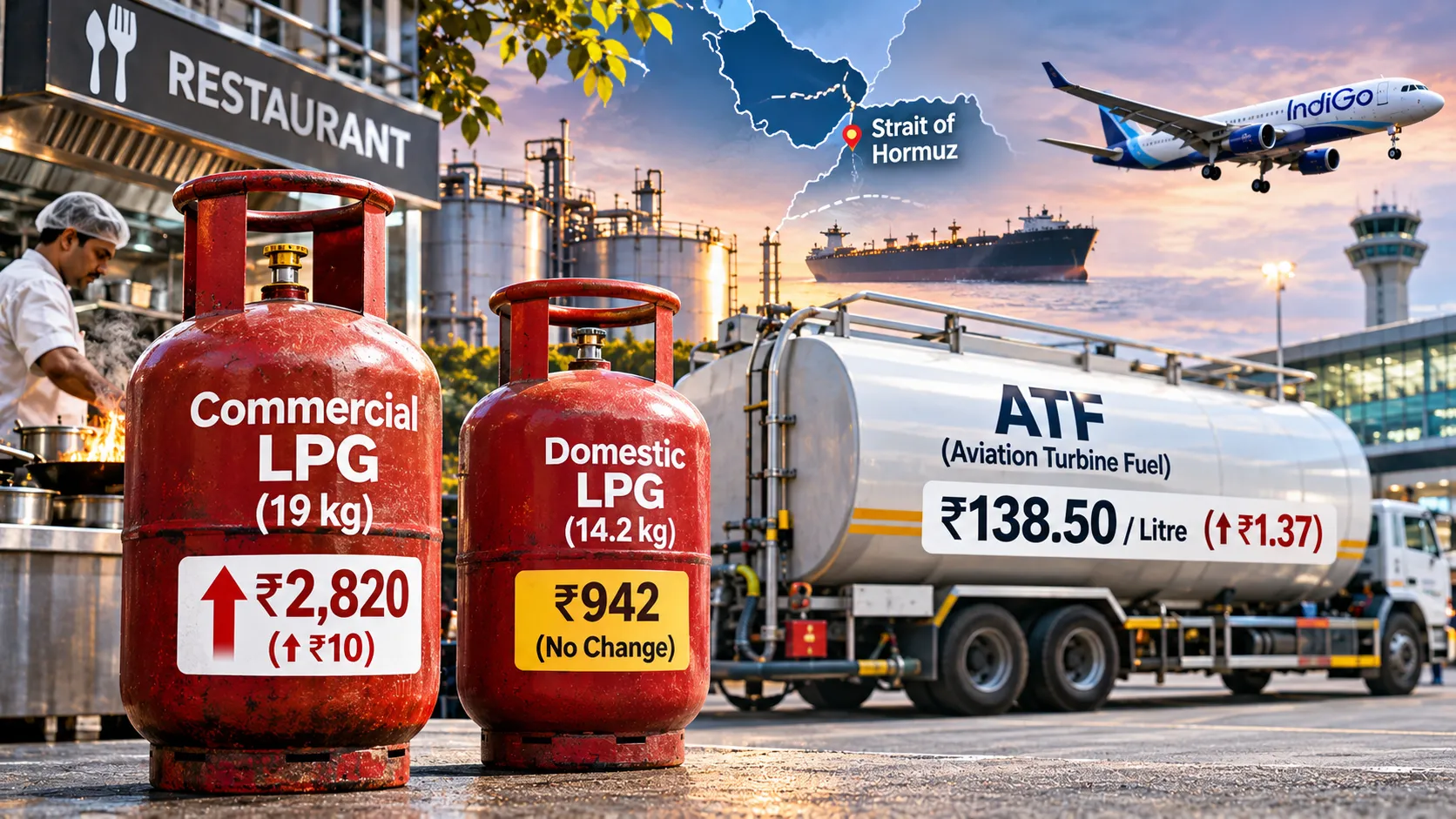
The price of a 19-kilogram commercial LPG cylinder rose by ₹10 to ₹2,820, and the price of aviation turbine fuel (ATF) rose by ₹1.37 to ₹138.50 a litre, with effect from Sunday, November 1, according to BW Businessworld. It is the third consecutive monthly increase for commercial LPG and the fourth for ATF.
The price of a 14.2-kilogram domestic LPG cylinder, used by households for cooking, remained unchanged at ₹942, according to the report. Petrol and diesel prices have been unchanged since increases of about ₹7.50 a litre in May.
Why prices are rising
The increases reflect geopolitical tensions and disruption to shipping through the Strait of Hormuz, which affect LPG supply and freight costs, along with higher shipping risk premiums, volatile international crude prices and elevated Saudi Aramco contract prices, according to BW Businessworld.
India imports a large share of its LPG, much of it from the Middle East. Saudi Aramco's monthly contract price for propane and butane, the components of LPG, serves as a benchmark for Indian import costs. When that price rises, Indian oil marketing companies adjust commercial LPG prices accordingly.
The Strait of Hormuz, through which a large share of the world's oil and gas exports pass, has been disrupted by the conflict involving Iran, raising costs and creating uncertainty for importers.
A volatile year for LPG
Commercial LPG prices have been highly volatile in 2026. Between February and June, the price of a commercial cylinder rose by ₹1,373, from ₹1,740.50 to ₹3,113.50, as the conflict escalated, according to BW Businessworld. Prices then fell by ₹183.50 in July and ₹192 in August as markets stabilised, before rising again by ₹9.50 in September, ₹62.50 in October and ₹10 in November.
The relatively small increase in November suggests that price pressures may be moderating, but prices remain far above levels at the start of the year.
Jet fuel climbs again
ATF prices have risen for four consecutive months, by ₹5 a litre in August, ₹6.28 in September, ₹16 in October and ₹1.37 in November, according to the report. Fuel is the largest single cost for airlines, accounting for roughly 38% of IndiGo's total expenses in the September quarter.
IndiGo, India's largest airline, reported last week that its fuel bill rose 67.2% in the July-September quarter, although higher fares helped it narrow its loss. Chief executive Willie Walsh warned that high jet fuel prices could persist through the rest of the financial year.
Impact on businesses
Commercial LPG is used by restaurants, hotels, dhabas, caterers, sweet shops and other businesses that cook in large volumes. Higher LPG costs squeeze their margins, and many pass on at least part of the increase to customers through higher menu prices. For small food businesses operating on thin margins, repeated price increases can be particularly painful.
The festive and wedding seasons, which bring higher demand for catering and restaurant services, mean that many businesses will be using more gas just as prices rise.
Impact on travellers
Higher jet fuel costs feed through to air fares. Airlines adjust fares and fuel surcharges based on costs and demand. With the festive season and winter holidays approaching, travellers can expect fares to remain elevated. IndiGo's passenger yield rose 34.3% in the September quarter, reflecting higher fares.
Indian airlines have long argued that taxes on ATF, particularly state value-added taxes, make jet fuel in India among the most expensive in the world, and have called for ATF to be brought under GST.
Protecting households
The government has kept household LPG prices unchanged to protect families, particularly lower-income households that received connections under the Pradhan Mantri Ujjwala Yojana. Oil marketing companies incur under-recoveries on domestic LPG, which the government compensates in part. Indian Oil recognised ₹7,243 crore of such compensation in the first half of the financial year.
The cost of this protection weighs on the government's finances, contributing to higher subsidy spending.
The inflation picture
Fuel price increases contribute to inflation through higher costs for transport, food services and goods. While the November increases are modest, the cumulative effect of this year's energy shock has pushed up prices across the economy. The Reserve Bank of India will monitor these effects as it considers monetary policy.
Other LPG products
A 5-kilogram Free Trade LPG cylinder costs ₹1,903 for a new connection and ₹782 for a refill, according to BW Businessworld. These smaller cylinders are popular with migrant workers, students and small businesses that may not have permanent addresses required for domestic connections.
How prices are set
Oil marketing companies, led by Indian Oil, Bharat Petroleum and Hindustan Petroleum, revise commercial LPG and ATF prices on the first day of each month, based on international benchmark prices, exchange rates and freight costs over the previous month. Domestic LPG prices are revised less frequently and are subject to government decisions, given their importance to household budgets.
Prices vary across cities because of differences in state taxes and transport costs. Metro cities such as Delhi, Mumbai, Kolkata and Chennai typically report slightly different prices.
The hospitality sector's response
India's restaurant and hospitality industry, which employs millions of people, has been particularly affected by this year's LPG price swings. Industry associations have called for relief measures, including lower taxes on commercial LPG. Some businesses have explored alternatives, such as piped natural gas, which is available in many cities and has generally been more stable in price, or electric induction cooking for certain applications.
What comes next
Fuel prices will be revised again on December 1. The direction of prices will depend on international energy markets, the course of the Middle East conflict and shipping conditions through the Strait of Hormuz. OPEC+ kept its December output targets unchanged on November 1, and its November 29 meeting on 2027 quotas will be watched closely for its effect on oil prices. For Indian businesses, managing energy costs is likely to remain a priority for months to come.
Consumers and businesses will be watching the December revision closely, hoping that easing pressures in global markets will finally bring some relief after a year in which energy prices have repeatedly squeezed household budgets and business margins across the country.