CoreWeave, the cloud computing company that rents out vast clusters of Nvidia processors to artificial intelligence developers, delivered the kind of results investors had been waiting for, sending its shares sharply higher and lifting technology stocks across Wall Street.
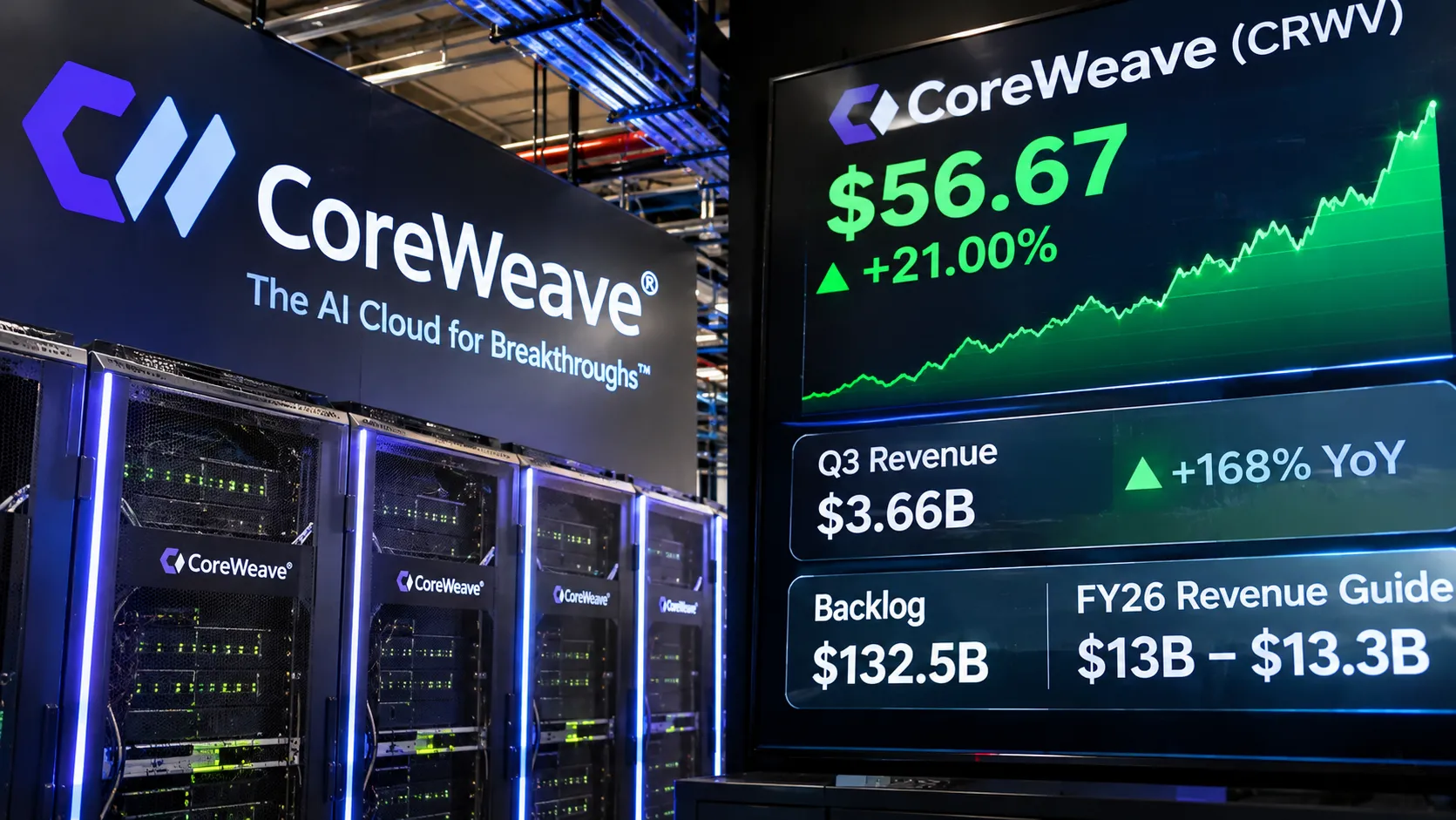
CoreWeave shares rose about 21% in morning trading on Wednesday, November 11, according to TheStreet, after the company reported third-quarter results that beat expectations and raised its full-year outlook. The stock had jumped about 16% to $56.67 in overnight trading, according to Newscord, from a close of $48.73 on Tuesday.
The rally helped push the Nasdaq Composite up 1.6% and the S&P 500 up 1.31% on Wednesday, according to TheStreet, as investors regained some confidence in the AI trade after weeks of selling.
The numbers
CoreWeave's third-quarter revenue rose 168% year-on-year to $3.66 billion, according to Newscord. Its GAAP net loss was $709 million, with quarterly interest expense of $846 million, highlighting the heavy debt burden of building AI infrastructure.
The company raised its 2026 revenue guidance to $13 billion to $13.3 billion, and lifted its adjusted operating income guidance by about 26% at the midpoint, to $1.275 billion to $1.375 billion, according to Newscord. Analysts had expected about $1.07 billion, TheStreet reported.
CoreWeave's contracted backlog, which represents revenue it expects to earn from signed contracts, rose to $132.5 billion from about $104 billion at the end of June. The company said it expects adjusted net income to turn positive in the first half of 2028.
Pricing power
Perhaps the most striking detail was CoreWeave's pricing. The company said prices rose about 25% in July and another 10% later in the quarter, according to Newscord. Short-term capacity is selling at more than $40 million per megawatt annually, while four- and five-year contracts are priced at $20 million to $25 million per megawatt.
Rising prices suggest that demand for AI computing capacity continues to outstrip supply, despite fears of an AI investment bubble. CoreWeave also expects about $9 billion in customer prepayments and deposits over the next three months, including more than $3 billion tied to signing new contracts.
The debt question
CoreWeave's rapid expansion has been funded heavily with debt, making the company a lightning rod for concerns about the financing of the AI boom. Some of its bonds have recently yielded more than 16%, according to TheStreet, a sign of investor worry about its leverage.
Chief executive Michael Intrator sought to address those concerns directly. "We will not use the unsecured debt market to fund our business at current yields, nor do we need to," he said, according to Newscord. The company closed a $2.6 billion delayed-draw term loan facility and expects to raise less than $5 billion of new parent-level capital through 2027.
The pledge to avoid expensive unsecured debt "alleviated primary market concerns," according to TradingKey, a financial analysis website.
The sceptics
Not everyone is convinced. Short seller Jim Chanos has warned of weak returns on capital at CoreWeave, according to Benzinga, arguing that the company's pre-tax return on invested capital is low relative to the vast sums it is spending.
TechCrunch noted that CoreWeave's bets "only hold if today's demand and pricing power continue." If AI demand slows or computing capacity becomes more abundant, prices could fall, making it harder for the company to service its debt.
Analysts split on targets
Citi raised its price target on CoreWeave to $149 from $128 and kept a buy rating, according to Newscord, implying substantial upside from the previous close. Jefferies, however, cut its target to $90 from $150 while keeping a buy rating, calling the quarter a "nice beat-and-raise."