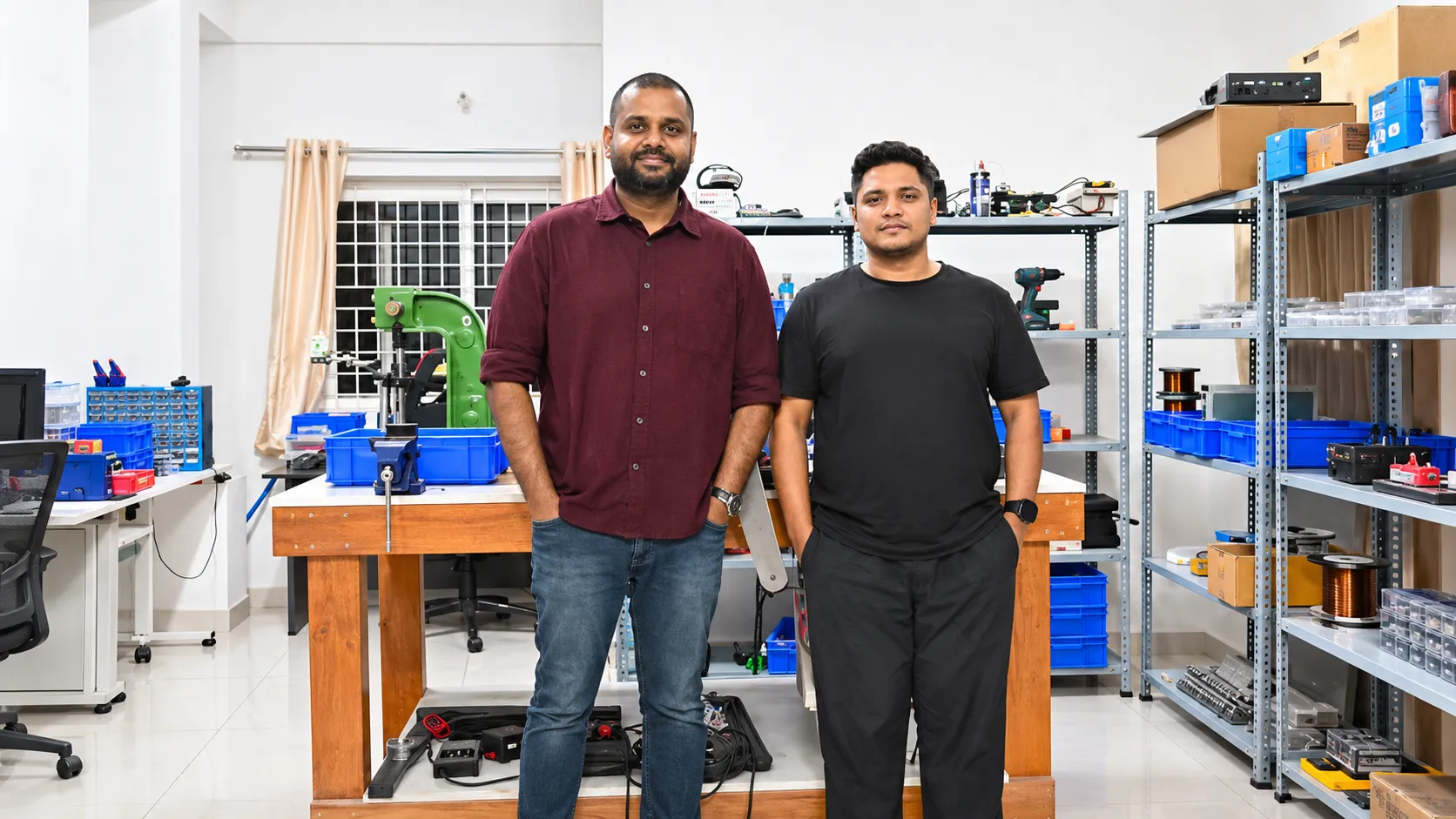
The global race to build humanoid robots has largely been led by companies in the United States and China. An Indian startup is betting that the country can build some of the most critical components itself.
Cosine Robots, a Bengaluru-based robotics startup, has raised ₹22.36 crore in a funding round led by Avaana Capital, Entrackr reported on Tuesday, November 24. WEH Ventures also participated, according to funding data compiled by Stopdown.
What Cosine builds
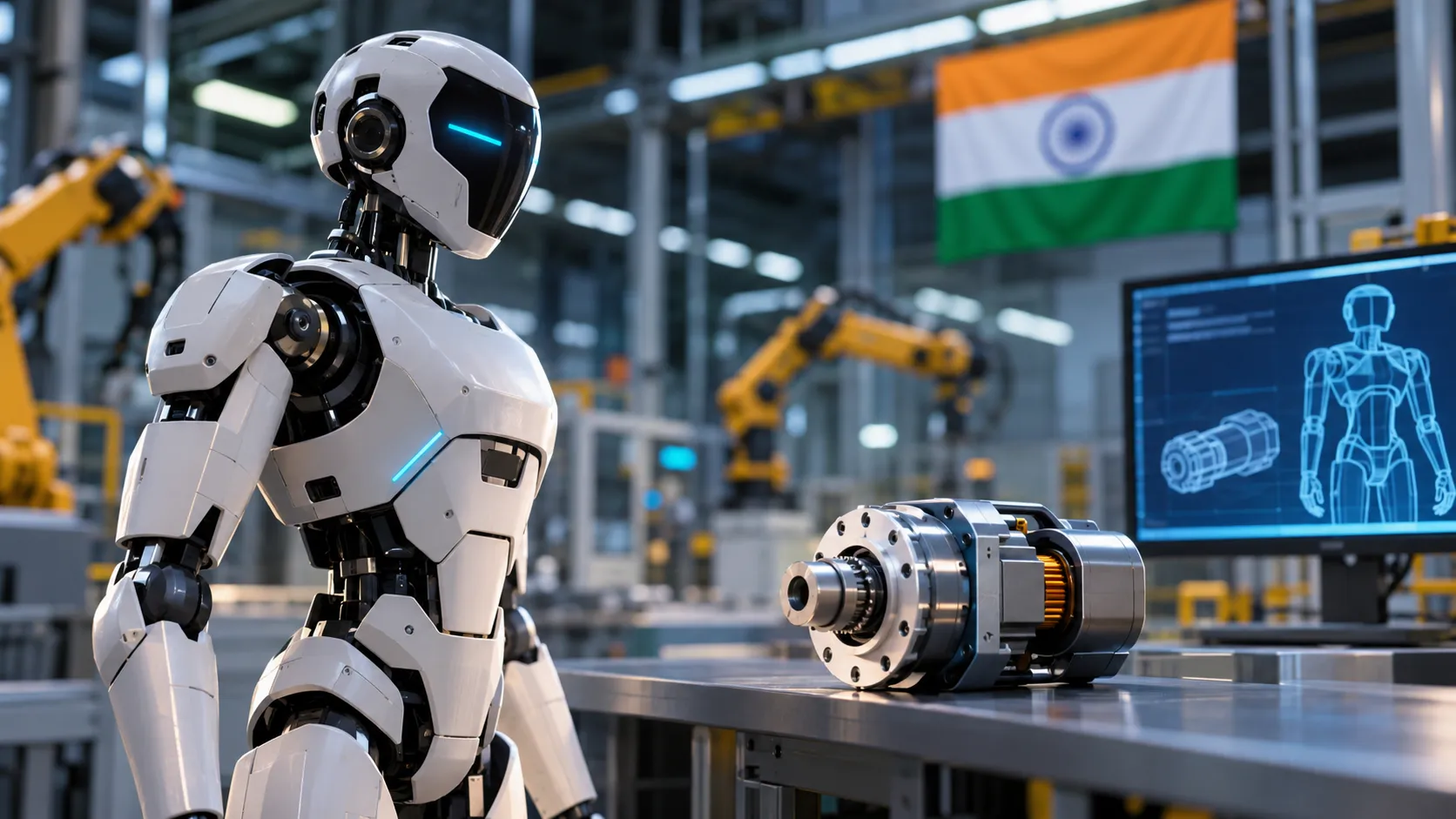
Cosine Robots is developing robotic actuators, the joints that allow robots to move, as well as affordable humanoid robots intended for use in Indian factories and homes, according to earlier reports.
Actuators combine electric motors, gearboxes, sensors and control electronics to produce precise, controlled movement. They are among the most important and expensive components of any robot. A humanoid robot may require dozens of actuators to move its arms, legs, hands and torso.
The quality, cost and reliability of actuators largely determine how capable and affordable a robot can be. Building them in India could reduce costs and dependence on imports.
The humanoid robot race
Humanoid robots, machines designed with a human-like body shape, have attracted enormous investment in recent years. Companies such as Tesla, Figure AI, Agility Robotics and Boston Dynamics in the United States, and Unitree, UBTech and several others in China, are developing humanoids for use in factories, warehouses and eventually homes.
The appeal of humanoids is that they can operate in environments designed for people, using the same tools and spaces, without the need to redesign factories or homes. Advances in artificial intelligence, particularly models that allow robots to learn tasks from demonstrations, have accelerated progress.
China has emerged as a leader in humanoid manufacturing, benefiting from its deep supply chains for motors, batteries, electronics and precision components, as well as government support. Chinese companies have dramatically reduced the cost of humanoid robots.
Why components matter
Much of the value in robotics lies in the components. Countries that can manufacture actuators, sensors, batteries and control systems at scale have a strategic advantage, because these parts are needed across many types of robots, from industrial arms to drones and humanoids.
India currently imports most robotic components. Startups like Cosine aim to build domestic capabilities, which could support a broader robotics industry and reduce vulnerability to supply chain disruptions.
The investors
Avaana Capital is an Indian venture capital firm that invests in climate, sustainability and deep technology companies. It recently led a ₹67 crore Series A round in appliance maker Mekr Technologies. WEH Ventures is an early-stage venture capital firm that backs technology startups in India.
Robotics in India
India's robotics ecosystem is growing, with startups working on industrial automation, warehouse robots, agricultural robots, surgical robots, drones and service robots. Bengaluru, Pune, Chennai and Hyderabad have emerged as centres of robotics development, supported by engineering talent, research institutions and manufacturing clusters.
Recent funding rounds in Indian robotics include Anscer Robotics, which raised capital to automate industrial operations, and CynLr, which builds vision-based robotic systems. Earlier this month, Bengaluru-based Humyn Labs also raised funding to supply training data for robotics companies.
Why India needs automation
India's manufacturing sector is growing, supported by government programmes such as Make in India and production-linked incentive schemes. As factories scale up, demand for automation is rising, particularly for tasks that are repetitive, dangerous or require high precision.
At the same time, India has a large workforce, and automation must be balanced with employment considerations. Many experts argue that affordable robots designed for Indian conditions could help small and medium manufacturers improve productivity and quality, making them more competitive in global markets.
The challenges
Building robotics hardware is difficult and capital-intensive. Startups must develop precise mechanical and electronic components, manufacture them reliably at scale and compete with established suppliers, particularly from China, which offer low prices. Hardware development cycles are longer and more expensive than software.
Cosine will need to demonstrate that its actuators can match global standards for performance and reliability at competitive costs.
The policy opportunity
The Indian government has identified robotics and advanced manufacturing as strategic areas, and policy support for deep technology startups has grown, including research funding and programmes to promote domestic component manufacturing. Startups building critical components could benefit from these initiatives.
What it means for the diaspora
Many Indian engineers working in robotics and AI abroad, including at leading companies and universities in the United States and Europe, represent potential talent, mentors and investors for Indian robotics startups. The growth of domestic robotics companies creates opportunities for diaspora professionals to return or collaborate.
The founders' challenge
Robotics startups must combine expertise in mechanical engineering, electronics, software and AI, making team building particularly challenging. Founders often need to attract experienced engineers from global companies and research institutions, competing with well-funded rivals abroad.
Access to manufacturing partners and testing facilities in India is also critical for moving from prototypes to production.
Use cases in Indian factories
Affordable robots could help Indian manufacturers with tasks such as material handling, assembly, packaging and quality inspection. Small and medium enterprises, which form the backbone of Indian manufacturing, have often found industrial robots too expensive.
Lower-cost robots designed for local conditions could make automation accessible to a much larger number of factories.
The supply chain question
Building actuators requires a supply chain for precision motors, gears, bearings, sensors and electronics. Many of these components are currently sourced from China, Japan, Germany and Taiwan. Developing domestic suppliers will take time and investment.
Startups like Cosine may initially rely on imported parts while designing their own systems, gradually increasing local content as the Indian ecosystem matures.
Government incentives for electronics and component manufacturing could help accelerate this process, as they have done for smartphones and other electronics in recent years.
Investor appetite for robotics
Global investors have poured billions of dollars into robotics startups in 2026, especially those working on humanoids and the AI models that control them. Indian robotics startups have raised smaller sums, but the number of deals has grown as investors look for opportunities in hardware and physical AI.
What comes next
Cosine Robots is expected to use the funding to develop its actuators and humanoid platforms, expand its engineering team and begin pilots with customers. Its progress will be watched as a test of whether India can build competitive robotics hardware at home.