
CtrlS, one of India's largest independent data centre operators, has raised Rs 250 crore from Zerodha co-founder Nikhil Kamath and entrepreneur Sreeram Reddy Vanga, funding the company says will underwrite its continued build-out of computing infrastructure across the country. The investment lands at a moment when demand for data centre capacity in India is being reshaped by the rapid scale-up of artificial intelligence workloads, which require far denser power and cooling infrastructure than traditional enterprise hosting.
For Kamath, the CtrlS investment extends a pattern of personal and Rainmatter-linked bets on India's digital and physical infrastructure that sit adjacent to, but distinct from, his day job running Zerodha's brokerage and wealth businesses. Kamath has increasingly positioned himself as an active angel and early-stage backer of Indian infrastructure, climate and deep-tech companies through his personal capital and the Rainmatter platform, and the CtrlS round fits that broader thesis: as AI adoption accelerates across Indian enterprises, the physical layer of servers, power and cooling that underpins every model deployment is itself becoming a capital-intensive growth category.
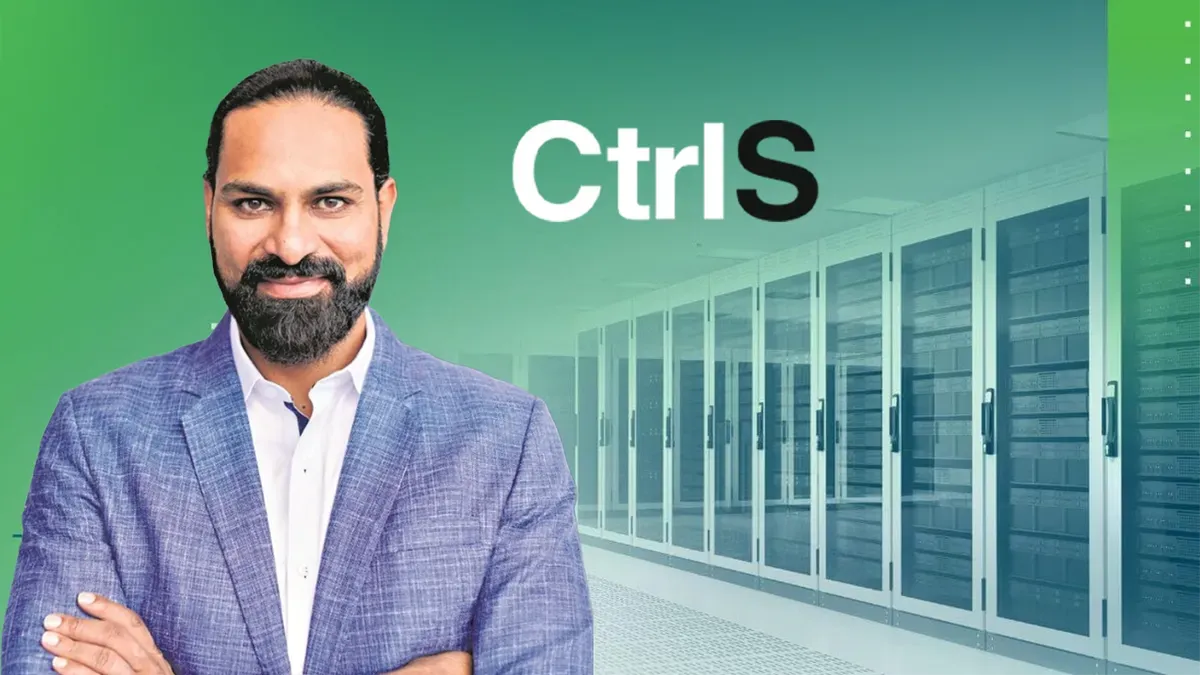
CtrlS has built its position over more than a decade as a rated-4, tier-certified data centre operator, a classification that signals the highest level of infrastructure redundancy and uptime guarantees demanded by banks, government agencies and large enterprises. The company's facilities span multiple Indian cities, and it has previously positioned itself competitively against both domestic operators and the Indian arms of global hyperscale data centre players expanding into the country.
The Rs 250 crore raise arrives during a broader wave of capital flowing into India's digital infrastructure layer through the second half of 2026, as venture and private capital investors increasingly differentiate between application-layer AI startups — many of which face intensifying competition and thinning margins — and the infrastructure providers whose revenue is more directly tied to the sheer volume of compute being deployed, regardless of which application layer ultimately wins. Analysts tracking the sector have noted that data centre capacity in India remains structurally undersupplied relative to projected AI and cloud demand over the next five years, a gap that has drawn both domestic capital, such as this round, and larger sovereign and hyperscaler-backed investments.
Terms of the transaction, including the resulting stake sizes for Kamath and Vanga or any post-money valuation figure for CtrlS, were not disclosed. The deal nonetheless adds to a week of active Indian infrastructure and fintech dealmaking, and reinforces a theme likely to persist through the remainder of 2026: as global AI capital increasingly chases chips, models and infrastructure in roughly equal measure, India's data centre operators are emerging as a distinct, comparatively under-covered category for investors seeking exposure to the AI buildout without taking on model-layer competitive risk.