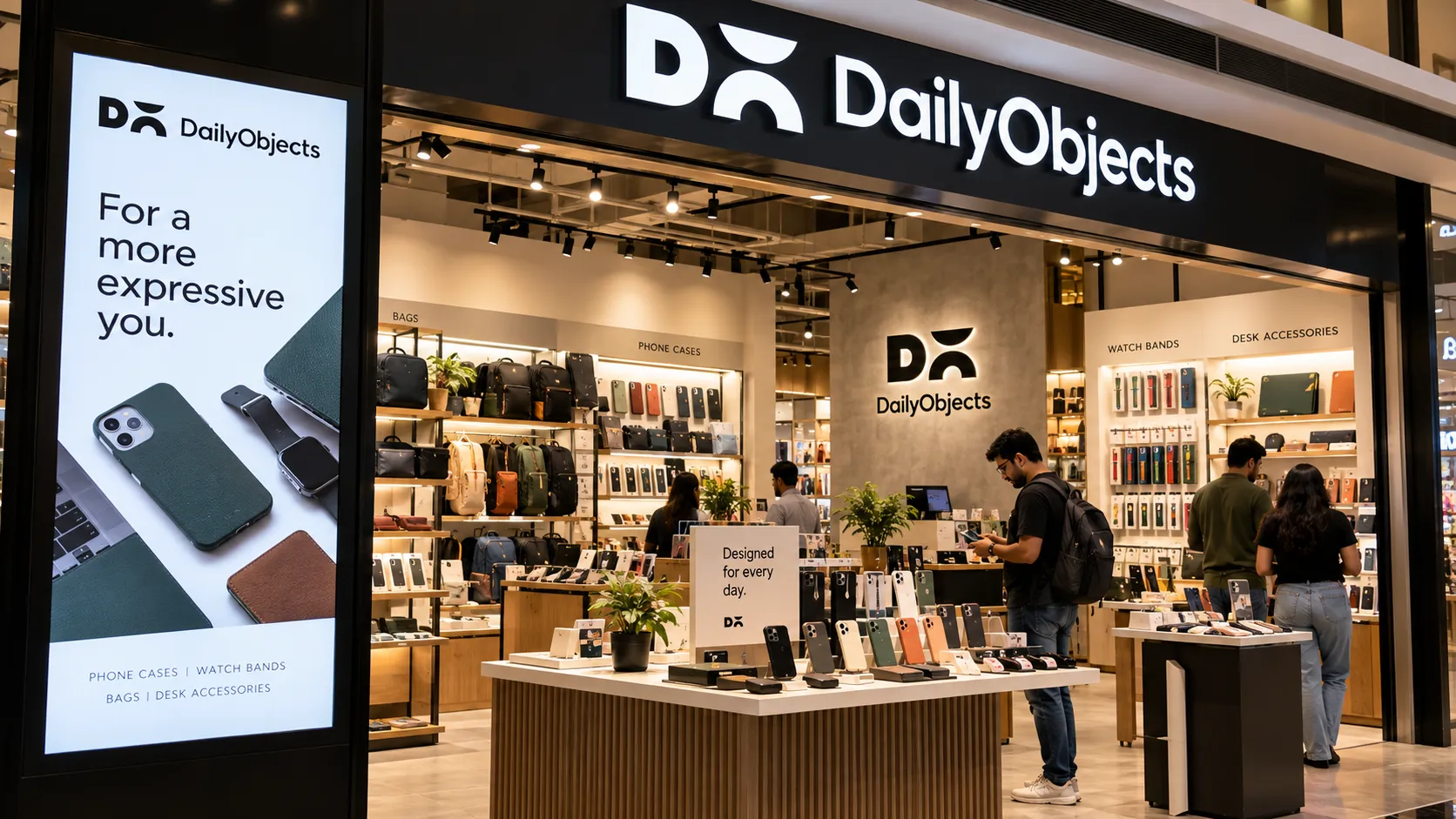
NEW DELHI, Oct 8 DailyObjects, the Indian direct-to-consumer brand known for its phone cases, watch bands, bags and desk accessories, has raised ₹332 crore (about $34.3 million) in a Series C round that values the company at ₹1,050 crore (roughly $108.4 million), offering a rare clean exit to one of its early institutional investors.
The round was co-led by Xponentia Capital Partners, Anicut Capital and Axiom Asia Private Capital and combined fresh primary capital with a secondary sale of existing shares. As part of that secondary component, Roots Ventures partially exited its holding, booking what the firm described as an 18X return on its investment.
The transaction stands out in a funding market where Indian consumer brands have found it harder to raise growth capital than they did during the 2021 boom, and where liquidity for early backers has often been limited to the small number of companies that reach the public markets.
Key facts at a glance
• Round size: ₹332 crore (about $34.3 million), Series C
• Valuation: ₹1,050 crore (about $108.4 million)
• Co-leads: Xponentia Capital Partners, Anicut Capital, Axiom Asia Private Capital
• Structure: primary capital plus secondary sale of existing shares
• Partial exit: Roots Ventures, at an 18X return
• Roots' history: $2 million in February 2022, follow-on in the $10 million Series B (2024)
• Plans: 150 exclusive brand outlets in five years, R&D, brand building, international expansion
A textbook early-stage outcome
Roots Ventures first invested $2 million in DailyObjects in February 2022 and followed on when the company raised a $10 million Series B in 2024. To generate an 18-fold return on that early cheque in under five years, the value of the business had to compound rapidly through a period when many consumer start-ups were cutting costs, shrinking marketing budgets or being folded into larger roll-up platforms.
For India's venture ecosystem, outcomes such as this matter well beyond a single fund's performance. Limited partners, including global endowments and family offices, have been pressing Indian managers for distributions rather than paper markups. A secondary sale inside a priced growth round allows an early investor to return cash while the company continues to grow privately, and it gives incoming investors a larger stake than primary capital alone would have bought.
Where the money goes
DailyObjects said it will use the new capital to build out a network of 150 exclusive brand outlets over the next five years, step up investment in research and development, strengthen its brand, and push further into international markets.
The emphasis on physical retail reflects a broader shift among Indian D2C companies. Having built audiences online, many have found that customer acquisition costs on marketplaces and social platforms rise steeply as they scale. Physical stores, particularly in high-footfall malls and premium high streets, give brands control over presentation, allow shoppers to handle products before buying, and can lift online sales in the same catchment area.
For a company whose products — phone cases, watch bands, laptop sleeves, backpacks, wallets and wireless chargers — are tactile and design-led, the in-store experience is a natural extension of the brand. It also helps a premium accessories label separate itself from the large volume of low-priced, unbranded alternatives that dominate online marketplaces.
The investor line-up