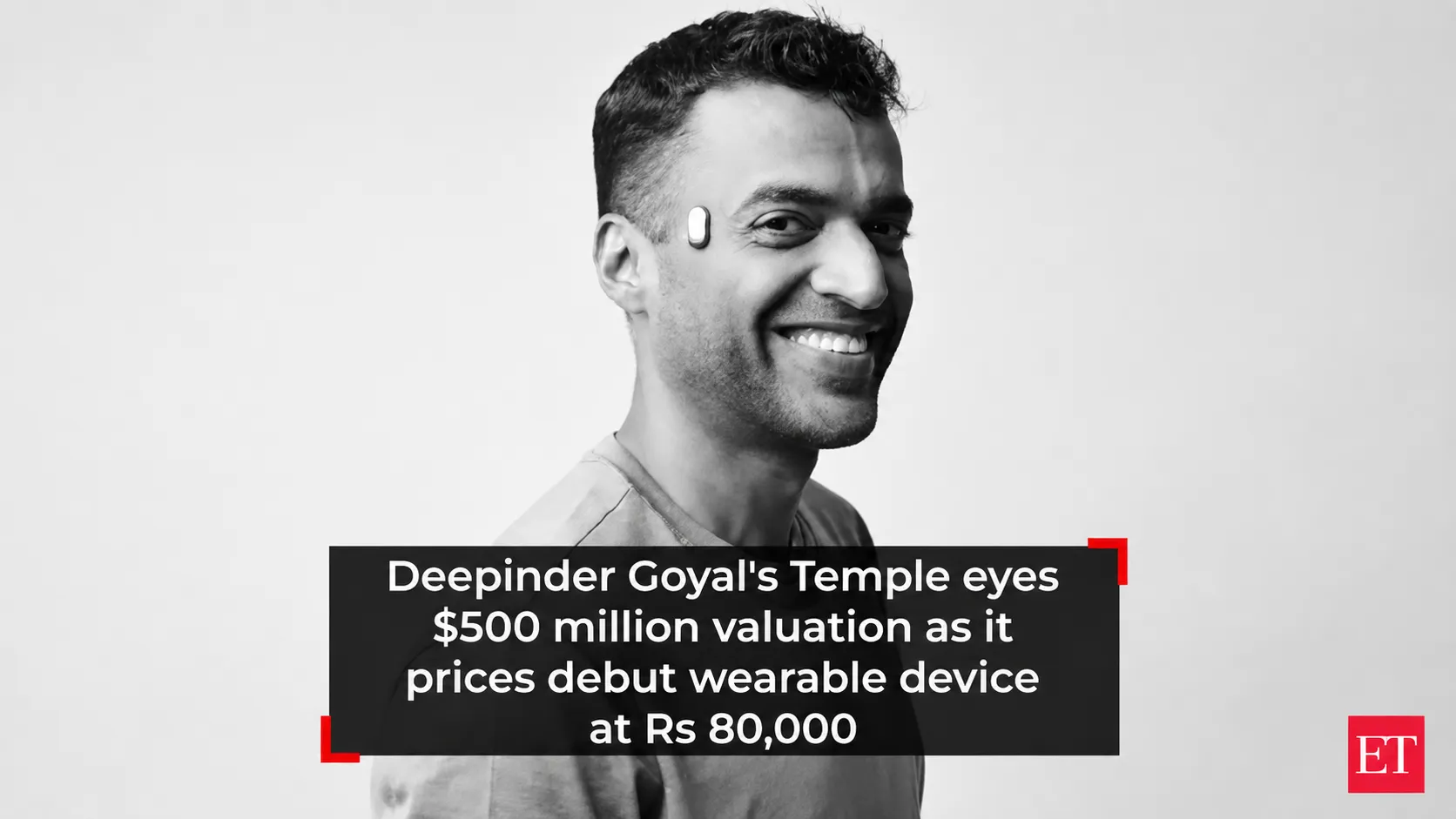
Temple, the health-technology venture founded by Zomato and Eternal co-founder Deepinder Goyal, is reportedly in the market for a new funding round that would value the company at approximately $500 million — a more than two-and-a-half-fold jump from the $190 million valuation at which it raised its debut round barely six months ago. The reported target values comes as Temple prepares to move from prototype to commercial product, having recently unveiled a smaller, refined version of its forehead-worn wearable ahead of a planned launch.
Goyal stepped away from the chief executive's chair at Eternal, the renamed parent of food-delivery giant Zomato, earlier this year, describing the move as a deliberate pivot toward what he called higher-risk exploration and experimentation. Temple was the first tangible outcome of that pivot: a wearable device, worn near the temple rather than the wrist, designed to continuously monitor cerebral blood flow, oxygenation and markers of cognitive stress rather than the heart-rate and step-count metrics that dominate the existing fitness-wearable category.
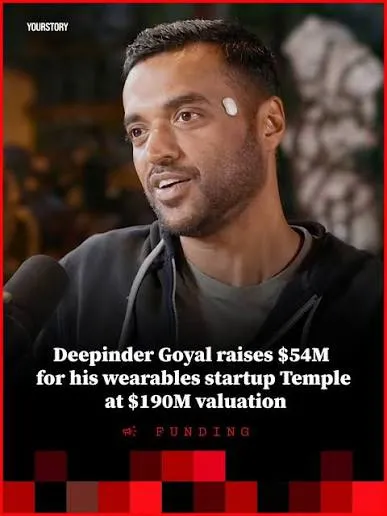
The company's initial seed round, closed in February at a post-money valuation of roughly $190 million, brought in $54 million from a mix of institutional and individual backers, including Steadview Capital, Peak XV Partners, InfoEdge Ventures and Dharana Capital, alongside more than 80 individual investors and over 30 Temple employees who invested alongside the professional funds. That level of insider participation was seen at the time as an unusually strong signal of internal conviction for a company still operating largely in stealth.
Since then, Temple's valuation trajectory has moved quickly. In July, the company doubled its valuation to $375 million through a secondary share sale that also funded its first employee stock ownership plan liquidity programme, allowing early employees to cash out a portion of their vested equity ahead of any formal fundraising. Goyal, in a memo to staff at the time, said the company was already seeing external investor interest at a $500 million valuation and wanted some of that value to reach the people who had helped build it before the next round closed.