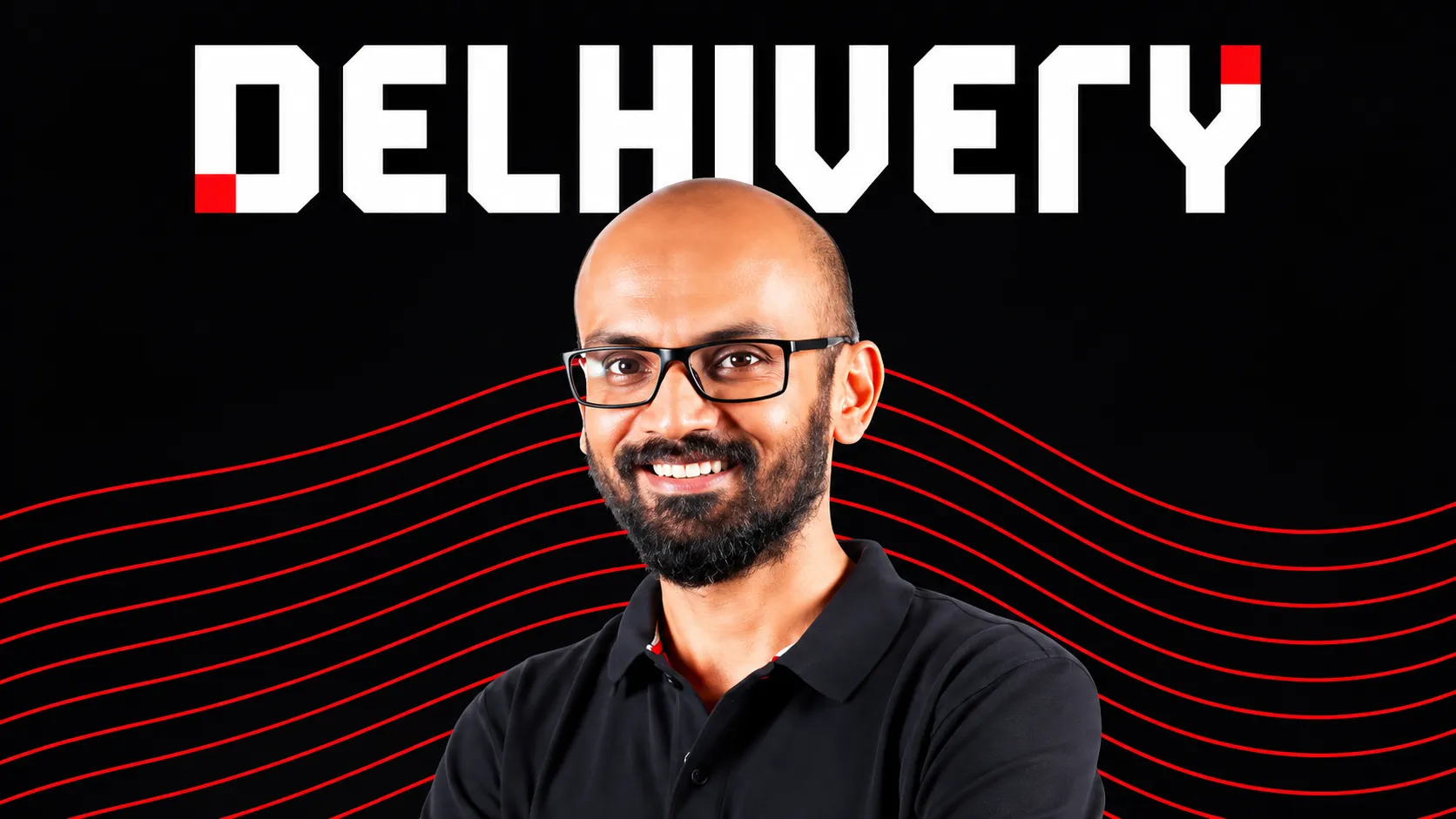
Shares of Delhivery surged on Monday, November 2, after India's largest listed logistics company reported a return to profit and its highest-ever quarterly revenue, easing investor concerns about margins that had weighed on the stock for months.
Delhivery posted a consolidated profit after tax of ₹40.6 crore for the July-September quarter, the second quarter of the financial year 2026-27, compared with a loss of ₹50.3 crore a year earlier, according to Business Standard. Revenue from operations rose 20% to ₹3,066.3 crore from ₹2,559.3 crore, crossing the ₹3,000 crore mark for the first time.
The stock opened sharply higher at ₹400 on the National Stock Exchange and climbed to an intraday high of ₹419.85, a gain of about 9%, according to Business Standard. By mid-morning, around 7 million shares had changed hands, with a traded value of about ₹272 crore. The broader market was also firm, with the Nifty 50 up 1.16% at 23,321.
Margins expand
The headline improvement came from operating profitability. Delhivery's EBITDA was about ₹205 crore, roughly three times the level a year earlier, according to Maritime Gateway, with the EBITDA margin rising to 6.7% from 2.7%. The company's net margin was 1.3%.
Delhivery ended the quarter with a cash balance of ₹4,676 crore, giving it substantial financial flexibility to invest in its network and technology.
Parcel volumes surge
The core express parcel business, which delivers packages for e-commerce companies and direct-to-consumer brands, handled 325 million shipments in the quarter, up 32% from a year earlier. Express parcel revenue rose 22%, according to the company's disclosures reported by Business Standard.
The gap between shipment growth and revenue growth points to lower average revenue per shipment. Maritime Gateway calculated that average revenue per express shipment fell about 7.6%, reflecting factors such as lighter parcels, pricing competition and a changing mix of customers.
The part truck load (PTL) business, which moves smaller freight consignments for businesses, carried 545,000 tonnes, up 14% from a year earlier, with revenue rising 23%. Average revenue per tonne in PTL rose about 7.9%, according to Maritime Gateway, suggesting improved pricing in that segment.
Festive readiness and AI
Delhivery said its network was well prepared for the festive season, when e-commerce volumes surge. "Network service levels heading into the festive season have been the best we have recorded," the company's management said, according to Business Standard. Management added that the team has "strong momentum heading into the second half of FY27."
The company said its investments in artificial intelligence were beginning to pay off in areas including sales productivity, customer onboarding, claims and dispute handling, and fraud detection. Delhivery also said it has begun production of customised autonomous vehicles for moving goods within its facilities, according to Maritime Gateway, part of a broader push to automate its sorting centres and warehouses.
The company flagged several cost pressures, including rising fuel prices, labour availability constraints and statutory changes.
Analysts' view
Jefferies maintained its "buy" rating on Delhivery but cut its target price to ₹470 from ₹540, based on 20 times estimated EV/EBITDA for September 2028, down from 22 times, according to Business Standard. The brokerage raised its earnings per share estimate for FY27 by 21% while cutting estimates for FY28 and FY29 by 8% to 10%.
Jefferies said Delhivery's EBITDA and margins beat its expectations despite a festive season that fell later than last year. It expects the stock's 30% underperformance relative to peers since the June quarter to reverse as margin pressures ease.

The journey to profitability
Delhivery, founded in 2011 in Gurugram, listed on Indian stock exchanges in May 2022 as one of the most prominent new-age technology companies to go public. Like many of its peers, it initially struggled with losses as it invested heavily in building a nationwide network of warehouses, sorting centres and delivery hubs.
The company has since focused on improving efficiency and profitability, while expanding its services beyond e-commerce parcel delivery into freight, supply chain management and cross-border logistics. Its scale gives it significant advantages in a fragmented industry, as higher volumes allow it to spread the fixed costs of its network over more shipments.
The competitive landscape
India's logistics market is intensely competitive. Delhivery, which agreed in 2025 to acquire rival Ecom Express, competes with Shadowfax, Xpressbees and the in-house logistics arms of large e-commerce platforms such as Amazon and Flipkart. Shiprocket and other aggregators also play a role in serving smaller businesses. The rapid growth of quick commerce, with deliveries in 10 to 30 minutes from dark stores, has also changed the logistics landscape, creating new demand for fast, local delivery networks.
Pricing pressure remains a challenge, particularly in express parcels, where large e-commerce clients have significant bargaining power. Delhivery's ability to grow volumes while protecting margins will be a key test in the coming quarters.
The bigger picture
The logistics sector is a critical part of India's economic infrastructure. The government's National Logistics Policy aims to reduce logistics costs, which have historically been high relative to the size of the economy, through better infrastructure, digitisation and coordination. Investments in highways, dedicated freight corridors and multimodal logistics parks are expected to support the growth of efficient logistics companies.
E-commerce growth, driven by rising internet penetration and expanding consumer demand in smaller cities and towns, remains the primary driver of parcel volumes. India's festive season, which includes Diwali, is the busiest period of the year for e-commerce, and strong festive demand bodes well for Delhivery's third-quarter results.
Why it matters for investors
Delhivery's results add to evidence that India's listed new-age technology companies are increasingly focused on profitability. Several companies that went public in the 2021-2022 wave, including Zomato (now Eternal), Paytm, Nykaa and PB Fintech, have shifted their emphasis from growth at any cost towards sustainable earnings.
For investors, the return to profit and the improvement in margins suggest that Delhivery's scale advantages are beginning to translate into financial results. However, the stock remains sensitive to pricing trends, competition and the pace of e-commerce growth.
What comes next
Delhivery's third-quarter results, covering the festive season, will be closely watched for evidence that the company can sustain volume growth and margin expansion. Analysts will also look for progress on automation, its freight and supply chain businesses, and the integration of acquired operations as it seeks to consolidate its position as India's leading independent logistics company.