TechFuture Tech5 MIN READ

Swiss AI Inspection Firm Delvitech to Invest Up to $30 Million in Bengaluru Plant, Creating Up to 800 Jobs

Swiss AI-native automated optical inspection company Delvitech will set up a 65,000 sq ft manufacturing and technology facility in Bengaluru with an initial $10 million investment, rising to $25–30 million, and up to 800 jobs over five years.

By Aravind Kumar · Author23 September 2026New
Swiss AI Inspection Firm Delvitech to Invest Up to $30 Million in Bengaluru Plant, Creating Up to 800 Jobs

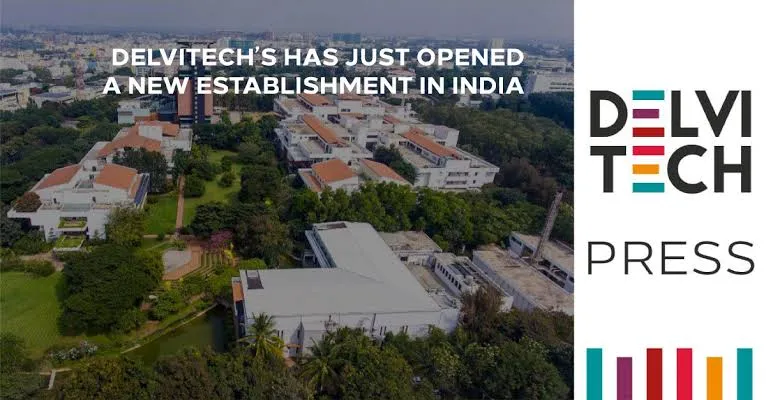
Delvitech, a Swiss company specialising in AI-native automated optical inspection (AOI) systems for electronics manufacturing, has announced plans to establish a manufacturing and technology facility in Bengaluru, in a move that underlines India's growing importance in global electronics supply chains.

The company will make an initial investment of $10 million, with overall investment expected to reach $25 million to $30 million, according to an announcement made on 22 September 2026. The 65,000-square-foot facility is expected to become operational in the first quarter of calendar 2027 and could create between 500 and 800 jobs over the next five years.

What the Bengaluru facility will do

The plant will integrate a broad range of capabilities, including precision machining, metrology and equipment integration, alongside mechanical, electrical, optical, software and control systems. It will also support engineering and research and development activities, product demonstrations and customer trials.

That combination is significant. Rather than serving purely as an assembly site or sales office, the Bengaluru facility is designed to house core engineering functions and to act as a showcase where customers can evaluate inspection systems on their own products. For an equipment maker, proximity to customers is valuable: inspection systems must be configured for specific production lines, board designs and quality requirements.

Delvitech said the investment reflects its long-term commitment to India's electronics manufacturing sector. The company showcased its Horus, Aton and Horus Dual Lane inspection solutions at productronica India 2026 in Bengaluru, highlighting AI-driven approaches to quality inspection and manufacturing efficiency.

Why optical inspection matters

Automated optical inspection is a critical, if often overlooked, part of electronics manufacturing. On surface-mount technology lines, where tiny components are placed and soldered onto printed circuit boards at high speed, AOI systems use cameras and image analysis to detect defects such as missing components, misalignment, poor solder joints and bridging.

Traditional AOI systems rely on rule-based algorithms that must be carefully programmed for each product. They can generate large numbers of false alarms, which slow production and require human operators to review flagged boards. AI-native systems aim to improve accuracy by learning what genuine defects look like, reducing false calls while catching subtle problems that rule-based systems may miss.

As electronics become more complex, with smaller components, denser boards and higher reliability requirements in sectors such as automotive, aerospace and medical devices, the importance of accurate inspection increases. A defect that escapes detection can lead to costly recalls, warranty claims and, in safety-critical applications, serious consequences.

Riding India's electronics manufacturing wave

Delvitech's investment comes as India works to build a larger share of global electronics manufacturing. Government incentive schemes have encouraged global brands and contract manufacturers to expand production of smartphones, laptops, servers and components in the country. Policymakers have also prioritised electronics component manufacturing and semiconductors as strategic sectors.

As production volumes grow, so does demand for the capital equipment used on factory floors, from placement machines and reflow ovens to inspection and testing systems. Much of that equipment has traditionally been imported. Establishing local manufacturing and engineering capacity for such equipment could reduce lead times, improve service responsiveness and lower costs for Indian manufacturers.
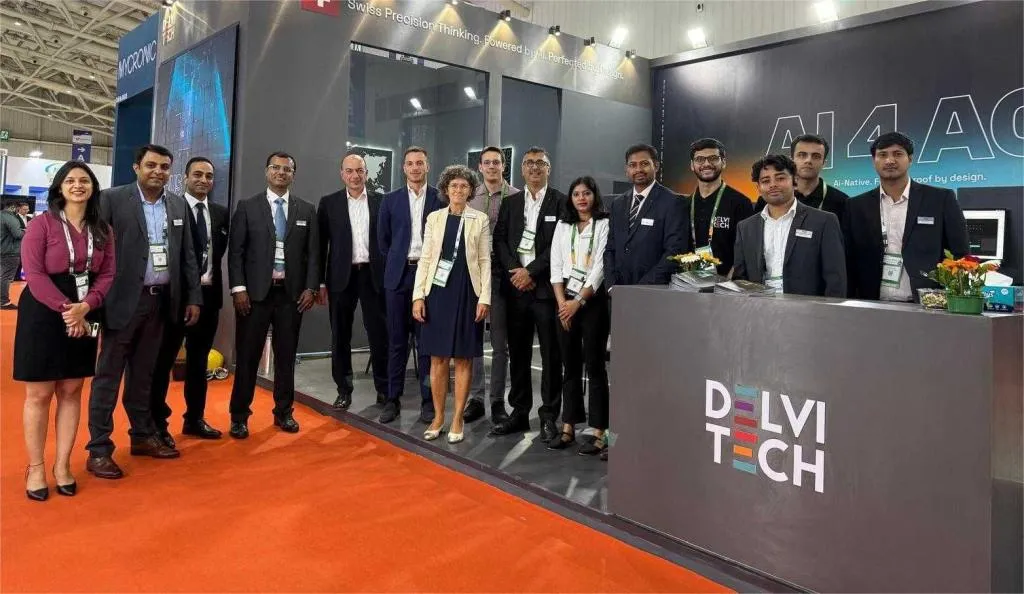

Every smartphone, server and electric vehicle built in India will need to be inspected. Delvitech is betting that the inspection machines themselves can be built here too.
TIGI Analysis

For global equipment makers, India also offers a deep pool of engineering talent in mechanical, electrical, software and AI disciplines. Bengaluru, in particular, combines a large technology workforce with an established ecosystem of electronics design, research centres and global capability centres.

image.png

Jobs and skills

The projected 500 to 800 jobs over five years would span a range of skills, from precision machining and assembly to optics, software development and applications engineering. Such roles are valuable for India's manufacturing ambitions because they combine hands-on industrial skills with advanced technology expertise.

Building capability in capital equipment is often seen as a marker of industrial maturity. Countries that design and manufacture the machines used in factories, rather than simply operating imported equipment, tend to capture more value and develop deeper industrial ecosystems. Delvitech's facility, while modest in scale, is a step in that direction for the electronics sector.

Competitive landscape

The AOI market is competitive, with established players from Japan, South Korea, Germany, the United States and elsewhere. Delvitech's strategy of differentiating on AI-native inspection and establishing a local presence in a fast-growing market could help it win business from manufacturers expanding in India.

Its success will depend on several factors: the performance of its systems on real production lines, the quality of its local support and service, and its ability to scale manufacturing while maintaining precision. Customer trials at the Bengaluru facility could prove important in persuading manufacturers to adopt its technology.

The AI angle in industrial inspection

Delvitech's positioning as an AI-native company places it within a broader movement to bring machine learning into industrial quality control. Across sectors from automotive parts to pharmaceuticals, manufacturers are adopting vision systems that learn from examples rather than relying solely on hand-coded rules. The appeal is clear: fewer false rejects, faster changeovers between products and the ability to detect defects that are difficult to describe in rules.

Adoption, however, depends on trust. Manufacturers need to understand why a system flags a board as defective, and they must be confident that it will not allow genuine defects to pass. Industrial AI vendors therefore invest heavily in validation, explainability and integration with factory data systems. A local engineering centre can help by allowing Indian customers to test systems on their own products and work directly with engineers to tune performance.

India's manufacturing sector, which is expanding rapidly and adopting new lines rather than retrofitting old ones, may be particularly receptive. New factories can build AI inspection into their processes from the outset, giving vendors such as Delvitech an opportunity to become part of the standard toolkit.

The broader signal

Investments of this kind are less visible than announcements of large smartphone assembly plants or semiconductor fabs, but they are no less important. A resilient manufacturing ecosystem requires not only final assembly but also the tools, equipment and services that make production possible.

Delvitech's decision to build in Bengaluru adds to evidence that India is moving from being primarily a destination for assembly towards a more complete electronics manufacturing ecosystem. If the facility becomes operational on schedule in early 2027 and reaches its hiring targets, it will contribute both to the quality of electronics made in India and to the country's capacity to build the advanced machinery behind them.

TagsDelvitechBengaluruElectronics ManufacturingAutomated Optical InspectionAIMake in IndiaFDISemiconductorsproductronica IndiaManufacturing JobsSwitzerlandQuality Inspection

Reader reviews

Sign in to rate and review this article.
Loading reviews…

