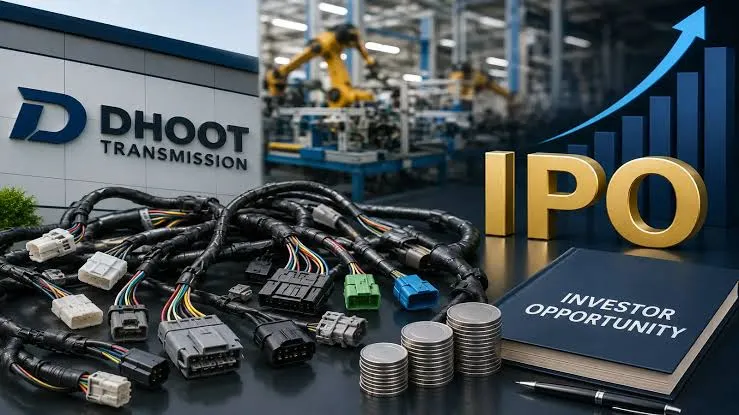
Dhoot Transmission, an auto components manufacturer backed by global private equity firm Bain Capital, made a strong entrance onto Indian public markets this week, with its shares listing at a 38% premium to the issue price — one of the stronger stock market debuts recorded in India's auto-ancillary sector so far this year. The listing adds to a broader wave of manufacturing and industrial companies choosing to go public through 2026, a trend that market participants have increasingly read as evidence of renewed investor appetite for asset-heavy, export-linked Indian businesses.
Dhoot Transmission's core business — manufacturing wiring harnesses and related electrical components used across two-wheelers, passenger vehicles and commercial vehicles — sits at the heart of India's automotive supply chain, a sector that has benefited significantly from the country's growing position as a global manufacturing and export base for both traditional internal combustion and increasingly electric vehicles. Wiring harness manufacturers in particular have seen rising demand as vehicles, including electric variants, incorporate greater electronic and connectivity content, expanding the addressable market for component suppliers beyond simple mechanical parts.
Bain Capital's backing of the company reflects a broader private equity thesis that has gained traction across Indian industrial and manufacturing sectors over recent years: that India's auto-component ecosystem, historically overshadowed by the more glamorous narrative around consumer internet and software startups, represents a durable, cash-generative opportunity benefiting from both domestic vehicle demand growth and increasing global supply-chain diversification away from China. The strong listing-day performance validates that thesis, at least in the immediate term, and will likely encourage other private equity-backed auto-ancillary companies in Bain Capital's and rival funds' portfolios to accelerate their own public market timelines.
The 38% listing premium also fits a broader pattern observed across Indian IPOs through much of 2026, in which manufacturing, industrial and infrastructure-linked companies have frequently outperformed consumer internet and software listings on debut, even as the latter category continues to dominate headline coverage of India's startup ecosystem. Investors appear to be rewarding businesses with clear profitability, tangible assets and export exposure — criteria that traditional manufacturing companies like Dhoot Transmission are often better positioned to satisfy than earlier-stage technology businesses still working toward sustainable unit economics.
For India's broader capital markets, the strength of Dhoot Transmission's debut reinforces a narrative that has been building through the year: that the country's IPO pipeline is no longer solely a story about consumer technology unicorns, but increasingly about a diverse set of profitable, often lesser-known industrial companies finding enthusiastic reception from both institutional and retail investors. As more auto-ancillary and manufacturing companies weigh their own listing timelines, Dhoot Transmission's performance offers an encouraging data point for the sector.
The company's product portfolio and customer relationships also illustrate broader shifts underway in the global automotive supply chain that have benefited Indian component manufacturers over the past several years. As global original equipment manufacturers continue to diversify sourcing away from concentrated dependence on any single geography, Indian auto-component suppliers with established quality certifications and export capabilities have increasingly won incremental business from global automakers seeking to build more resilient, geographically diversified supplier networks — a dynamic that has provided meaningful tailwinds for well-run companies like Dhoot Transmission independent of purely domestic demand cycles.
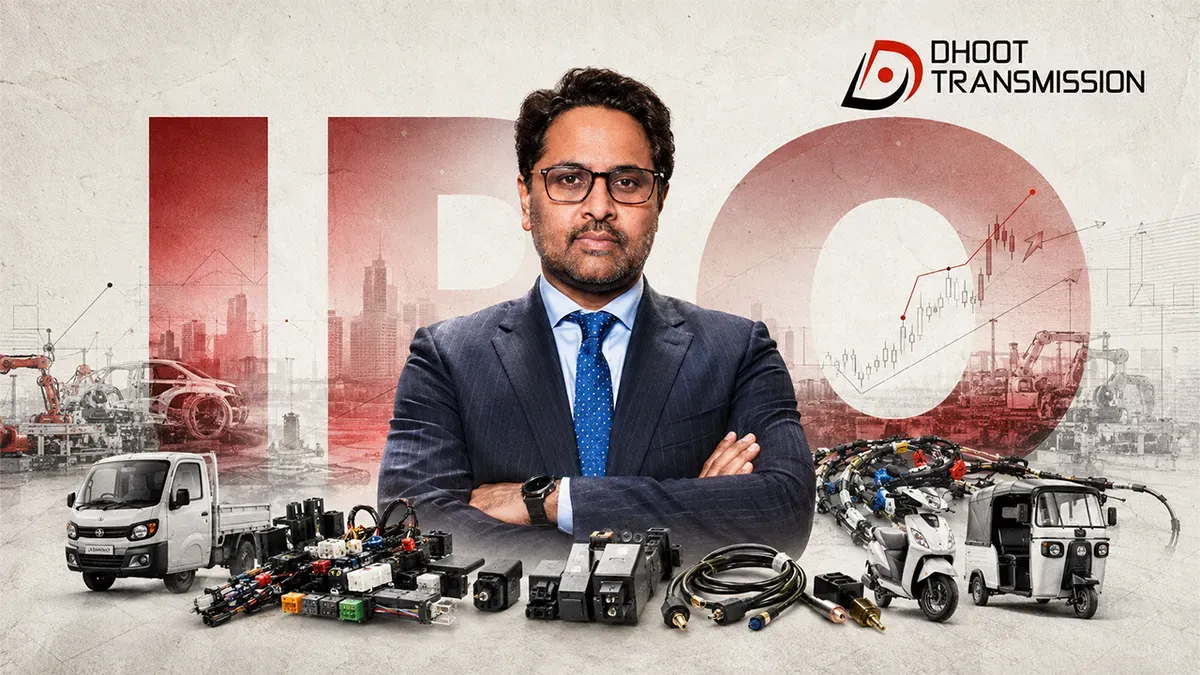
Bain Capital's involvement in Dhoot Transmission also reflects a broader private equity strategy that has gained increasing traction across India's manufacturing sector: identifying well-managed, family-founded industrial businesses with strong underlying fundamentals but limited access to the growth capital and governance upgrades needed to scale toward public-market readiness, and providing both alongside a clear path to eventual listing. This playbook, distinct from the venture capital approach that dominated headlines during the previous decade's consumer-internet boom, has quietly built a substantial and increasingly successful track record across Indian industrial and manufacturing sectors.
For retail investors, who have played an increasingly influential role in determining Indian IPO listing-day performance through 2026, the appeal of companies like Dhoot Transmission often rests on relatively straightforward, comprehensible business fundamentals — tangible manufacturing operations, established customer relationships and demonstrable profitability — in contrast to the more speculative growth narratives that characterised many consumer-internet listings during the previous funding cycle. This shift in retail investor preference has itself become a meaningful factor shaping which companies choose to pursue public listings and how they structure their IPO narratives.
As Dhoot Transmission begins trading as a public company, its subsequent performance will offer further evidence for whether the strong listing-day premium reflects a durable re-rating of the auto-ancillary sector's growth prospects, or a more temporary reflection of broadly favourable market sentiment toward Indian IPOs during this particular window. Either way, the debut adds meaningfully to the growing body of evidence that India's manufacturing renaissance extends well beyond headline-grabbing electric vehicle and semiconductor announcements into the less glamorous but economically vital auto-component supply chain.
For Bain Capital, a strong listing outcome also strengthens the exit case for its broader portfolio of Indian industrial investments, several of which are reportedly at various stages of pre-IPO preparation. As global private equity firms continue weighing India against other emerging manufacturing hubs for capital deployment, successful public market exits of this kind offer tangible validation of the India industrial investment thesis, likely encouraging continued fund allocation toward the country's auto-component and broader manufacturing sector in the quarters ahead.
The listing also arrives as India's broader vehicle electrification transition continues to reshape demand patterns across the auto-component supply chain, with wiring harness and electrical component manufacturers such as Dhoot Transmission increasingly positioned to benefit from the higher electronic content inherent to electric and hybrid vehicle architectures relative to conventional internal combustion platforms — a structural tailwind that is likely to feature prominently in how analysts model the company's medium-term growth prospects as a newly public entity.
The company's export order book, built over years of supplying international automotive customers alongside its domestic business, also provides a degree of revenue diversification that public market investors have increasingly come to value amid concerns about the cyclicality of India's domestic passenger vehicle demand. This diversified customer base is likely to be highlighted repeatedly in analyst coverage initiated following the listing as one of Dhoot Transmission's more distinctive competitive strengths relative to more domestically concentrated auto-ancillary peers.