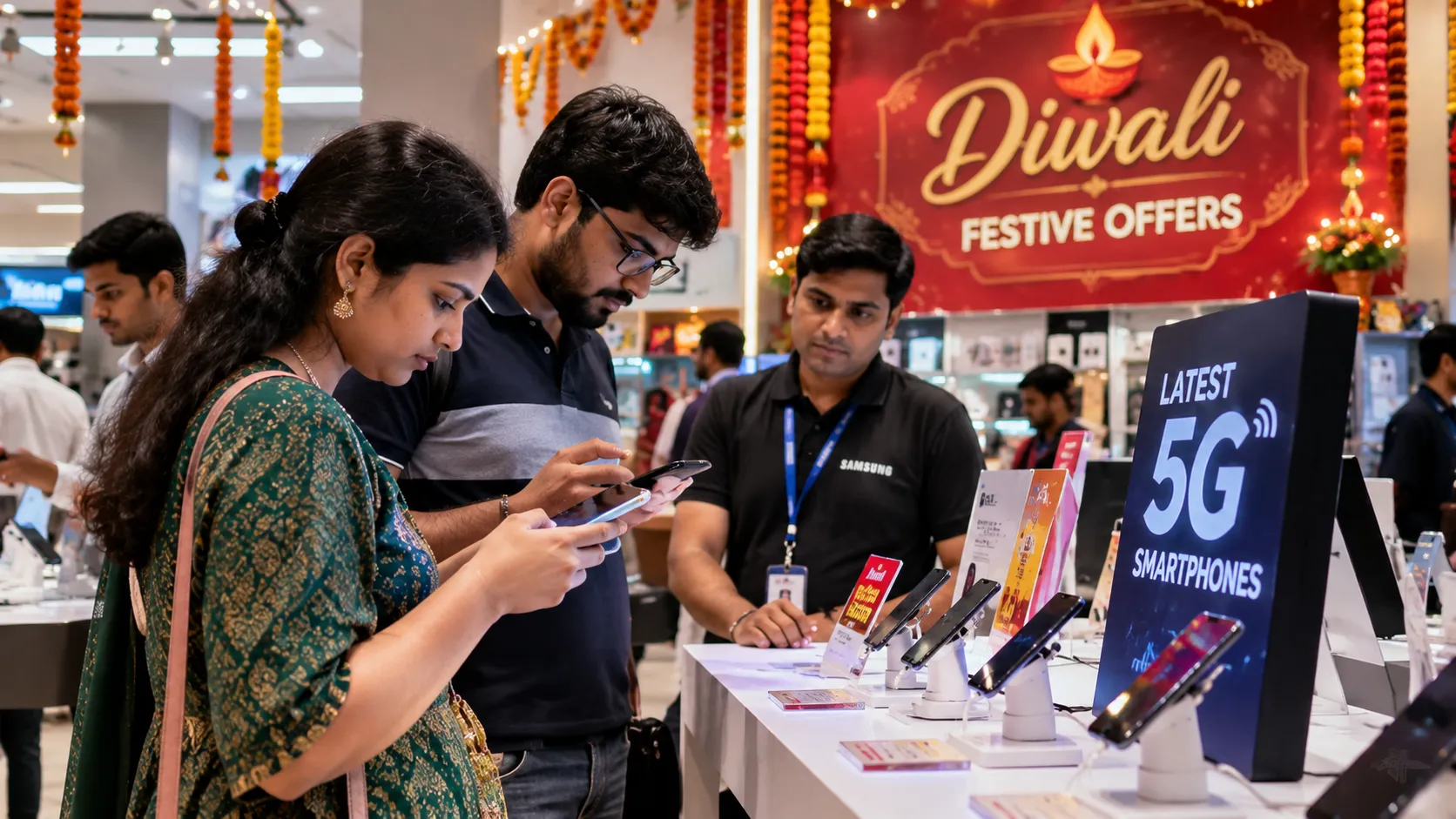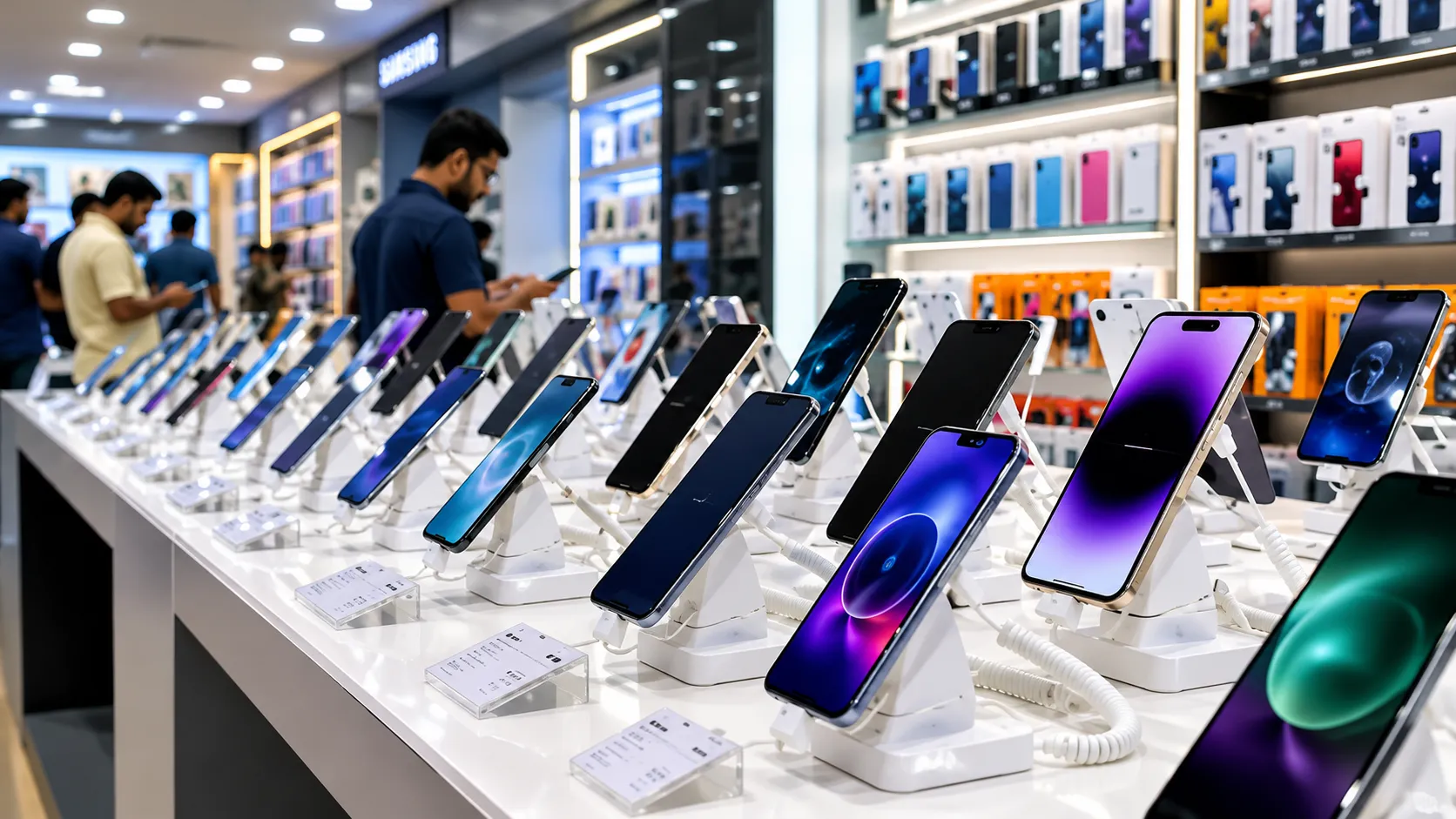
Diwali is traditionally the biggest shopping season of the year for India's smartphone retailers. This year, many of them saw far fewer customers buying phones.
Sales volumes at offline smartphone retailers fell 18% to 20% over the four days of Diwali from November 6 to 9 compared with last year's festive season, according to the All India Mobile Retailers Association (AIMRA), as reported by Inc42 on Thursday, November 12.
Sales value was broadly flat compared with last year, supported by higher average selling prices, according to Inc42. But margins and store profitability were squeezed, the association said.
The affordable segment hit hardest
The weakest part of the market was the sub-₹20,000 segment, which accounts for a large share of smartphone sales in India. Retailers said this segment was hit by a shortage of fresh, competitive 5G models, according to Inc42.
Affordable smartphones are particularly important for India's mass market, where many buyers are upgrading from older devices or buying their first 5G phone. A lack of attractive new models in this price range can deter purchases, particularly when prices are rising.
Loan approvals fall
Consumer finance has become crucial for smartphone sales in India, where many buyers pay through equated monthly instalments (EMIs). Only 60% to 70% of loan applications were approved during the Diwali period, according to Inc42. Tighter lending standards mean that some customers who wanted to buy phones on credit were unable to do so.
Lenders have become more cautious about unsecured consumer loans after regulatory tightening by the Reserve Bank of India and concerns about rising defaults among some borrowers.
A difficult year for smartphones
The weak Diwali sales follow a difficult period for India's smartphone market. Shipments fell 26% year-on-year to 35.8 million units in the third quarter of 2026, a decade low for that quarter despite the festive season, according to research firm Omdia.
Rising memory prices have been a key factor. Demand for memory chips from AI data centres has pushed up prices of DRAM and NAND flash, increasing the cost of making smartphones. Manufacturers have passed on some of these costs through higher prices, which has hurt demand, particularly among price-sensitive buyers.
Shipments of phones priced below ₹20,000 fell 47% in the third quarter, according to Counterpoint Research, as reported by Communications Today. Manufacturers held back channel inventory even ahead of the festive season, and Counterpoint expects a post-festive slowdown and another round of price increases.
Premiumisation's limits
India's smartphone market has been undergoing premiumisation, with buyers increasingly choosing more expensive phones, often financed through EMIs. This trend has supported the value of sales even as volumes have stagnated. But the latest data suggest that rising prices may be reaching the limits of what many consumers can afford.
The flat sales value reported by AIMRA, despite lower volumes, reflects this dynamic: fewer people are buying phones, but those who buy are spending more on each device.
Online versus offline
The AIMRA figures cover offline retail stores, which compete with e-commerce platforms such as Amazon and Flipkart. Online platforms often launch exclusive models and offer aggressive discounts during festive sales, and offline retailers have long complained that they face unfair competition. However, offline stores remain important, particularly in smaller towns, where many buyers prefer to see and touch phones before buying and rely on store staff for advice and financing.