US stocks fell on Monday, 28 September 2026, as a sharp drop in Boeing shares, rising Treasury yields and renewed tension between Washington and Tehran pulled Wall Street lower at the start of a week packed with economic data.
The Dow Jones Industrial Average lost 347.11 points, or 0.67 per cent, to close at 51,481.51. The S&P 500 fell 59.72 points, or 0.77 per cent, to 7,683.69, and the Nasdaq Composite dropped 248.34 points, or 0.92 per cent, to 26,820.38.
The declines followed a winning week for equities, in which technology and technology-linked stocks had outperformed. Monday's losses were broad, but the most dramatic move came from one of the Dow's most closely watched industrial names.
Boeing hit by another certification delay
Boeing shares closed down 6.9 per cent after the US Federal Aviation Administration said it would not certify the 737 Max 10, the largest variant of the company's best-selling narrow-body jet, until it had assessed a newly discovered software problem.
Boeing found an issue that prevents pilots from accessing automated flight guidance during specific landing scenarios. The FAA said the glitch increases pilot workload during go-arounds, the procedure in which pilots abort a landing attempt and climb away to try again.
FAA Administrator Bryan Bedford was blunt about the timeline. "We will be delaying the 10 until we're satisfied that we don't have an issue here," he said. Asked how long that would take, he added: "Is that weeks, days, months? I don't know."
Certification had previously been expected in October. The issue will now be examined by a Corrective Action Review Board, and approval has been delayed indefinitely.
The software problem is not confined to future aircraft. Canadian carrier WestJet currently operates the affected software on its 737 Max fleet, although it said it has experienced no in-service issues. Alaska Airlines does not use the affected software version. United Airlines, one of the largest customers for the Max 10, is not accepting deliveries of aircraft with that software version, according to reports.
"We continue to follow the lead of the FAA as we work through the certification process," a Boeing spokesperson said.
Why the Max 10 matters
The Max 10 is critical to Boeing's competitive position. It is the company's answer to Airbus's A321neo, which has dominated the market for large single-aisle jets and built a substantial order backlog. Airlines have placed hundreds of orders for the Max 10, but repeated certification delays have forced some to adjust fleet plans, and in some cases to turn to Airbus.
For Boeing, the delay also carries symbolic weight. The company has spent several years rebuilding its reputation with regulators and customers after the fatal Max crashes of 2018 and 2019 and a mid-air door-plug blowout on an Alaska Airlines Max 9 in January 2024. Each new certification setback revives questions about its engineering and quality processes, even when, as in this case, the issue was identified by the company itself during testing.

Yields at multi-decade highs
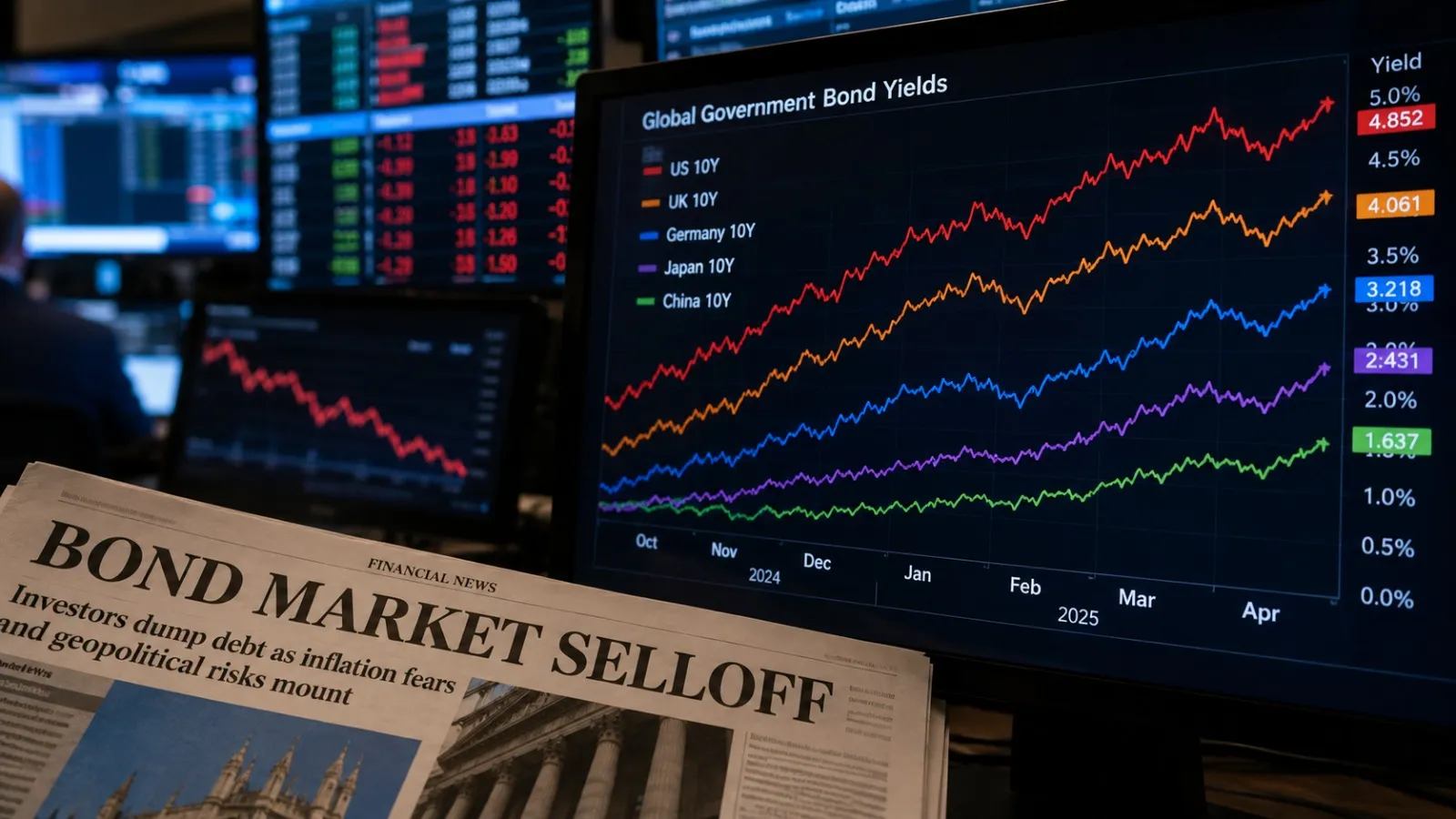
The broader market backdrop was set by the bond market. The yield on the 10-year US Treasury note rose about six basis points to 5.24 per cent, its highest level since 2007. The 30-year yield reached 5.56 per cent, the highest since 2004.
Rising long-term yields weigh on stocks in two ways. They increase borrowing costs for companies and consumers, and they reduce the relative attractiveness of equities by offering investors a higher risk-free return. Growth and technology stocks, whose valuations depend heavily on expected future profits, are especially sensitive.
Markets have increasingly priced in the possibility that the Federal Reserve will keep interest rates higher for longer, or even raise them further, as inflation pressures persist and energy prices remain elevated. Investors are now focused on Wednesday's release of the personal consumption expenditures (PCE) price index, the Fed's preferred inflation gauge, and Friday's monthly jobs report.
Oil and geopolitics
Energy markets added to the pressure. Oil prices rose after President Donald Trump rejected an Iranian proposal to reopen the Strait of Hormuz, reviving fears about supply disruptions through one of the world's most important shipping lanes. US crude futures for November delivery rose 0.72 per cent to $93.27 a barrel.
Higher oil prices feed directly into inflation expectations, reinforcing the case for tighter monetary policy and, in turn, pushing bond yields higher.
Tech's uneven day
Technology stocks were mixed. Several AI-related names led the market lower. Advanced Micro Devices fell 3.6 per cent and Micron Technology 2.6 per cent, while Amazon and Microsoft each declined about 1 per cent. Meta Platforms fell 4.8 per cent, giving back some of the gains from a rally of nearly 13 per cent the previous week, when investors cheered the launch of its Muse AI agent. Meta had risen more than 25 per cent in September.
Nvidia bucked the trend, rising about 3 per cent after announcing a record $150 billion share buyback and launching an AI safety platform. MongoDB shares plunged about 20 per cent after the database company's chief executive departed to join Meta. Biotech company Kodiak Sciences more than doubled on positive phase 3 trial results.
Despite Monday's decline, some strategists remain constructive on technology. Analysts at Deutsche Bank, including Parag Thatte, noted in a client note that mega-cap growth and technology stocks were up 14 per cent since the end of July, reaching a new record high, and argued that the rally still had room to run.
What it means for Indian investors
Wall Street's weakness and rising US yields have direct consequences for India. Higher US bond yields tend to draw capital away from emerging markets, including Indian equities and bonds, as global investors can earn attractive returns in dollar assets with less risk. Foreign portfolio investors have been heavy sellers of Indian stocks this year, and the combination of high yields and elevated oil prices, which hurt India as a major crude importer, adds to that pressure.
Indian benchmark indices fell sharply on the same day, and pre-market indicators on Tuesday pointed to a muted opening. The trajectory of US yields and oil prices over the coming days will be a key influence on sentiment in Mumbai as well as New York.
The week ahead
With the PCE inflation data and the jobs report due later in the week, investors will be looking for evidence of whether the US economy is cooling enough to ease pressure on the Fed. For Boeing, the more immediate question is how quickly it can resolve the software issue and give its airline customers a firm timeline for the Max 10. Neither answer is likely to come quickly.