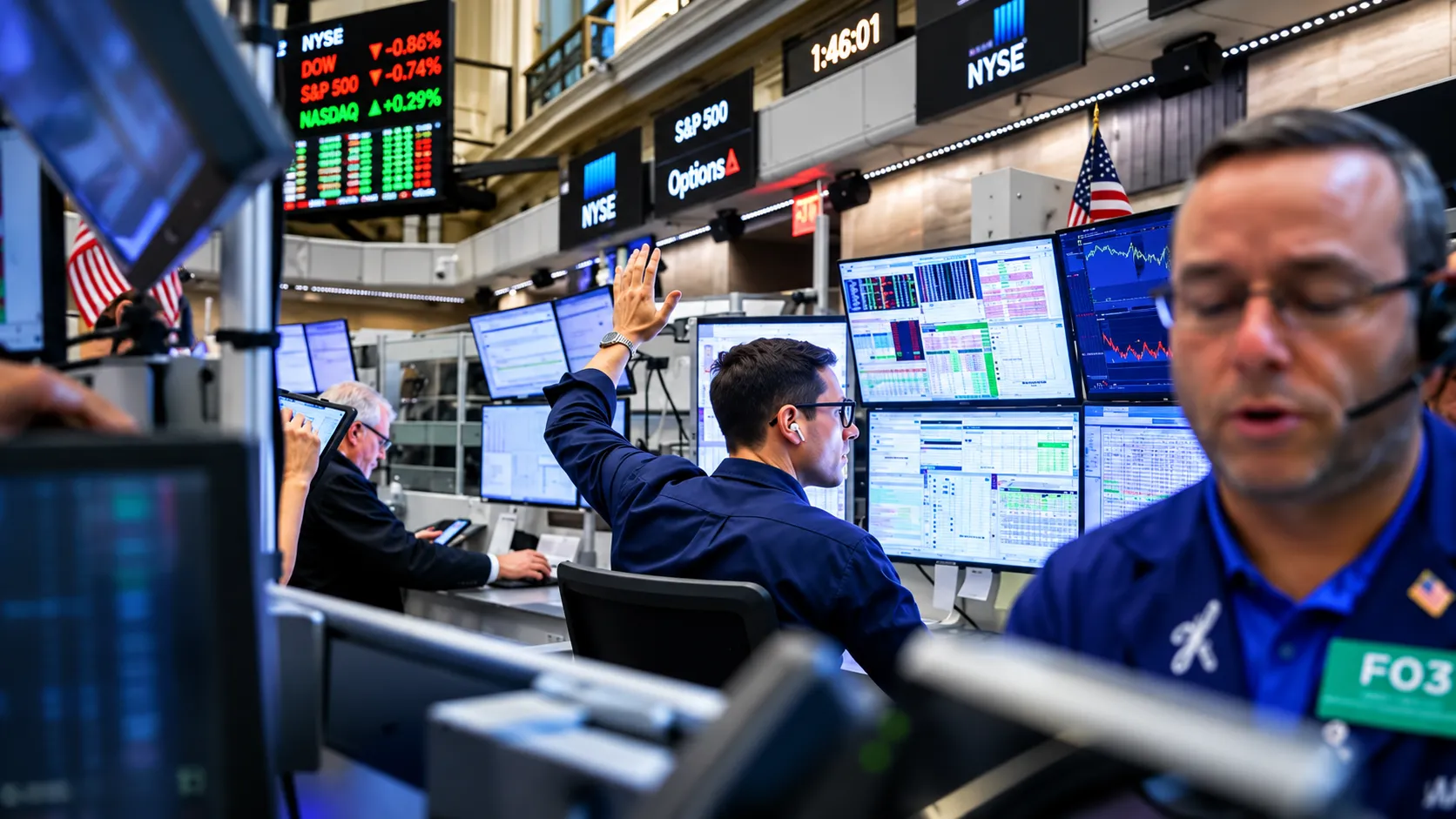
US stocks posted one of their strongest sessions in more than a year on Wednesday, November 4. Investors reacted to the results of the midterm elections and to a sharp fall in oil prices, and the rally swept across almost every corner of the market.
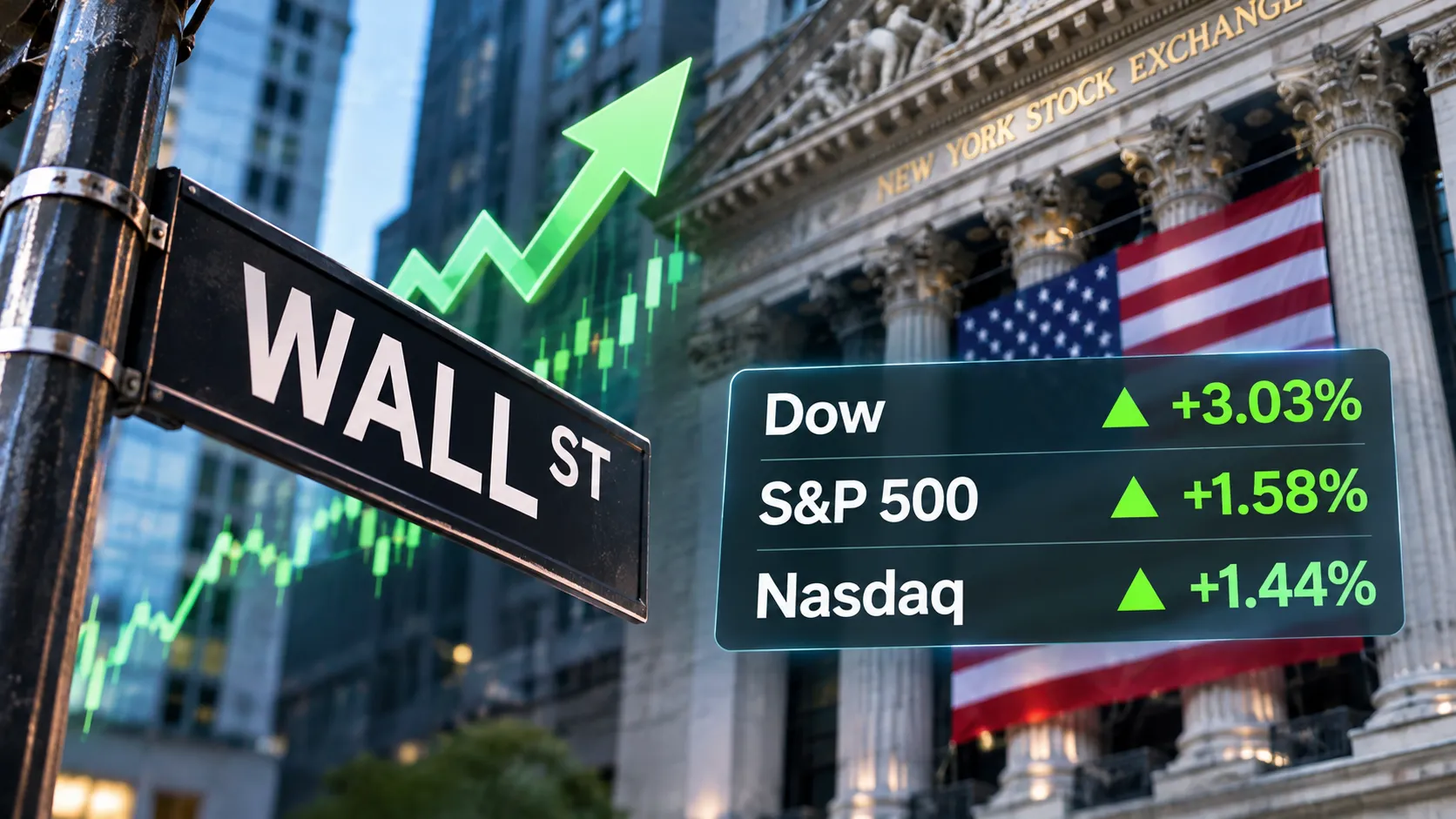
The Dow Jones Industrial Average rose 1,569.40 points, or 3.03%, to close at 53,356.12. It was the blue-chip index's best day since April 9, 2025, and it closed above 53,000 for the first time since September 8.
The broader S&P 500 rose 1.58% to 7,688.62. The tech-heavy Nasdaq Composite gained 1.44% to 25,736.51. The small-cap Russell 2000 also climbed 1.58%, to 2,856.96.
A reversal of the pre-election slide
The rally marked a sharp turnaround from the nervousness that had gripped markets in the days before the vote. Stocks had fallen as investors worried about the outcome and its possible effects on economic policy, energy prices and the conflict involving Iran.
The Democrats won control of both chambers of Congress, ending a period of single-party control of Washington. President Donald Trump said he would accept the results.
Historically, many investors have viewed divided government as positive for markets. When control of the White House and Congress is split, major legislative changes become harder to pass, which can reduce policy uncertainty. Some market strategists described Wednesday's rally as one of the strongest post-midterm sessions in decades.
Breadth signals conviction
The rally was notably broad. On the New York Stock Exchange, advancing stocks outnumbered decliners by more than three to one. Wide participation is often seen as a sign of conviction among investors, because it shows that buying is not limited to a handful of large stocks.
The gains in small-cap stocks were also significant. Smaller companies are typically more sensitive to the domestic economy and to interest rates. Their rise suggested investors expected lower energy costs and reduced policy uncertainty to benefit the broader US economy.
Sector winners and losers
Consumer discretionary stocks led the market, with the sector rising about 4.3%. Retailers, restaurant chains, travel companies and carmakers stand to gain from lower energy prices, which leave consumers with more money to spend and reduce companies' own fuel and transport costs.
Energy was the weakest sector, falling about 4.8%. Oil and gas producers fell sharply as crude prices tumbled. Brent crude fell nearly 9% on the day to settle at $94.62 a barrel, its lowest level in almost two months, as traders bet that the election result would increase pressure to end the conflict with Iran.
Apple and Microsoft closed at record highs, underlining continued investor confidence in the largest technology companies. However, the technology sector's performance was mixed. Nvidia fell, and data-centre stocks came under pressure after Democratic wins in key technology hubs, including Texas, raised concerns that the pace of data-centre construction could slow.
Shares in Elon Musk's companies, SpaceX and Tesla, also fell, bucking the broader rally after Musk's heavy spending in support of Republican candidates failed to change the outcome.
The role of oil
The fall in oil prices was one of the most important drivers of the rally. Higher energy prices during the conflict with Iran had pushed up inflation and weighed on consumer spending and corporate profits.
A sustained fall in oil would ease inflation pressures, which in turn could give the Federal Reserve more room to manage interest rates. Lower inflation and lower interest rates are generally positive for stock valuations.
For many companies, cheaper fuel directly improves profit margins. Airlines, logistics firms and chemical producers are particularly sensitive to energy costs.
What divided government means for policy
With control of Congress shifting, investors are now working out what the change means for economic policy. A Democratic Congress could slow or block some of the administration's priorities, and congressional committees may increase oversight of government policy and of certain companies.
Taxes, trade and regulation are among the areas investors will watch closely. Major changes to tax policy are likely to require bipartisan agreement, which could limit the scope for big shifts in either direction. Trade policy, where the president has significant authority, may be less affected.
Regulation of technology companies, energy and financial services could also become a focus of congressional attention. Data centres, which have become a political issue in several states because of their energy and water use, may face more scrutiny.
Global ripple effects
The rally on Wall Street set a positive tone for markets around the world. Asian markets rose on Thursday morning, and India's Sensex opened more than 1,600 points higher, helped by the combination of lower oil prices and the strong lead from the US.
For India, the fall in oil prices is especially important. The country imports most of its crude, and lower prices reduce inflation, support the rupee and ease pressure on the current account.
The turnaround on Wall Street also reversed the pre-election mood that had weighed on global markets. In the days before the vote, global equities slid as investors reduced risk ahead of an uncertain outcome.
Risks remain
Despite the strength of Wednesday's rally, risks remain. The conflict involving Iran has not been resolved, and oil prices could rebound quickly if diplomatic efforts stall or tensions rise again. Analysts have cautioned that a lasting decline in crude would require a durable diplomatic resolution.
Valuations are another consideration. With the S&P 500 near record levels and large technology stocks trading at high multiples, some strategists warn that markets could be vulnerable to disappointment, whether from corporate earnings, economic data or policy developments.
The earnings season is also still under way. Companies' results and guidance will shape investor sentiment in the coming weeks, alongside economic data and comments from Federal Reserve officials.
What investors will watch next
In the near term, investors will watch for further developments on Iran, the path of oil prices, and early signals about the new Congress's priorities. Economic data, including inflation and employment figures, will also be important for the outlook for interest rates.
For global investors, including members of the Indian diaspora with holdings in US markets, Wednesday's session was a reminder of how quickly sentiment can shift around major political events. The pre-election slide turned into one of the biggest one-day gains in more than a year once the result was known and energy prices fell.
Whether the rally can be sustained will depend on how policy develops in a divided Washington, and on whether the fall in oil prices proves lasting.


