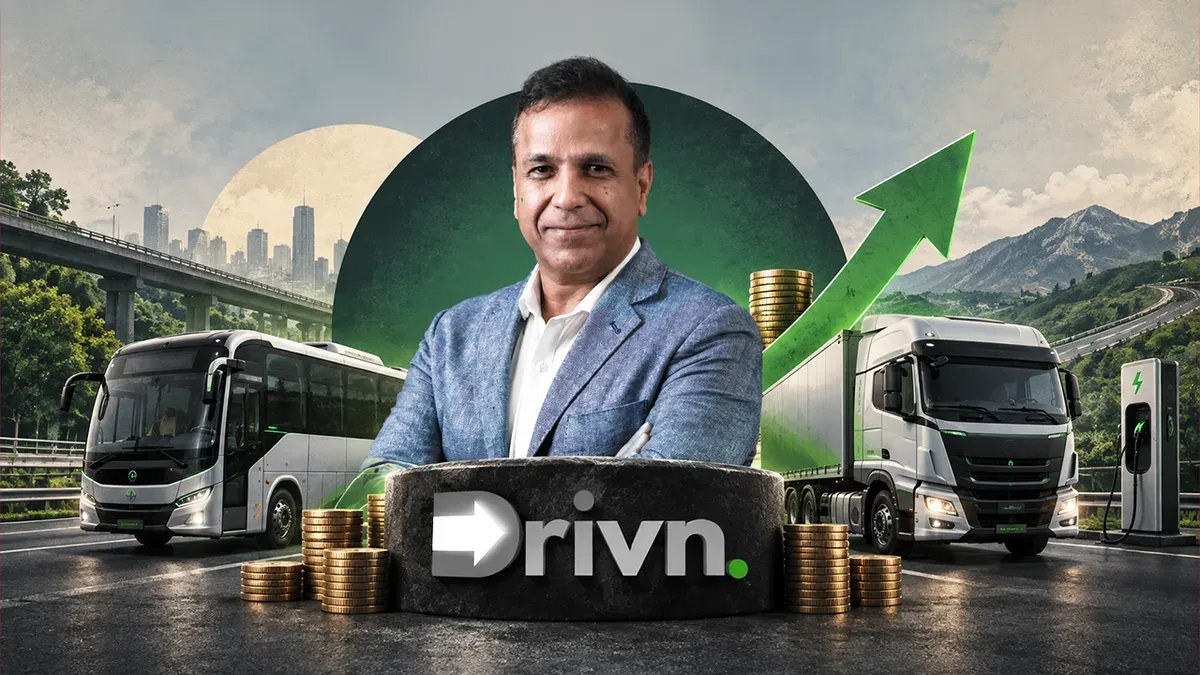
Drivn's Indian entity has raised Rs 45 crore from Avaana Capital, according to a funding disclosure reported on September 21, 2026, adding to the steady flow of institutional capital into India's clean-mobility and fleet-management sector this year. The round underscores continued investor appetite for climate-adjacent transportation businesses even as broader startup funding in India has grown more selective through 2026.
Avaana Capital has built a reputation as one of India's more disciplined climate-focused venture investors, backing companies across clean energy, sustainable agriculture and electric mobility infrastructure. Its participation in Drivn's raise fits a pattern the fund has followed through the year: smaller, targeted cheques into companies solving specific operational bottlenecks in India's transition toward lower-emission transport and logistics.
India's electric and clean mobility sector has emerged as one of the most consistently funded categories in the country's startup ecosystem through 2026, with capital flowing into everything from two-wheeler manufacturers and battery-swapping networks to fleet-electrification software and charging infrastructure. Investors have increasingly favoured business models that generate near-term revenue from commercial and enterprise customers over consumer-facing plays that require longer runways to reach profitability.
While the specifics of Drivn's operating model were not extensively detailed in the disclosure, the company's positioning within the climate-mobility space places it alongside a growing cohort of Indian startups building the operational and financing infrastructure — rather than just the vehicles themselves — required to make electric and low-emission fleets commercially viable at scale.
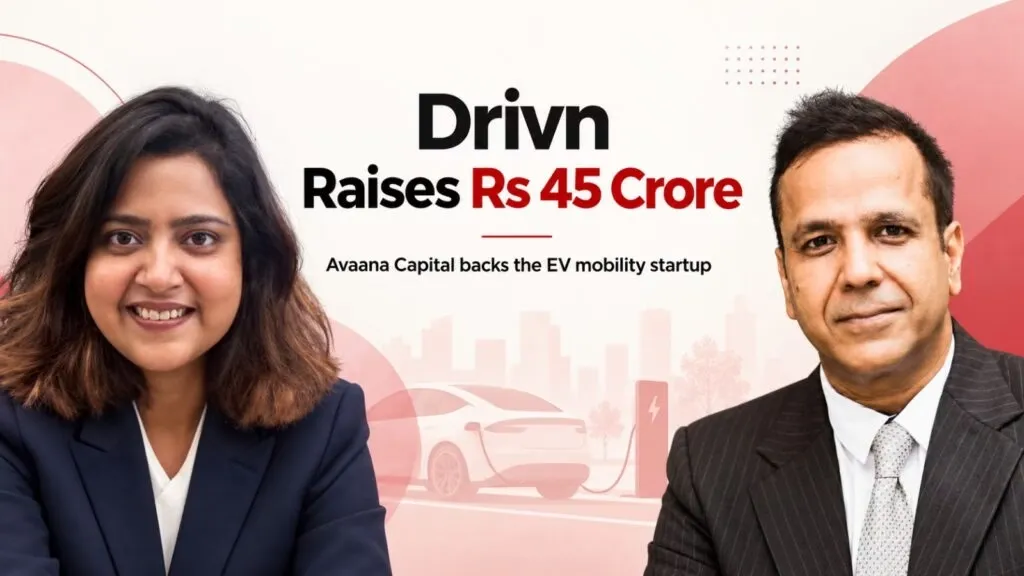
Avaana Capital's broader portfolio strategy has consistently emphasised businesses that intersect directly with policy tailwinds, and India's clean-mobility sector currently enjoys some of the strongest such tailwinds in the country's startup ecosystem. The Ministry of Heavy Industries' production-linked incentive schemes for electric vehicles and components, combined with state-level subsidies in several large markets, have created a favourable operating environment for companies positioned anywhere along the EV value chain, from vehicle manufacturing through to the software and financing layers that make fleet electrification commercially viable for enterprise customers.
The Rs 45 crore raise, while modest relative to some of the headline-grabbing rounds seen elsewhere in India's startup ecosystem this year, reflects a broader institutional thesis that has strengthened through 2026: climate and mobility infrastructure companies solving unglamorous but essential operational problems — fleet utilisation, charging logistics, financing structures for commercial EV adoption — are increasingly seen as durable, less speculative bets than consumer-facing climate ventures.
For Avaana Capital, the investment extends a portfolio strategy built around identifying capital-efficient companies positioned to benefit from India's broader decarbonisation push, including government incentives for electric-vehicle adoption and increasingly stringent emissions targets for commercial fleet operators.
For founders operating in this space, the current funding environment rewards specificity. Investors have grown noticeably more selective about backing companies with clearly defined revenue models and identifiable enterprise customers, rather than broader consumer-facing mobility platforms whose paths to profitability remain less certain. Drivn's positioning within this more disciplined funding climate — and its ability to secure backing from a climate-focused investor known for rigorous diligence — offers an indication of how the company has framed its commercial traction to prospective backers.
As India's clean-mobility funding landscape continues to mature, rounds like Drivn's Rs 45 crore raise illustrate how capital is increasingly flowing toward companies addressing the practical, operational challenges of electrification rather than simply the vehicles themselves — a shift that investors say reflects a sector moving from early-stage experimentation toward genuine commercial scale.