StartupsLatest5 MIN READ

London's Easol Raises $30 Million and Launches AI "Teammates" for Travel, Events and Experience Businesses

Easol, the London-based platform for travel, events and experience businesses, has raised $30 million, made up of $20 million in equity and $10 million in debt. Backed by Y Combinator and Tiger Global, Easol says its platform has served 2.8 million guests across more than 135 countries, and it has launched AI "Teammates" to automate work for its customers.

By Nisha Omkumar · Author29 October 2026New
London's Easol Raises $30 Million and Launches AI "Teammates" for Travel, Events and Experience Businesses

Tour operators, retreat organisers, festival promoters and adventure travel companies share a common challenge: they often run complex businesses with very small teams. A London-based startup that builds software for these businesses has raised new funding and is betting that AI can act as an extra pair of hands.

Easol has raised $30 million, made up of $20 million in equity and $10 million in debt, according to reports on Wednesday, October 28. The company is backed by Y Combinator and Tiger Global. Alongside the funding, Easol launched AI "Teammates", AI tools designed to carry out tasks for the businesses that use its platform.

What Easol does

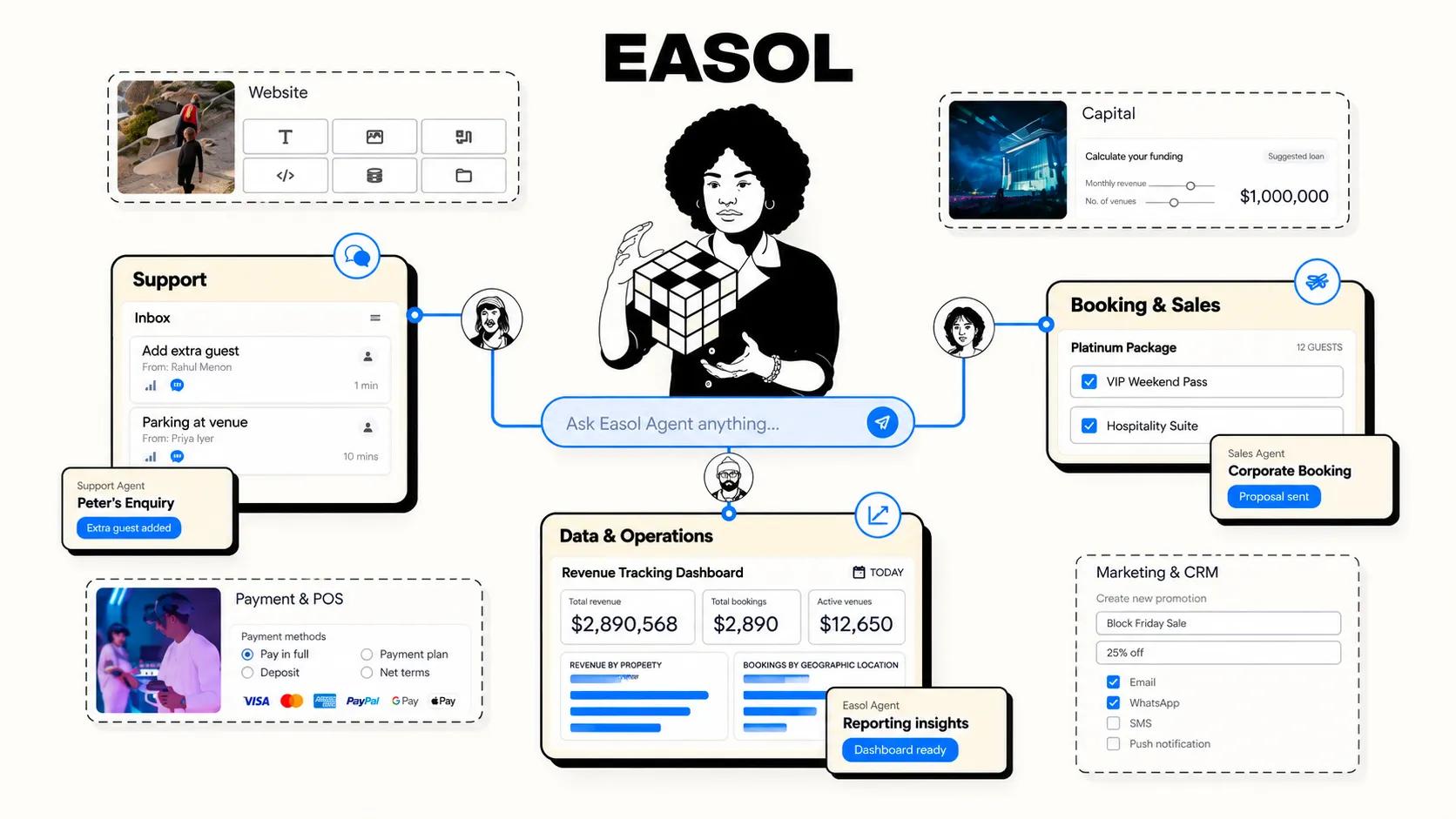
Easol provides a platform that experience businesses use to sell and manage bookings, including websites, booking engines, payments and customer management. Its customers include tour operators, event organisers, retreat and wellness businesses, outdoor adventure companies and creators who sell experiences.

The company says its platform has served 2.8 million guests across more than 135 countries, reflecting the international nature of the experience economy.

AI Teammates

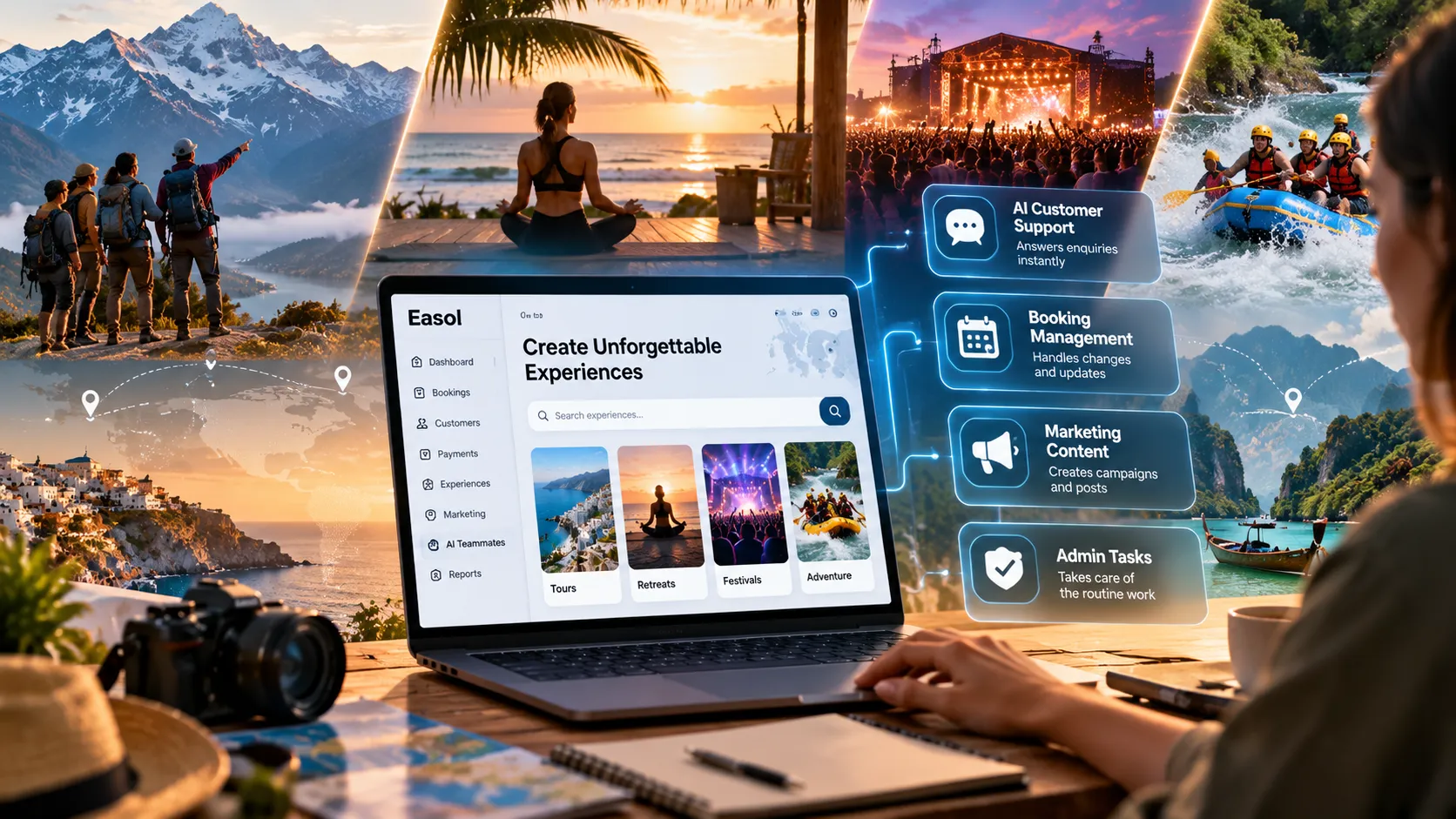
The launch of AI Teammates reflects a broader shift in software, as companies move beyond adding AI features to building AI agents that can perform tasks on behalf of users. For experience businesses, such tasks could include answering customer questions, managing bookings and changes, creating marketing content and handling administrative work.

Small experience businesses typically lack dedicated staff for marketing, customer service and operations, so founders and small teams often handle everything themselves. AI tools that take on routine tasks could free them to focus on delivering experiences and growing their businesses.

The experience economy

The experience economy, in which consumers spend on activities and memories rather than physical goods, has grown strongly in recent years. Spending on travel, live events, festivals, wellness retreats and adventure activities rebounded sharply after the pandemic, and younger consumers in particular have prioritised experiences.

Despite its size, the sector is highly fragmented, made up of thousands of small and medium-sized operators. Many still rely on basic tools, spreadsheets and third-party marketplaces that charge high commissions. Platforms such as Easol aim to give these businesses the technology to sell directly to customers and build their own brands.

Equity and debt

The mix of equity and debt in Easol's funding is notable. Venture debt has become more common among growth-stage startups as a way to raise capital without diluting existing shareholders as much. Lenders typically provide debt to companies with established revenue and investor backing. The $10 million debt component suggests that Easol has a meaningful revenue base.

Investors

Y Combinator, the Silicon Valley accelerator, has backed thousands of startups, including many that have become major companies. Tiger Global, the New York-based investment firm, was one of the most active technology investors in the world during the 2020-2021 boom, backing startups globally, including many in India. It has since become more selective.

Competition

Easol competes with booking software providers for tours and activities, event ticketing platforms and general e-commerce platforms. Large online travel marketplaces also sell experiences, but they typically charge commissions and own the customer relationship, which encourages operators to seek direct booking tools.

“The experience economy is full of small operators doing big jobs with tiny teams, which is exactly where AI assistants can make the biggest difference.”
— TIGI Startups Desk

Easol's focus on giving operators control over their brand and customer relationships, combined with AI tools, is intended to differentiate it in this market.

The relevance for India

India's experience economy is also growing rapidly, with rising domestic tourism, adventure travel, music festivals, wellness retreats and destination weddings. Many Indian operators are small businesses that rely on social media and messaging apps to market and sell their experiences. Platforms that combine booking, payments and AI assistance could find a large market among such businesses in India and other emerging markets.

Indian startups are also active in travel technology, building tools for travel agents, tour operators and hotels.

63c47b07-c6bd-4cd3-8862-9a55511d4234.png

The rise of AI agents for small businesses

Large enterprises have been the early adopters of AI agents, deploying them in customer service, IT and finance. Small businesses have been slower to adopt AI, partly because they lack the resources to integrate new tools and train staff. Software platforms that embed AI directly into the tools that small businesses already use, as Easol is doing, could accelerate adoption by making AI easier to use.

For experience businesses, common tasks such as responding to enquiries, updating availability, sending reminders and processing changes consume significant time. Automating these tasks could improve customer response times and free operators to focus on delivering experiences.

Lessons from the pandemic

The experience economy was hit hard by the pandemic, when travel restrictions and lockdowns brought many businesses to a halt. Platforms serving the sector had to adapt quickly, and many operators shifted to online experiences or domestic markets. The strong recovery since then has demonstrated the resilience of consumer demand for experiences, but it has also highlighted the vulnerability of small operators to external shocks. Tools that help them operate efficiently and diversify their sales channels can improve their resilience.

What comes next

Easol will use the funding to develop its AI Teammates and expand its platform. Its progress will be watched as a test of whether AI agents can deliver practical value for small businesses, which have often been slower to adopt new technology than large enterprises. If its AI tools save time and increase bookings for operators, Easol could strengthen its position in a large and growing market.

Why the funding mix makes sense

For a company with established revenue, combining equity and debt allows it to fund growth while limiting dilution for founders and existing investors. Debt can finance working capital and growth initiatives with predictable returns, while equity funds riskier investments such as new product development, including AI. The mix suggests that Easol is managing its capital carefully at a time when investors are more disciplined about valuations than they were during the funding boom of 2021.

Operators in the experience economy, from tour guides to festival organisers, will be watching to see whether AI Teammates can genuinely save them time and increase bookings.

For India's fast-growing community of experience businesses, from trekking companies in the Himalayas to music festival organisers in Goa, Easol's model offers an example of how software and AI can help small operators compete with large platforms and build direct relationships with their customers. Similar tools may well emerge from Indian startups targeting the domestic market.

TagsEasolY CombinatorTiger Globalexperience economytravel technologyeventstour operatorsAI agentsAI TeammatesLondon startupsUK startupsbooking platformscreator economysmall businessesventure debtstartup fundingtourismhospitality technologySaaSglobal startups

Reader reviews

Sign in to rate and review this article.
Loading reviews…

