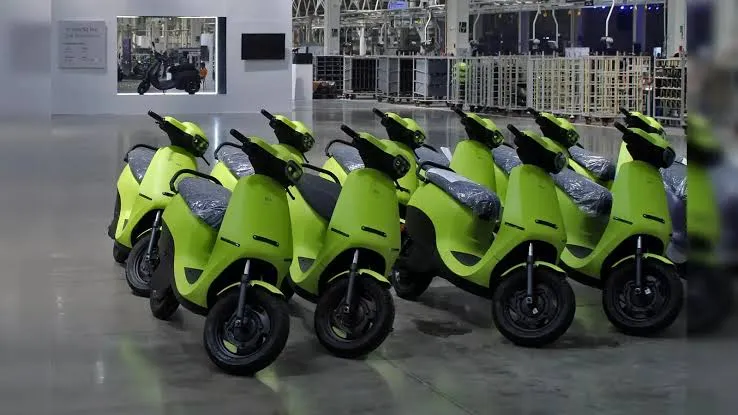
A car that brakes automatically, warns drivers about vehicles in their blind spot, and holds position in traffic without driver intervention has become fairly ordinary equipment in modern passenger vehicles. A motorcycle or scooter, by contrast, has almost none of this technology — despite two-wheelers accounting for a disproportionate share of India's road fatalities. Edgeverse, a Bengaluru-based edge-AI perception startup, has raised ₹3 crore from GVFL to close exactly that gap.
The funding will support Edgeverse's development of rider-assistance systems specifically engineered for two-wheelers, a vehicle category that has historically been overlooked by the advanced driver-assistance systems industry, which has concentrated its research and commercial focus almost entirely on four-wheeled passenger and commercial vehicles. That neglect sits uneasily alongside road-safety data showing two-wheeler riders and pillion passengers represent one of the largest single categories of road traffic deaths in India.
Building perception systems for two-wheelers presents distinct engineering challenges compared to their four-wheeled counterparts. Motorcycles and scooters have less surface area and power budget for sensors and compute hardware, operate in far more dynamic and unstable riding conditions, and must deliver alerts and interventions in ways that do not destabilise a rider already balancing the vehicle itself — a fundamentally different design constraint than alerting a driver seated inside a stable four-wheeled cabin.
Edgeverse's edge-AI approach — processing perception data directly on the vehicle rather than relying on cloud connectivity — is particularly suited to India's riding conditions, where network reliability can be inconsistent outside major urban centres and where latency in safety-critical alerts could make the difference between a warning and a collision. Local processing also addresses cost constraints, since two-wheelers occupy a far more price-sensitive market segment than cars, where every additional component must justify its expense to both manufacturers and consumers.
GVFL's investment reflects a broader pattern of Indian venture capital increasingly willing to back deep, hardware-adjacent AI startups tackling infrastructure-level problems rather than purely software-based consumer applications. Road safety technology, in particular, sits at an intersection of commercial opportunity and public interest that has attracted growing attention from both impact-oriented and purely financial investors as India's vehicle fleet — and its accident statistics — continue to expand.
For a market where two-wheelers vastly outnumber cars and represent the primary mode of transport for hundreds of millions of Indians, the commercial potential for affordable rider-assistance technology is substantial, assuming Edgeverse can prove its systems reliably reduce accidents at a price point manufacturers are willing to integrate. Whether the company can translate its ₹3 crore seed-stage funding into partnerships with two-wheeler manufacturers — rather than remaining a promising but unadopted technology — will determine its trajectory over the coming year.
India records one of the highest absolute numbers of road traffic fatalities globally, with government data consistently identifying two-wheeler occupants as among the most vulnerable categories of road users, alongside pedestrians and cyclists. Despite this, the advanced driver-assistance systems industry — spanning global giants like Bosch, Continental and Mobileye — has directed the overwhelming majority of its research and commercial investment toward four-wheeled vehicles, largely because passenger and commercial car manufacturers have historically represented a larger and more lucrative customer base for safety technology suppliers.
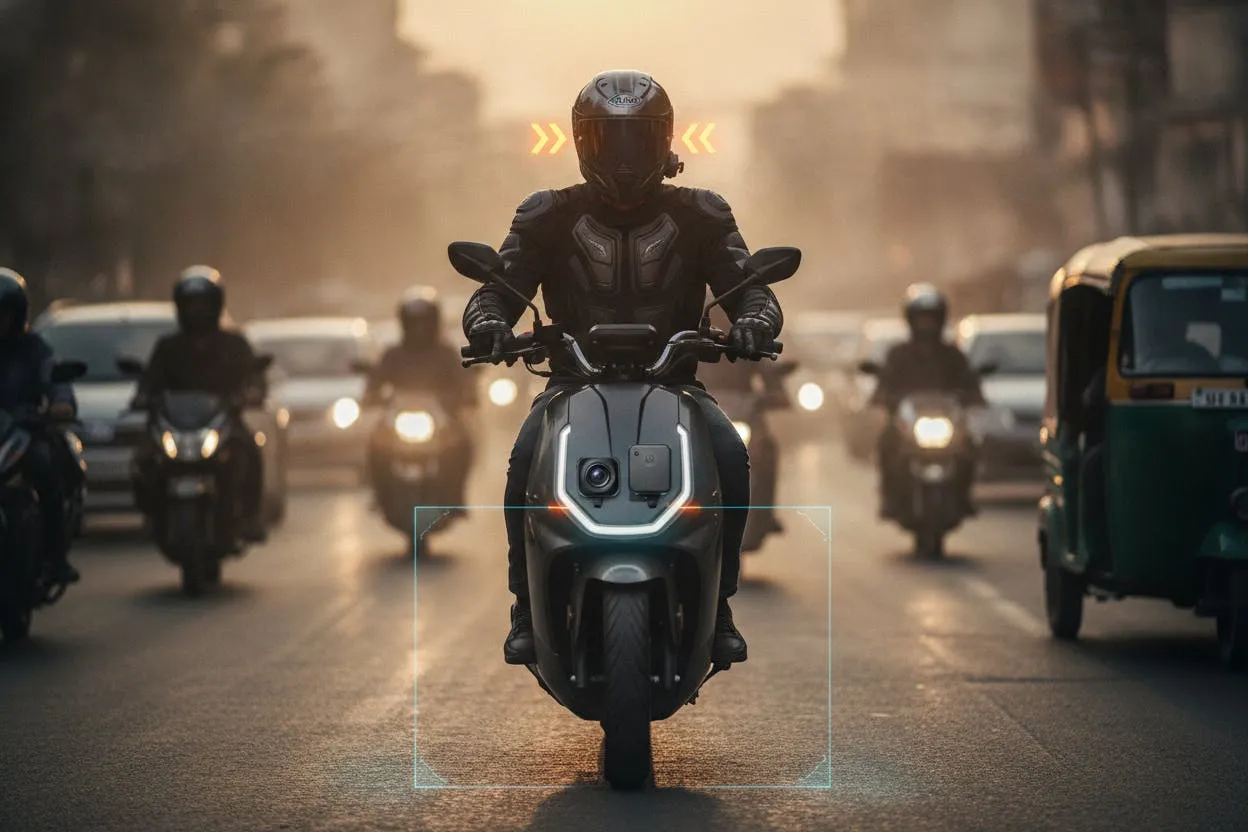
That imbalance has left a meaningful technology gap for startups like Edgeverse to address, though it also means the company faces the challenge of building an entirely new category of automotive safety technology with fewer established engineering playbooks or component supply chains to draw upon compared to founders building within the more mature four-wheeler ADAS ecosystem. Sourcing suitably compact, low-power sensors and compute hardware calibrated for two-wheeler form factors, rather than adapting components originally engineered for cars, is likely to remain an ongoing engineering challenge as the company scales.
GVFL's backing brings institutional credibility from one of India's longest-established venture capital firms, historically known for early-stage technology and life-sciences investments within Gujarat's startup ecosystem before expanding its mandate more broadly across Indian deep tech. The firm's willingness to back a hardware-adjacent, safety-critical AI startup at the seed stage suggests growing investor comfort with the category, even as many Indian venture funds continue to favour software-only business models with lower capital intensity and faster paths to revenue.
The commercial path for Edgeverse likely runs through partnerships with established two-wheeler manufacturers rather than direct-to-consumer aftermarket sales, given the integration complexity and safety certification requirements that typically accompany automotive safety technology. Securing even a single design partnership with a major two-wheeler original equipment manufacturer would represent a significant validation milestone, offering both revenue visibility and the kind of real-world deployment data needed to refine the underlying perception algorithms at scale.
As India's two-wheeler manufacturers face increasing regulatory and consumer pressure to improve vehicle safety standards, technology providers like Edgeverse that can offer affordable, purpose-built rider-assistance systems — rather than costly adaptations of automotive-grade ADAS hardware — may find themselves well positioned to become preferred suppliers as the safety-technology gap between two-wheelers and cars narrows over the coming years.
Beyond India, the addressable market for affordable two-wheeler safety technology extends across much of South and Southeast Asia, where motorcycles and scooters similarly dominate personal transport and where road-safety infrastructure often lags behind vehicle ownership growth. Should Edgeverse successfully prove its technology and secure Indian manufacturing partnerships, the same product could plausibly find receptive markets across Vietnam, Indonesia and other motorcycle-dependent economies facing comparable road-safety challenges.
At the seed stage, with ₹3 crore in fresh capital, Edgeverse's most immediate priority will likely be building and validating working prototypes robust enough to demonstrate to prospective manufacturing partners, rather than pursuing large-scale deployment. That validation phase — proving perception accuracy and rider-friendly alert design across real riding conditions — will shape how confidently the company can approach larger institutional investors for its next funding round.
Bengaluru's dense concentration of automotive-technology talent, spanning both established automotive suppliers and a growing cohort of mobility-focused startups, has likely benefited Edgeverse's early hiring and technical development, giving the company access to engineers already familiar with the sensor-fusion and embedded-systems challenges central to building reliable rider-assistance technology from the ground up.


