Elucid, the Boston-based health technology company developing AI-powered medical device and diagnostic technology, has raised $55 million in Series D funding, bringing its total capital raised to approximately $185 million since its founding. The round included participation from an unnamed medical device strategic partner alongside IAG Capital Partners, Elevage Medical Technologies and other investors, reflecting continued institutional confidence in the company's approach to applying artificial intelligence within clinical diagnostic and medical device workflows.
The company operates at the intersection of artificial intelligence and healthtech, a category that has attracted significant venture investment as AI capabilities have matured to the point of offering genuinely clinically useful applications, moving beyond earlier generations of health AI tools that often struggled to demonstrate reliable performance in real clinical settings. Elucid's continued ability to raise substantial follow-on capital through a Series D round suggests the company has built credible clinical validation and commercial traction for its underlying technology.
Participation from an undisclosed medical device strategic partner in the round is a notable detail, suggesting that an established player within the broader medical device industry sees sufficient strategic value in Elucid's technology to invest directly, a pattern increasingly common as large medical device and diagnostics companies seek to incorporate AI capabilities into their product portfolios through investment and partnership rather than purely in-house development, given the specialised expertise required to build clinically robust AI diagnostic tools.
Healthtech investment more broadly has remained one of the more resilient categories within the broader venture capital landscape, even as funding has grown more selective across many other technology sectors. Investors have shown particular interest in AI applications capable of demonstrating measurable clinical impact, whether through improved diagnostic accuracy, reduced clinician workload, or better patient outcomes, criteria that companies like Elucid must satisfy given the rigorous regulatory and clinical validation requirements inherent to the medical device industry.
The $185 million cumulative funding total positions Elucid among the better-capitalised companies within the AI-driven medical device category, providing substantial runway to continue investing in the clinical trials, regulatory approvals and commercial scaling activities that are typically required before AI-powered diagnostic and device technologies can achieve widespread adoption across hospital systems and clinical practices. These processes tend to unfold over considerably longer timelines than typical enterprise software adoption cycles, making sustained access to growth capital particularly important for companies in this category.
For IAG Capital Partners and Elevage Medical Technologies, the continued investment reflects specialised sector expertise in medical device and healthtech investing, an area that requires investors to evaluate not only conventional business metrics but also clinical evidence, regulatory pathway progress and reimbursement dynamics specific to the healthcare industry, factors that differentiate healthtech investment diligence considerably from evaluation criteria applied to typical consumer or enterprise software startups.
Elucid's continued fundraising success also reflects broader investor conviction that AI-enabled medical devices represent a durable, long-term growth category within healthcare technology, as hospital systems and clinicians increasingly look to AI tools to help manage growing patient volumes and increasingly complex diagnostic workflows amid persistent clinical staffing constraints across much of the global healthcare system.
As Elucid deploys its newly raised capital toward continued platform development and commercial expansion, the company's trajectory will offer an important signal of how successfully AI-driven medical device companies can navigate the combination of rigorous regulatory requirements and genuine clinical value creation needed to achieve sustained commercial success within the broader, rapidly evolving healthtech investment landscape.
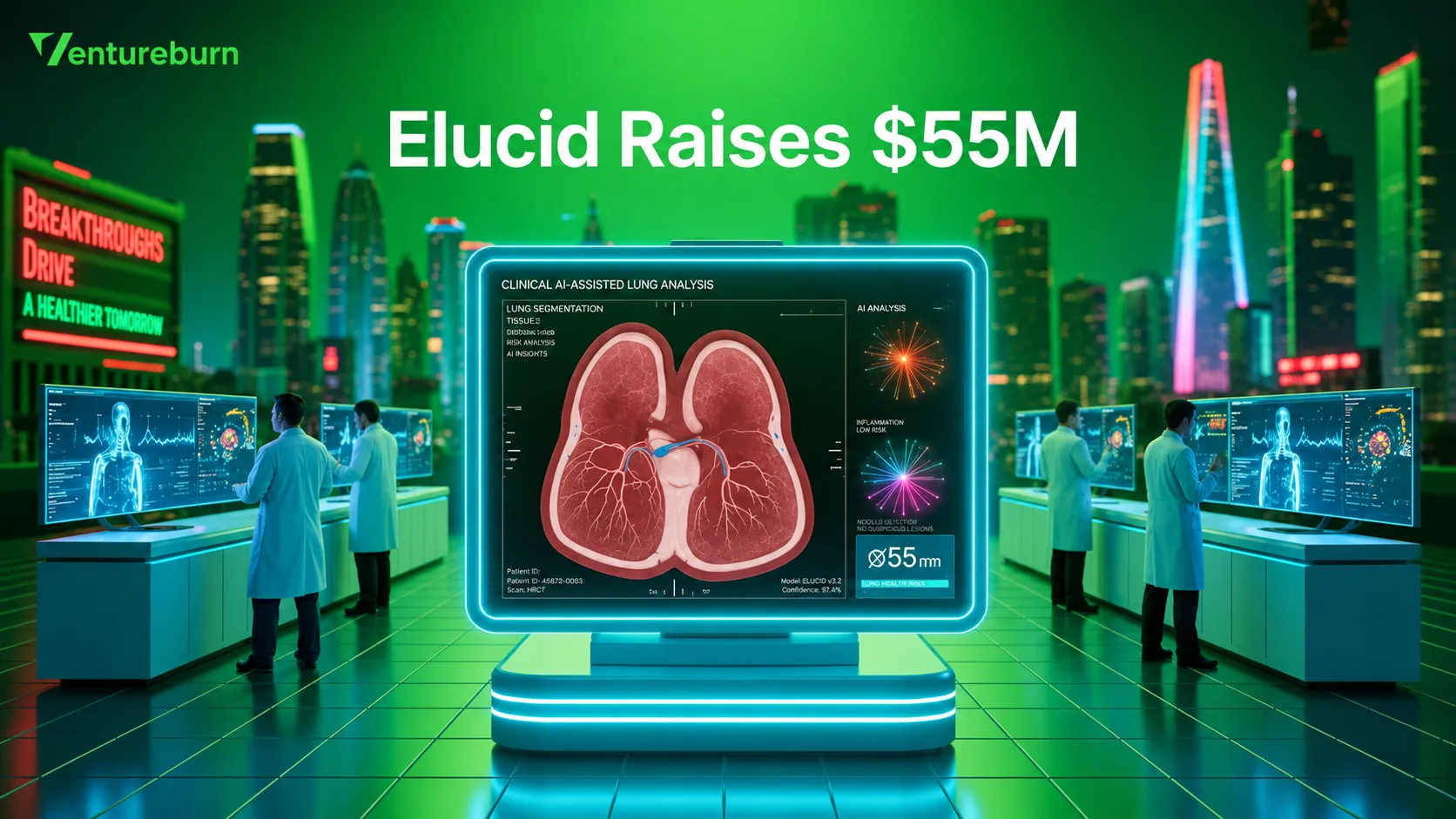
Medical technology investors note that companies successfully navigating the combination of rigorous clinical validation requirements and genuine AI-driven diagnostic value creation represent a comparatively small but increasingly well-capitalised segment of the broader healthtech investment landscape, given the substantial technical and regulatory barriers that have historically limited the number of companies able to achieve meaningful commercial scale in this category.
The participation of an undisclosed strategic medical device partner in Elucid's round also suggests growing appetite among established device manufacturers to secure early access or preferential partnership terms with promising AI diagnostic technology providers, rather than risk being displaced by AI-native competitors as the broader medical device industry increasingly incorporates artificial intelligence capabilities into core product lines.
As Elucid continues advancing its platform through further clinical validation and regulatory milestones, its trajectory will offer useful insight into how successfully AI-driven diagnostic technology companies can navigate the traditionally long and capital-intensive path toward widespread adoption across hospital systems and clinical practice settings globally.
Looking ahead, Elucid's progress through further clinical validation milestones and, eventually, broader commercial deployment across hospital systems will offer important insight into how effectively AI-driven diagnostic technology companies can navigate the healthcare industry's characteristically long adoption cycles while maintaining the investor confidence needed to fund continued development.
For healthtech industry readers, Elucid's Series D is a useful marker of which specific AI-driven medical technology categories are successfully clearing the field's notoriously difficult combination of regulatory, clinical and commercial hurdles, offering a template that other AI medtech founders may look to as they chart their own paths toward sustained institutional investor confidence.
It is also worth noting that Elucid's specific focus within AI-driven medical devices addresses a category where the clinical value proposition, more accurate and efficient diagnostic assessment, is comparatively easier to articulate and validate than in some other AI healthcare applications, likely contributing to the company's continued success in attracting substantial follow-on institutional capital.
Ultimately, Elucid's continued fundraising success offers encouraging evidence that AI-driven medical device companies capable of clearing rigorous clinical and regulatory hurdles can sustain strong institutional investor confidence, a pattern likely to encourage continued capital flows into similarly rigorous, clinically validated healthtech categories.
The company's progress will be closely tracked by investors seeking to understand which specific AI healthcare applications can most reliably clear the sector's demanding regulatory and clinical validation requirements.
That track record of sustained fundraising success is likely to keep Elucid among the more closely watched companies in AI-driven diagnostics over the coming funding cycles.
Its continued ability to attract strategic and institutional capital in equal measure suggests the broader medtech investment community sees a clear, defensible path from its current development stage toward eventual widespread clinical adoption across major hospital networks.