eMudhra, one of India's leading providers of digital certificates and signatures, said on Thursday, October 22, that it would voluntarily withdraw from the global SSL/TLS certificate business, days after a security researcher exposed weaknesses in certificates it had issued.
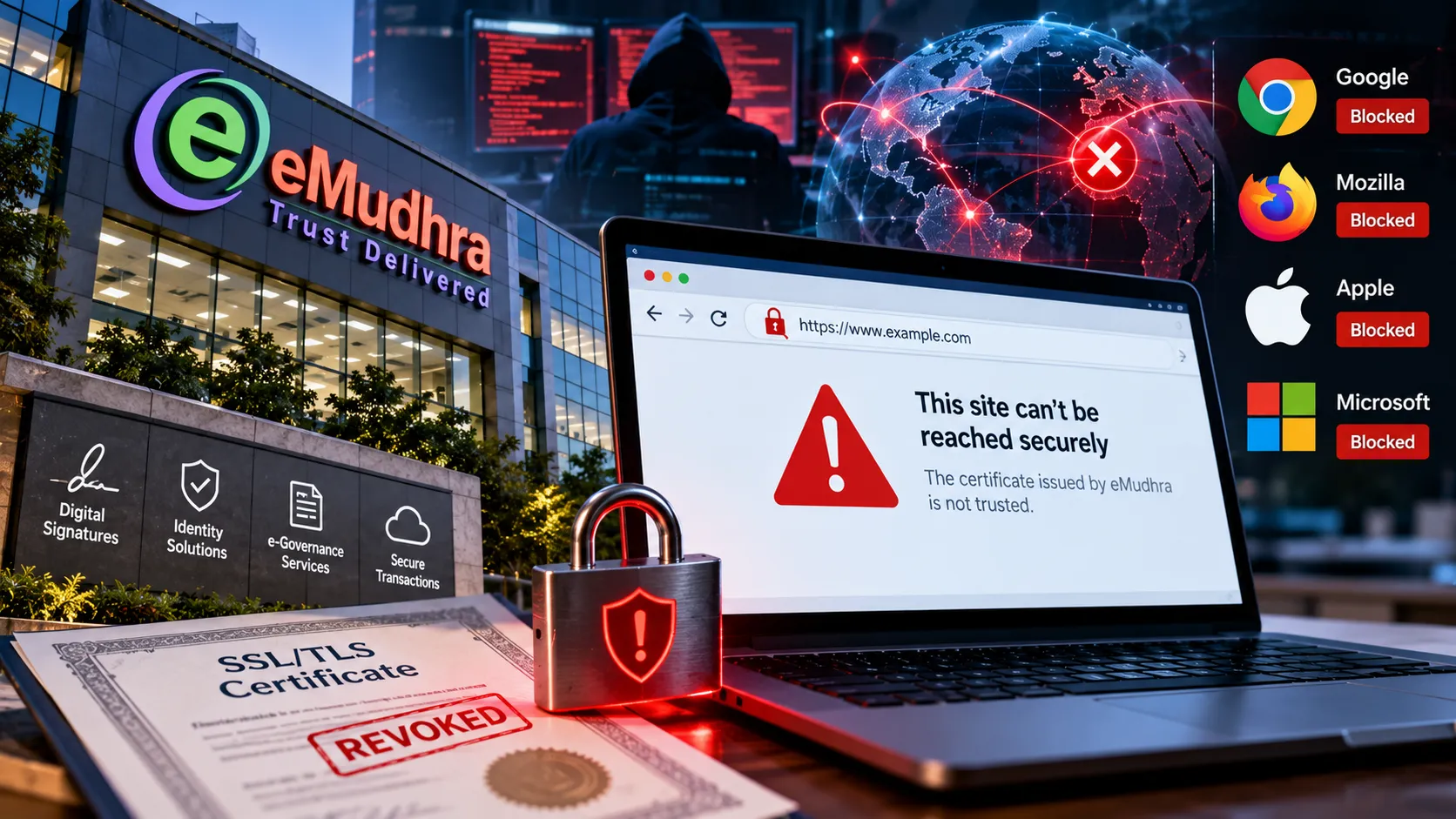
The decision follows a rapid sequence of events. Over the weekend, an independent cybersecurity researcher found that several key certificates issued by eMudhra were weak and "vulnerable to attack," Reuters reported. On Wednesday, India's Computer Emergency Response Team (CERT-In) issued an advisory saying some of eMudhra's intermediate certificates had been compromised. Google, Mozilla, Apple and Microsoft, which control the world's major web browsers and operating systems, blocked digital certificates issued by the company.
eMudhra said on Wednesday that it had withdrawn eight certificates. It said its infrastructure had not been compromised and no data had been breached.
Why certificates matter
SSL/TLS certificates are the foundation of security on the internet. When a user visits a website with an address beginning "https," the browser checks a digital certificate to confirm that the site is genuine and to set up an encrypted connection. The padlock symbol in a browser's address bar depends on this system.
Certificates are issued by certificate authorities, which browser makers and operating system vendors trust. That trust is hierarchical: root certificates, held by the authority, sign intermediate certificates, which in turn sign the certificates used by individual websites. If an intermediate certificate is compromised or uses weak cryptographic keys, attackers could potentially forge certificates and impersonate websites, intercepting sensitive communications.
Because the entire system depends on trust, browser makers act quickly when they find problems. In recent years, Google and Mozilla have removed trust from several certificate authorities over compliance failures, including Entrust in 2024.
A small business, a big impact
In a follow-up statement on Thursday, eMudhra said the global SSL/TLS certificate business contributed just 1% of its revenue, according to Reuters. The company said the scrutiny the incident had drawn was out of proportion to the significance of the business line, citing rising compliance costs and declining returns from the unit.
Investors reacted sharply nonetheless. eMudhra's shares fell 40% in the two days after the vulnerability was disclosed, reflecting concern that the episode could damage its reputation in its core businesses.
That concern is understandable. eMudhra's broader business is built on trust. The company issues digital signature certificates, provides identity and authentication solutions, and offers technology for electronic signatures and document workflows. Its customers include Infosys and TCS, and it issues certificates to government agencies, including for some online public services such as India's income tax portal.
India's digital trust infrastructure
The episode has prompted wider questions about India's digital trust infrastructure. India has built one of the world's most extensive systems of digital public infrastructure, including the Aadhaar identity system, the Unified Payments Interface and DigiLocker, along with widespread use of digital signatures for tax filings, company registrations and government processes.
Certificate authorities in India operate under a licensing framework administered by the Controller of Certifying Authorities, under the Information Technology Act. Their certificates are used for a wide range of domestic applications, from e-filing to e-tendering.


