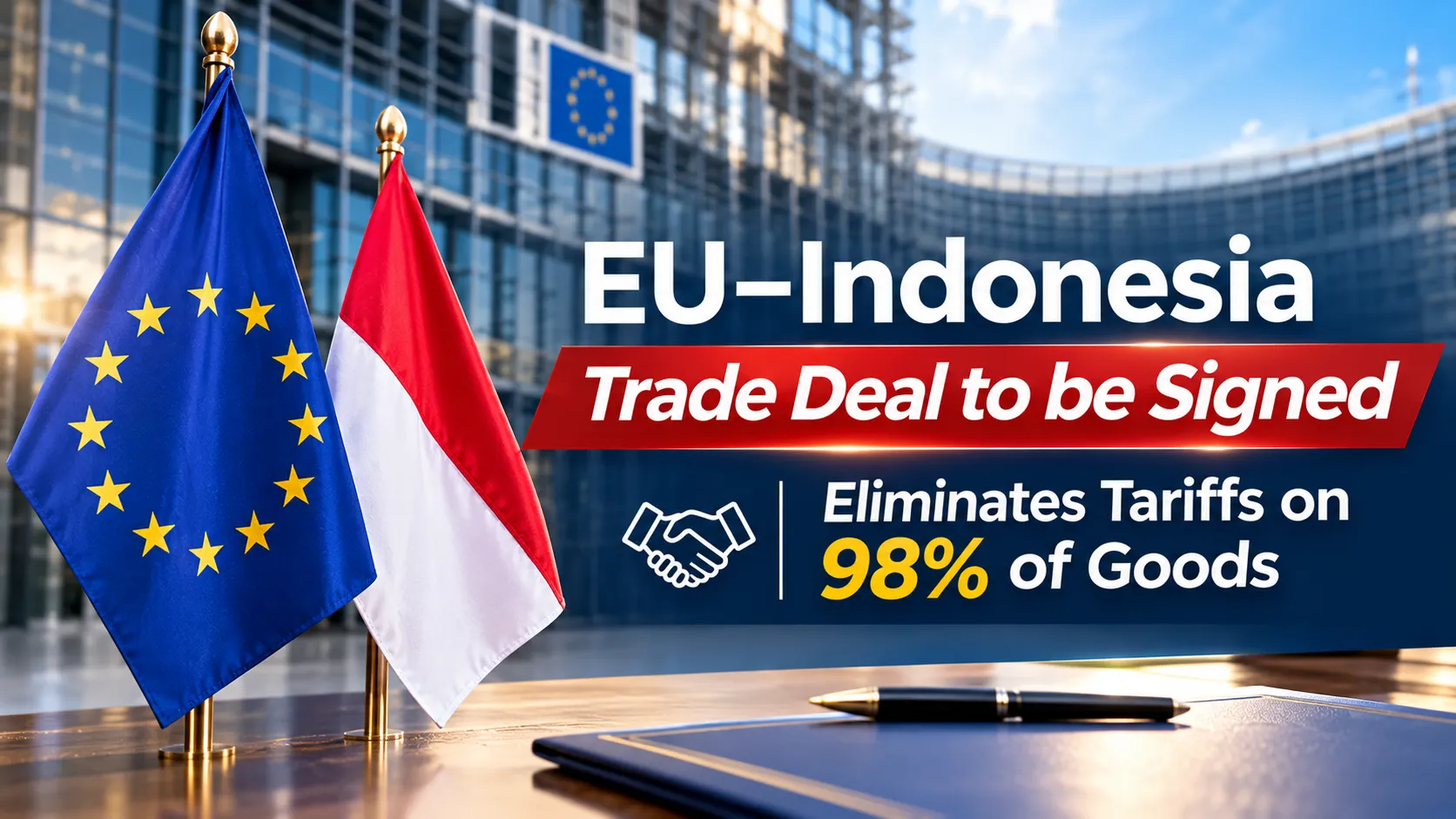
The European Union and Indonesia were scheduled to sign their long-awaited trade agreement in Brussels on Friday, November 21. The deal deepens ties between the 27-nation bloc and Southeast Asia's largest economy at a time of global trade uncertainty.
The Indonesia-European Union Comprehensive Economic Partnership Agreement (IEU-CEPA) was set to be signed alongside a separate Investment Protection Agreement, according to Indonesia's Ministry of Trade. EU governments authorised the signature of the agreements earlier in the week.
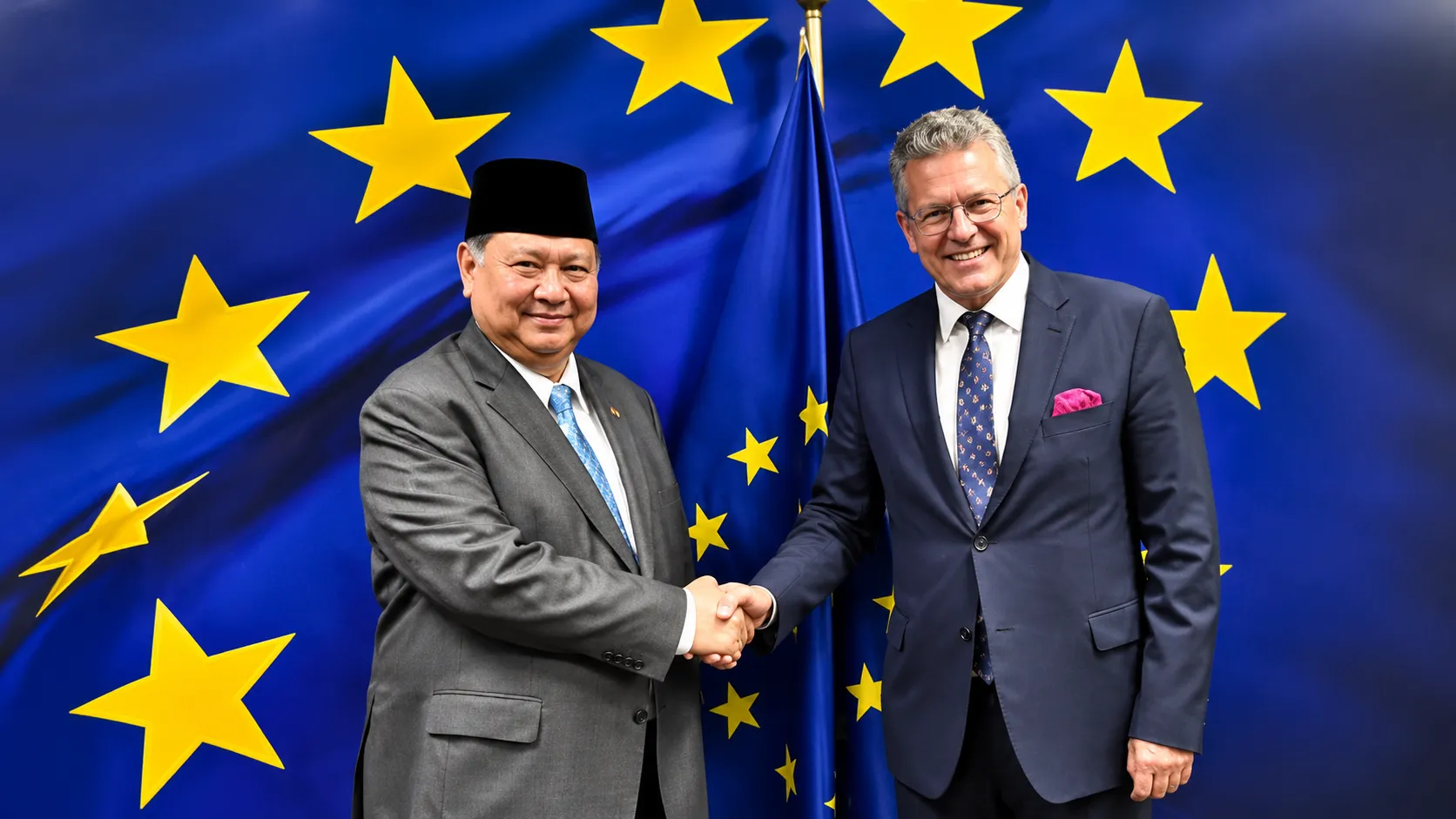
Negotiations began in 2016 and were concluded in September 2025, when EU Trade Commissioner Maroš Šefčovič and Indonesia's Coordinating Minister for Economic Affairs Airlangga Hartarto announced the deal in Bali. Signing is the next step before ratification. Indonesia is targeting full implementation in the first quarter of 2027.
What the deal covers
The agreement covers trade in goods and services, investment, customs procedures, technical barriers to trade, intellectual property and other areas. According to the European Commission, it will eliminate tariffs on more than 98% of tariff lines.
Indonesia's government has said the deal will eliminate EU tariffs on about 90.4% of its exports. Indonesia's 50% duty on cars imported from the EU will be eliminated within five years.
The deal also includes provisions on digital trade, government procurement and sustainable development. It contains a protocol on palm oil, one of the most sensitive issues in EU-Indonesia relations.
The separate Investment Protection Agreement is designed to give investors greater legal certainty when investing in each other's markets.
Trade between the two sides
Bilateral trade in goods between the EU and Indonesia was about €27.3 billion in 2024, according to the European Commission. The EU imported about €17.5 billion of goods from Indonesia and exported about €9.8 billion, giving Indonesia a significant surplus in goods trade. Services trade added nearly €9 billion, with the EU holding a lead in services.
Indonesia's main exports to the EU include palm oil, footwear, textiles, electronics and minerals. EU exports to Indonesia include machinery, chemicals, transport equipment and food products.
Both sides expect the agreement to increase trade significantly. Indonesia has projected that the deal could boost its exports to the EU substantially over the coming years
.
Why it took so long
The negotiations faced several obstacles. Palm oil was a major point of contention. Indonesia is the world's largest producer of palm oil, and EU regulations on deforestation and sustainability have been criticised by Indonesia as discriminatory. The EU's deforestation regulation, which requires companies to prove that products sold in the EU are not linked to deforestation, has been a particular source of tension.
Indonesia's policies on raw material exports were another issue. Indonesia has banned exports of unprocessed nickel ore to encourage domestic processing, a policy that has helped it attract large investments in nickel smelting and battery materials. The EU challenged the ban at the World Trade Organization.
The agreement's palm oil protocol and other provisions represent compromises on these issues.
A response to trade uncertainty
The deal gained momentum amid rising global trade tensions, particularly after the United States imposed higher tariffs on many trading partners. Both the EU and Indonesia have sought to diversify their trade relationships and reduce exposure to US trade policy.
The agreement is the EU's third with a Southeast Asian country, after Singapore and Vietnam. The EU has also been negotiating with other countries in the region, including Thailand, the Philippines and Malaysia.
Strategic importance
Indonesia is the world's fourth most populous country and the largest economy in Southeast Asia. It is a major producer of critical minerals, particularly nickel, which is essential for electric vehicle batteries. The EU is keen to secure access to these materials as it builds its own battery and EV industries.
The agreement could open investment in strategic sectors such as electric vehicles, electronics and pharmaceuticals. European companies may see Indonesia as both a growing consumer market and a manufacturing base for the wider region.
What it means for India
The EU-Indonesia deal is relevant for India in several ways. India has been pursuing its own comprehensive trade agreement with the EU, and the progress of other Asian countries in securing EU deals adds competitive pressure. Indonesian exporters may gain an advantage over Indian competitors in sectors such as textiles, footwear and certain manufactured goods if India's own agreement is delayed.
India and Indonesia are also partners and competitors in global trade. Both are large emerging economies seeking to attract manufacturing investment as companies diversify their supply chains.
Next steps
After signature, the agreements must be approved by the European Parliament and ratified by Indonesia. The investment protection agreement may require ratification by individual EU member states, which can take longer.
Indonesia aims to implement the trade agreement in the first quarter of 2027, giving its exporters faster access to the EU's 27-member market.
For The Impactful Global Indian's readers, the EU-Indonesia agreement is part of a broader reshaping of global trade networks. As major economies sign new agreements to diversify their partnerships, countries that move quickly to secure market access may gain a lasting advantage in the competition for trade and investment.
Sustainability provisions
Like other recent EU trade agreements, the deal includes a chapter on trade and sustainable development, covering labour rights, environmental protection and climate commitments. These provisions have become an increasingly important part of EU trade policy, reflecting pressure from the European Parliament and civil society to ensure that trade agreements support environmental and social goals.
For Indonesia, sustainability provisions are closely linked to its commodity exports, including palm oil, nickel and timber. Critics of the agreement, including some environmental groups, have raised concerns that increased trade could encourage deforestation or environmentally damaging mining. Supporters argue that the agreement creates a framework for dialogue and cooperation that can raise standards over time.
How these provisions are implemented and enforced will be watched closely, and they could serve as a reference point for India's own negotiations with the EU, where sustainability and carbon border measures have also been sensitive issues. Indian negotiators will be studying the final text closely as they shape their own approach.