FundingAnalysis5 MIN READ

Fed Holds Rates at 3.75-4% in a Split 10-2 Vote as Cook and Hammack Push for a Hike and Warsh Moves to Fewer Meetings From 2027

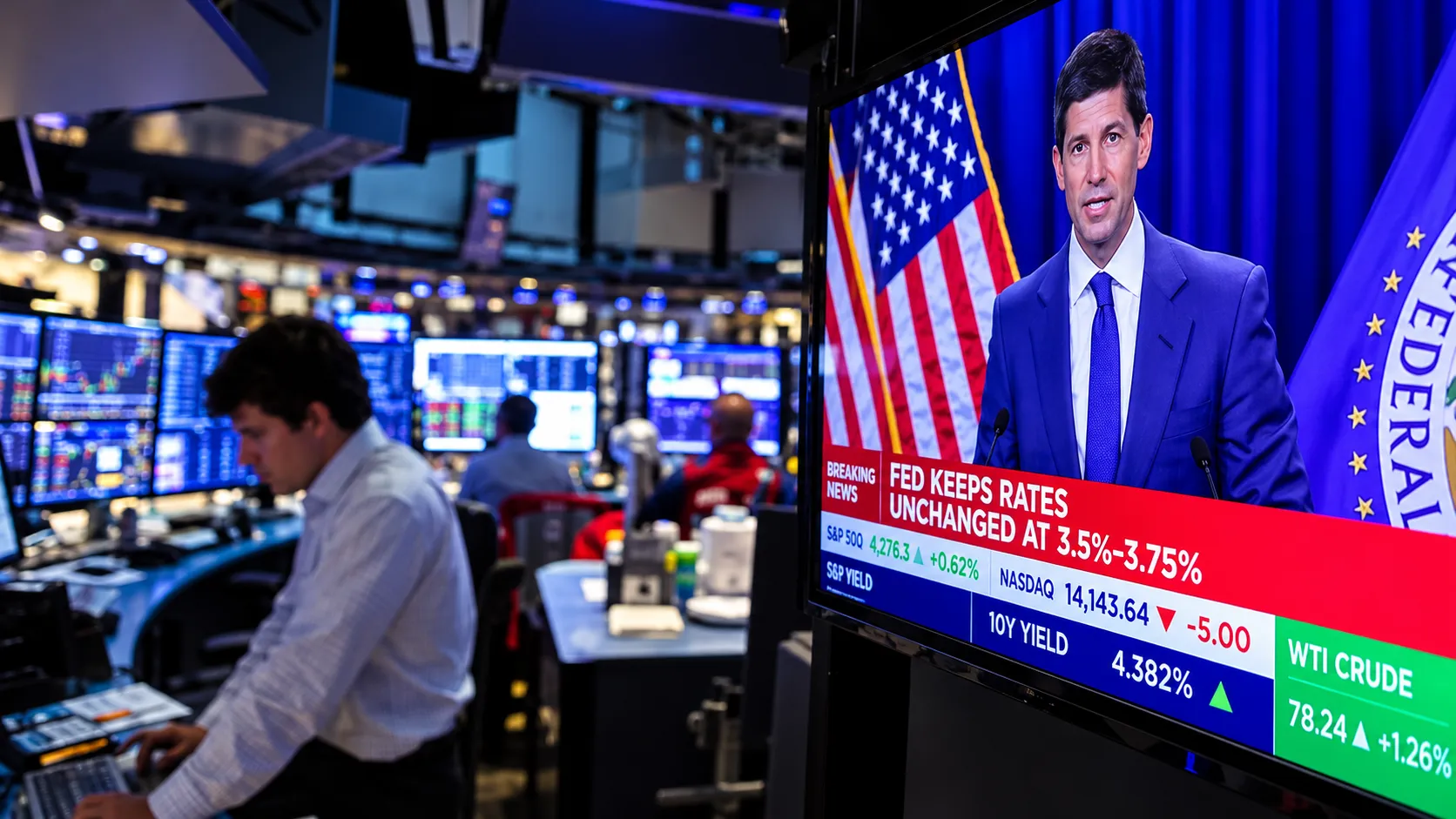
The US Federal Reserve kept its benchmark rate at 3.75-4% on October 28 in a 10-2 vote, with Governor Lisa Cook and Cleveland Fed President Beth Hammack favouring a quarter-point hike. The Fed upgraded its view of growth to "strong", said inflation remains elevated, and Chair Kevin Warsh said the committee will hold fewer rate-setting meetings starting in 2027.

By Shaym Kumar · Author30 October 2026New
Fed Holds Rates at 3.75-4% in a Split 10-2 Vote as Cook and Hammack Push for a Hike and Warsh Moves to Fewer Meetings From 2027

The US Federal Reserve left interest rates unchanged on Wednesday, but a split vote and a more upbeat view of the economy signalled that the central bank's fight against inflation may not be over.

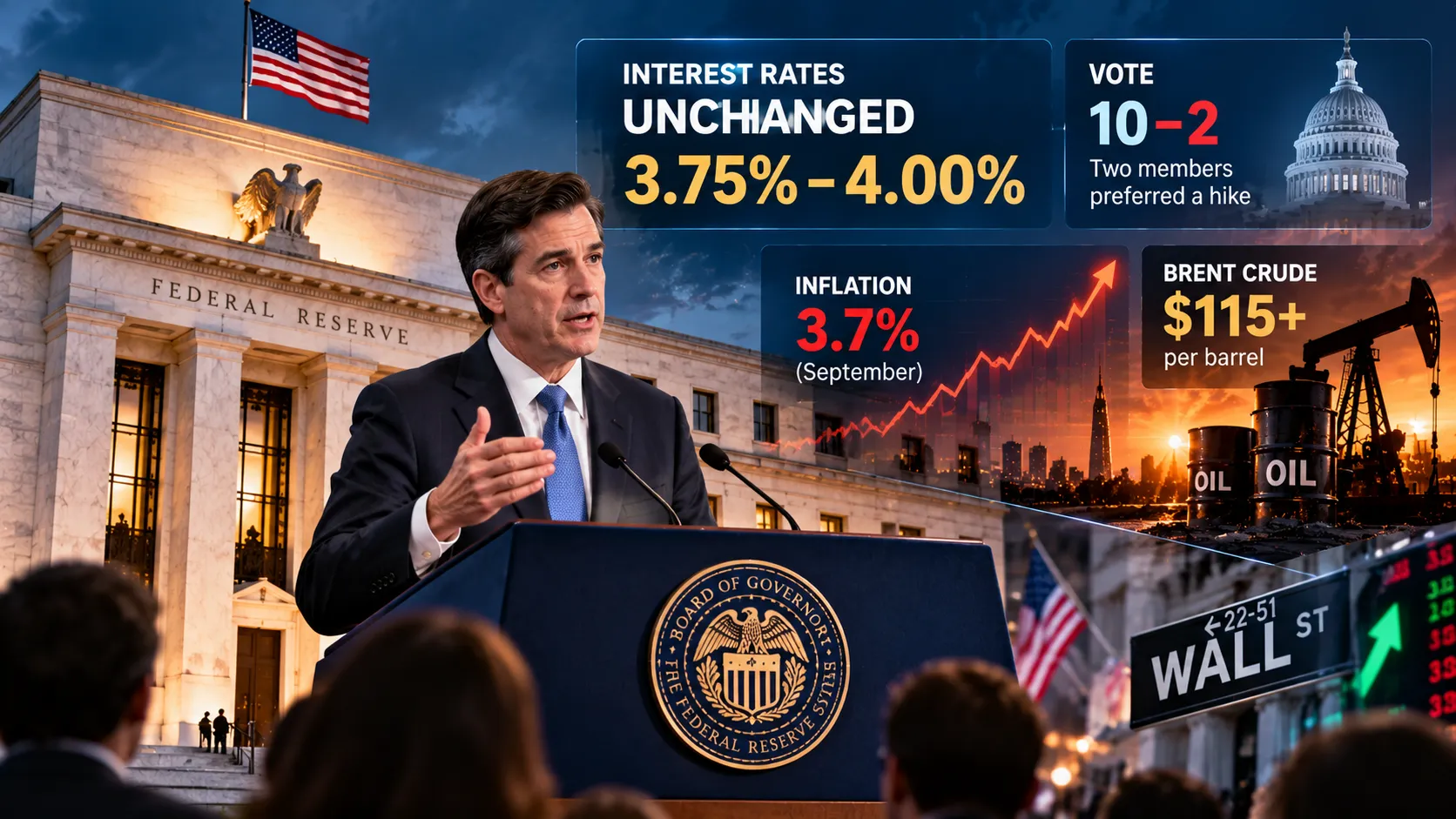
The Fed held its benchmark federal funds rate in a range of 3.75% to 4% at the end of its two-day meeting on October 28, six days before the US midterm elections, according to Fortune. The decision followed a quarter-point increase in September, the Fed's first rate hike since 2023 and the first under Chair Kevin Warsh.

Two dissenters want a hike

The vote was 10-2. Governor Lisa Cook and Cleveland Fed President Beth Hammack dissented, both preferring a quarter-point increase. Hammack's dissent had been widely expected, but Cook's was a surprise, Fortune reported. Previews had named Hammack, Dallas Fed President Lorie Logan and Minneapolis Fed President Neel Kashkari as the most likely dissenters.

Dissent from a sitting governor is relatively rare and signals that support for tighter policy extends beyond the regional Fed presidents who often take more hawkish positions.

What the statement said

The Fed upgraded its description of economic activity, saying it is expanding at a "strong" pace, compared with "solid" in September. It said inflation "remains elevated."

A new line in the statement read: "The accumulation of more information will help the Committee determine the policy stance appropriate" for returning inflation to its 2% goal in a timely way. That language replaced September's statement that the hike would support a faster return to the 2% target, and it leaves room for further increases depending on incoming data.

The closing line was unchanged: "The Committee will deliver price stability."

Inflation running hot

Consumer prices rose 3.7% from a year earlier in September, driven by gasoline, according to Fortune. Core inflation, which excludes food and energy, rose 2.6% and came in above forecasts. Overall inflation is approaching the three-year high reached in May.

The surge in energy prices, driven by conflict in West Asia, has pushed up fuel and transport costs. Brent crude rose above $115 a barrel on Wednesday after Yemen's Houthis said they had struck Saudi Arabia's largest refinery.

Fewer meetings

In a notable procedural change, Warsh said the Fed will hold fewer rate-setting meetings starting in 2027. The Fed currently holds eight scheduled meetings a year. Reducing the number could signal a shift towards a less reactive approach to policy, with decisions based on larger accumulations of data.

Warsh, who took office after being nominated by President Donald Trump, has avoided signalling the Fed's next move. "I don't prejudge meetings," he said earlier this month. During his press conference, he said politics played "no role" in the decision ahead of the midterm elections, according to Yahoo Finance's live coverage.

Markets react

US stocks were little changed after the decision, with the S&P 500 and Nasdaq each up about 0.2%, according to Nation Thailand. The two-year Treasury yield fell to 4.7%, while the 10-year yield rose to about 5.04%.

Analysts were divided on the outlook. Some argued that the Fed should have raised rates immediately, while several expected a hike in December. Others suggested markets may be overestimating the number of future increases. Traders are betting on a rate increase at the December meeting, according to Fortune.

“The accumulation of more information will help the Committee determine the policy stance appropriate.”
— Federal Open Market Committee statement

Canada hikes, the Fed waits

The Fed's decision contrasted with the Bank of Canada, which raised its policy rate by a quarter point to 2.5% on the same day, its first hike since July 2023, citing a substantially higher inflation outlook driven by energy prices. Central banks around the world are wrestling with how to respond to the energy shock without derailing growth.

The political backdrop

The decision came days before the midterm elections, which will determine control of Congress. Interest rates and inflation are politically sensitive, and the Fed's independence has been closely watched under Warsh, who was nominated by Trump.

bea05d9b-595a-43e5-8056-578b3f66f665.png

What it means for India

For India, the Fed's hawkish hold has significant implications. Higher US interest rates and a strong dollar tend to draw foreign capital away from emerging markets. Foreign investors have sold record amounts of Indian equities this year, and the rupee has weakened to about 95.2 per dollar.

The prospect of a December hike could add further pressure on the rupee and Indian assets, and may influence the Reserve Bank of India's own policy decisions, as it balances inflation risks from high oil prices against the need to support growth.

The Warsh Fed

The meeting was one of the early decisions under Chair Kevin Warsh, whose leadership has been closely watched by markets. Warsh has long argued for changes in how the Fed communicates and conducts policy, and the move to fewer meetings from 2027 reflects that agenda. Investors are still learning how his Fed will respond to the competing pressures of rising energy prices and strong growth.

The two dissents in favour of a hike show that some policymakers are increasingly concerned about inflation. Lisa Cook and Beth Hammack argued that the rise in prices, driven partly by energy, warranted tighter policy. Their dissents suggest that the debate within the Fed could shift towards tightening if inflation continues to rise.

The oil shock and the Fed

Rising oil prices pose a classic dilemma for central banks. Higher energy costs push up headline inflation, which argues for tighter policy, but they also act as a tax on consumers and businesses, slowing growth, which argues for patience. The Fed has generally sought to look through temporary energy price spikes, focusing on core inflation, which excludes food and energy. With core inflation at 2.6% but headline inflation at 3.7%, the gap illustrates how much energy has pushed up overall prices, and why policymakers are divided.

What comes next

The Fed's next meeting is in December. Incoming data on inflation, employment and economic growth will determine whether it raises rates again. Investors will also watch the outcome of the midterm elections and developments in the Middle East, which will affect energy prices and the inflation outlook. Investors will also scrutinise speeches by Fed officials in the coming weeks for signals about whether more policymakers are moving towards the hawkish view expressed by the two dissenters. Bond yields and the dollar are likely to remain sensitive to any shift in tone, with knock-on effects for emerging markets, including India.

TagsFederal ReserveFed decisionKevin Warshinterest ratesFOMCLisa CookBeth Hammackinflationrate hikeTreasury yieldsUS dollarUS economymidterm electionsmonetary policyBank of Canadaemerging marketsrupeeRBIWall Streetinvestors

Reader reviews

Sign in to rate and review this article.
Loading reviews…

