Indian equities head into a holiday-shortened week under the weight of relentless foreign selling. Foreign institutional investors sold shares worth ₹3,693.93 crore on Friday, according to NSE data, taking their net sales for September to ₹17,131 crore and their cumulative selling for 2026 to ₹2,41,572 crore, based on NSDL figures. Domestic institutional investors bought ₹2,838 crore on Friday, cushioning the impact, but not enough to reverse the trend.
Early indications for Monday were negative. GIFT Nifty futures traded around 23,110 to 23,118 in the early hours, down roughly 70 points, as most Asian markets declined and Brent crude rose after the United States rejected Iran's latest proposal to reopen the Strait of Hormuz.
Seven weeks of losses
The Nifty 50 closed the week ended 25 September at 23,140.50, down 205.90 points or 0.9 per cent, its seventh consecutive weekly decline. The Sensex ended at 73,895.74, down 399.22 points or 0.5 per cent. The seven-week losing streak is the Nifty's longest since the market collapse at the start of the Covid-19 pandemic in 2020, and the index has fallen about 5.8 per cent over that period.
The week's sharpest move came on Thursday, when the Nifty dropped 383.70 points, or 1.64 per cent, to 23,063.10, and the Sensex fell 1,247.71 points, or 1.67 per cent, to 73,580.54. It was the steepest single-session decline in about 10 weeks, erasing an estimated ₹4 lakh crore of market value and taking the Nifty to a five-month low. A sell-off in insurance distribution stocks, after the insurance regulator proposed lower commissions, contributed to the damage. Friday brought a partial recovery, with the Sensex gaining 315.20 points as value buyers stepped into banks, autos and real estate.
Why foreign investors are selling
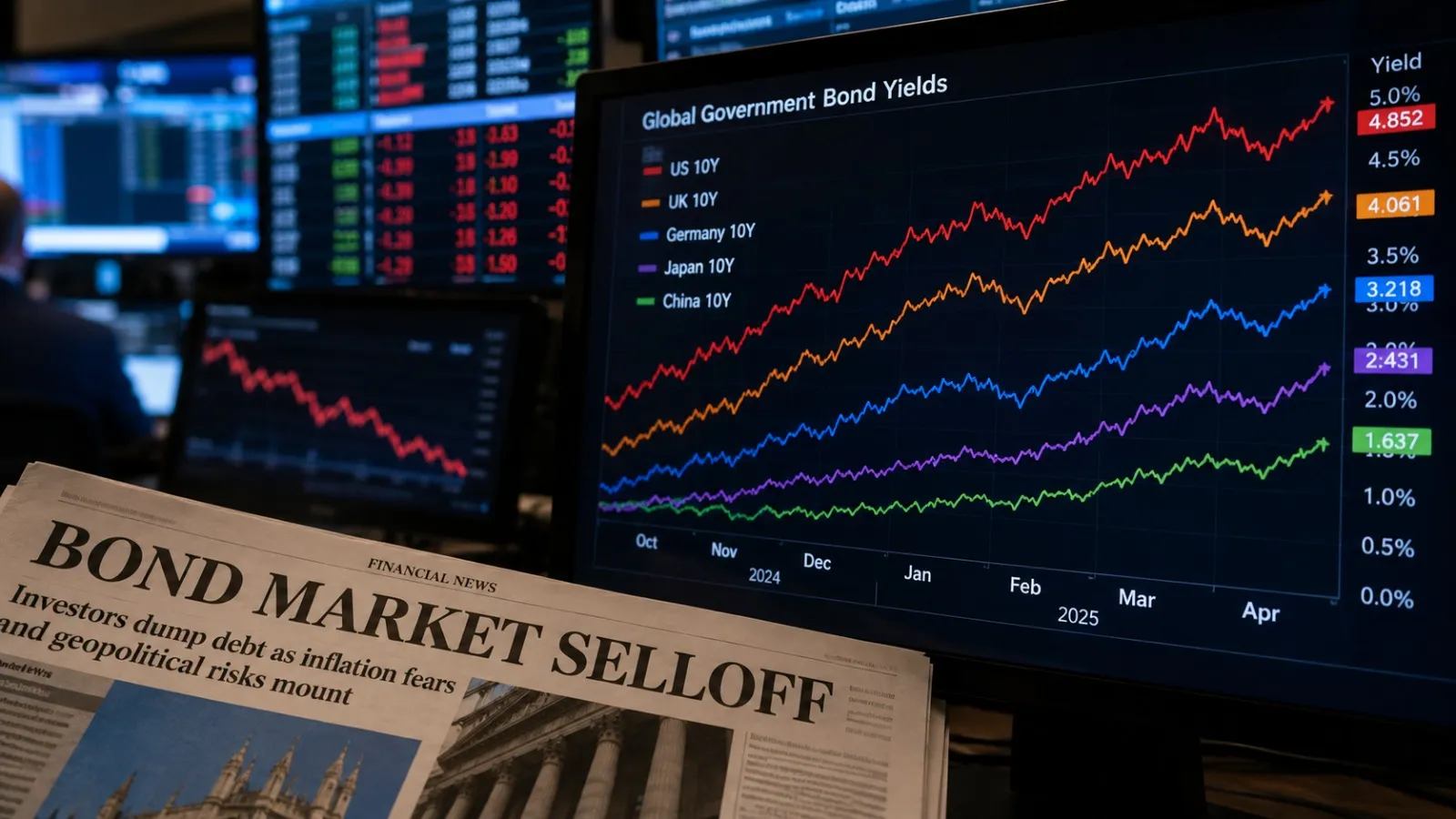
Several forces are pushing foreign capital out of Indian equities at the same time. The first is US interest rates. The Federal Reserve raised rates earlier this month for the first time since 2023, and US 10-year Treasury yields have climbed above 5 per cent. Higher risk-free returns at home reduce the appeal of emerging-market equities. One measure captures the squeeze: the spread between the Sensex's earnings yield and the US 10-year Treasury yield has turned negative and is at its lowest level in 14 months, according to Business Standard analysis.
The second is oil. Brent crude has traded above $100 a barrel for much of September because of disruption in the Strait of Hormuz linked to the conflict involving Iran. India imports most of its crude, so higher oil prices widen the current account deficit, pressure the rupee and raise inflation risk. For foreign investors measuring returns in dollars, rupee weakness compounds equity losses.
The third is valuation and relative opportunity. Even after the correction, Indian equities trade at a premium to most emerging markets. With Wall Street's technology stocks near records and markets such as South Korea and Taiwan benefiting from the AI hardware boom, global funds have found more attractive destinations for incremental capital.
Domestic investors as shock absorbers
The persistent presence of domestic buyers has prevented a steeper fall. Mutual fund inflows through systematic investment plans have remained resilient, giving domestic institutions a steady stream of money to deploy. On Friday, DIIs bought ₹2,838 crore, absorbing most of the foreign selling. This dynamic, domestic money offsetting foreign outflows, has become a defining feature of Indian markets since 2022.
It has limits. Domestic flows can slow the decline, but they cannot fully offset sustained foreign selling of this scale, especially in large caps where foreign ownership is highest. Broader markets have also come under pressure. The Nifty Midcap 100 has fallen about 6 per cent in a month and slipped below its 200-day exponential moving average, a closely watched technical level.
The rupee is part of the same equation. With crude elevated and foreign money leaving, the currency has leaned on the Reserve Bank of India's intervention, and the central bank has used both dollar sales and a concessional deposit swap scheme to manage volatility. A stable rupee reduces the currency losses foreign investors face, so any sign of calmer oil prices tends to help both the currency and equities at once.
Levels to watch
Technical analysts are cautious. Sachin Gupta, vice president of technical research at Choice Equity Broking, said: "The Sensex continues to maintain a sideways-to-bearish outlook, with 73,200-73,450 acting as the crucial support zone." He added that sustained buying above 74,000 could strengthen the recovery and open the way towards 74,200 to 74,500, while a break below the support band could revive selling pressure. For the Nifty, analysts are watching whether the index can reclaim and hold the 23,120 level it broke on Thursday, with the 23,000 to 23,050 zone as near-term support.
A four-day week of catalysts
This week has only four trading sessions, as markets will be closed on Friday, 2 October, for Gandhi Jayanti. Several catalysts are lined up. The most important is the outcome of indirect talks between the United States and Iran, which President Donald Trump said he expects to continue this week. Any sign of progress on reopening the Strait of Hormuz would likely pull oil prices lower and support Indian equities.
Investors will also watch US economic data, including the Federal Reserve's preferred inflation gauge and the monthly jobs report, for signals on whether the Fed will raise rates again this year. At home, a busy primary market calendar, including the final day of the Moneyview IPO and several new listings, will test appetite for fresh paper.
What investors should consider
For long-term investors, including the global Indian diaspora with exposure to Indian equities, the current phase is a reminder that India's growth story does not insulate its markets from global forces. Oil, US rates and the dollar remain the dominant short-term drivers. At the same time, corrections of this kind have historically created entry points for patient capital, particularly when domestic earnings growth remains intact.
The critical variable is the duration of the oil shock. If diplomacy produces a credible path to reopening the Strait of Hormuz, the pressure on the rupee, inflation and foreign flows could ease quickly. If the conflict escalates, Indian equities may face further outflows before valuations become compelling enough to lure foreign investors back. For now, the market is caught between resilient domestic buying and persistent foreign selling, and the next move is likely to be decided far from Dalal Street.