
StartupsLatest7 MIN READ

Beauty Quick-Commerce Startup Firi Raises $3 Million Led by 360 ONE Asset, Kunal Shah Joins as Angel Investor

Gurugram-based Firi, founded by former Uber India executives, has raised $3 million to expand its AI-curated beauty and personal-care quick-commerce platform, with CRED founder Kunal Shah among its backers.

By Aravind Kumar · Author18 September 2026New
Beauty Quick-Commerce Startup Firi Raises $3 Million Led by 360 ONE Asset, Kunal Shah Joins as Angel Investor

Firi, a Gurugram-based beauty and personal-care quick-commerce startup, has raised $3 million in a funding round led by 360 ONE Asset, with participation from Better Capital, CRED founder Kunal Shah, and a clutch of other angel investors. The round, closed on September 16, 2026, will fund the company's expansion into new product categories including makeup and fragrances, alongside the addition of more dark stores across Gurugram ahead of a planned push into other Indian cities. The deal is one of several quick-commerce and beauty-tech bets to land in Indian founders' hands this week, underscoring how much investor interest continues to concentrate around ultra-fast delivery models layered with product curation.

Firi was founded in 2026 by Vivek Madani and Karishma Rathaur, both former Uber India executives who left the ride-hailing giant to build a beauty platform around a specific insight: that India's beauty and personal-care shoppers, faced with an overwhelming number of product options across skincare, haircare and cosmetics, were increasingly turning to reviews and word-of-mouth before purchasing — and that most existing platforms did a poor job of surfacing that signal at the point of sale. Firi's answer has been to build an AI system that ingests and analyses product reviews at scale before a product is ever listed on the platform. According to the company, it has analysed more than 50 million reviews to date and used that analysis to shortlist around 3,000 products for its current catalogue, a curation-first approach that stands in contrast to the exhaustive-catalogue strategy pursued by many quick-commerce operators.

Speed of delivery remains central to Firi's proposition. The company says deliveries in parts of Gurugram are currently completed in as little as nine minutes, placing it firmly within the ultra-fast delivery window that has come to define India's quick-commerce category since the model's rise to prominence in the country's largest cities. That speed is made possible by a network of dark stores — small, hyperlocal fulfilment centres stocked specifically for rapid picking and dispatch — which the new funding will help Firi expand within its home market before it attempts to replicate the model elsewhere. The decision to deepen density in Gurugram before expanding geographically reflects a lesson quick-commerce operators across categories have learned the hard way in recent years: unit economics in ultra-fast delivery depend heavily on order density within a tight delivery radius, and spreading too thin, too early, has undone more than one ambitious quick-commerce launch in India.

The involvement of Kunal Shah as an angel investor adds a recognisable name to Firi's cap table and reflects a broader pattern among India's most prominent founder-investors, who have increasingly used personal angel cheques to back a new generation of consumer startups addressing categories they know intimately from their own scaling journeys. Shah, who built CRED into one of India's most closely watched consumer fintech brands, has been a prolific angel investor across sectors in recent years, and his participation in Firi's round is likely to draw additional attention to the beauty quick-commerce category from other investors weighing similar bets.

India's beauty and personal-care market has been one of the more resilient consumer categories through 2026, supported by rising discretionary spending among younger, urban consumers and a proliferation of D2C beauty brands that has, paradoxically, made the category harder for shoppers to navigate rather than easier. That paradox — more choice producing more confusion rather than more satisfaction — is precisely the gap Firi is attempting to close by pairing curation with speed. Where a traditional beauty retailer or marketplace might stock tens of thousands of SKUs across hundreds of brands, Firi's decision to hold its catalogue to roughly 3,000 products, each vetted through review analysis before listing, is a bet that shoppers value trust and speed over exhaustive choice, at least in a category as personal and reputation-sensitive as beauty and skincare.
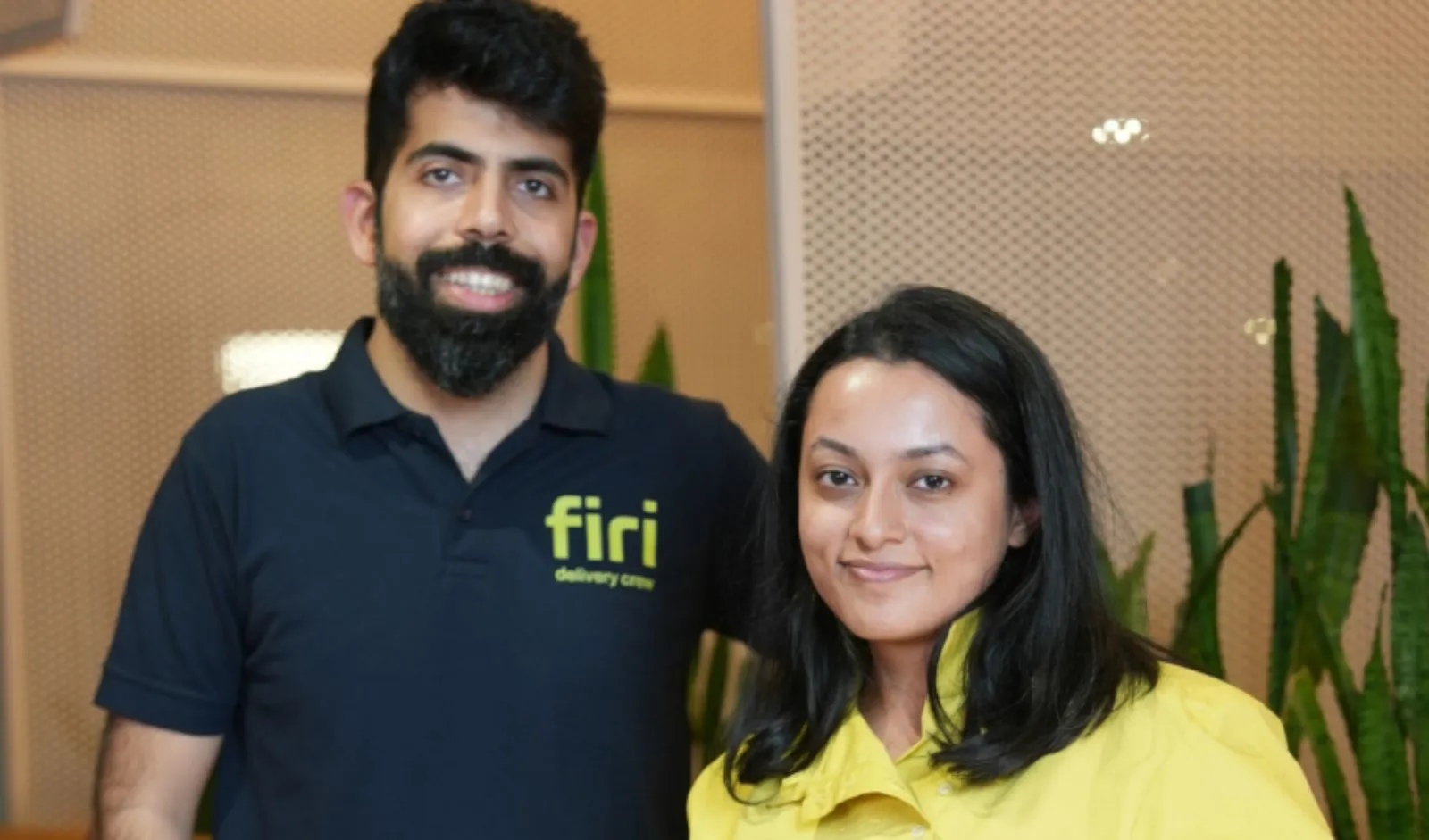

Firi has analysed more than 50 million product reviews to shortlist roughly 3,000 items for its curated beauty catalogue.
Company disclosure

image.png

The involvement of a woman co-founder in Rathaur's role is also notable within the broader context of India's startup funding landscape, where women-led and women-co-founded companies continue to receive a disproportionately small share of institutional venture capital relative to their share of founder headcount. Industry data compiled through 2026 has repeatedly shown that companies with at least one woman co-founder secure a meaningfully smaller share of total deal value than all-male founding teams, even as several studies point to comparable or superior capital efficiency among diverse founding teams. Firi's raise, while modest in absolute size, adds to a small but growing list of India-based quick-commerce and consumer-tech companies with women in senior founding roles that have successfully closed institutional rounds in 2026.

With fresh capital in hand, Firi's near-term roadmap is clear: deepen density in Gurugram, broaden into makeup and fragrance categories that carry higher average order values than core skincare and haircare, and build the operational muscle needed to eventually replicate the dark-store model in a second city. Whether the company can sustain nine-minute delivery windows as it scales beyond a single dense metro will be the central test of its unit economics — and, by extension, of whether curated, AI-assisted quick-commerce can carve out a durable niche in a beauty market that big horizontal quick-commerce players have already begun to target aggressively.

Firi also enters a beauty quick-commerce field that has begun to attract attention from India's largest horizontal quick-commerce operators, several of which have expanded their own beauty and personal-care assortments substantially over the past year as they look to improve order values and customer stickiness beyond grocery staples. That competitive dynamic raises an important strategic question for focused players like Firi: whether a curated, single-category platform can defend its position against larger operators with far greater delivery infrastructure and customer reach, or whether curation and category depth become durable enough differentiators to sustain an independent, VC-backed business. Firi's bet, implicit in its founders' background at Uber India, is that operational discipline around delivery logistics — honed at one of the world's most sophisticated logistics companies — combined with a genuinely differentiated curation layer can offset the scale disadvantage it faces against larger, better-capitalised rivals.

The $3 million round is unlikely to be Firi's last. Quick-commerce businesses are notoriously capital-intensive in their early years, as dark-store buildouts, inventory financing and delivery-fleet costs accumulate well ahead of revenue reaching a scale that can support them independently. Investors in this round will be watching closely for early indicators — repeat purchase rates, average basket size as the company expands into higher-margin categories like fragrance and makeup, and delivery cost per order as the dark-store network matures — that would justify a larger institutional round in 2027. For now, Firi's raise adds another data point to a beauty quick-commerce category in India that remains young, competitive and unproven at scale, but that continues to attract capital from investors betting that curated, AI-assisted commerce can carve out durable customer loyalty in a market defined by abundant choice and eroding brand differentiation.

TagsFiriQuick CommerceBeauty Tech360 ONE AssetKunal ShahKarishma RathaurGurugramIndia Startups

Reader reviews

Sign in to rate and review this article.
Loading reviews…

