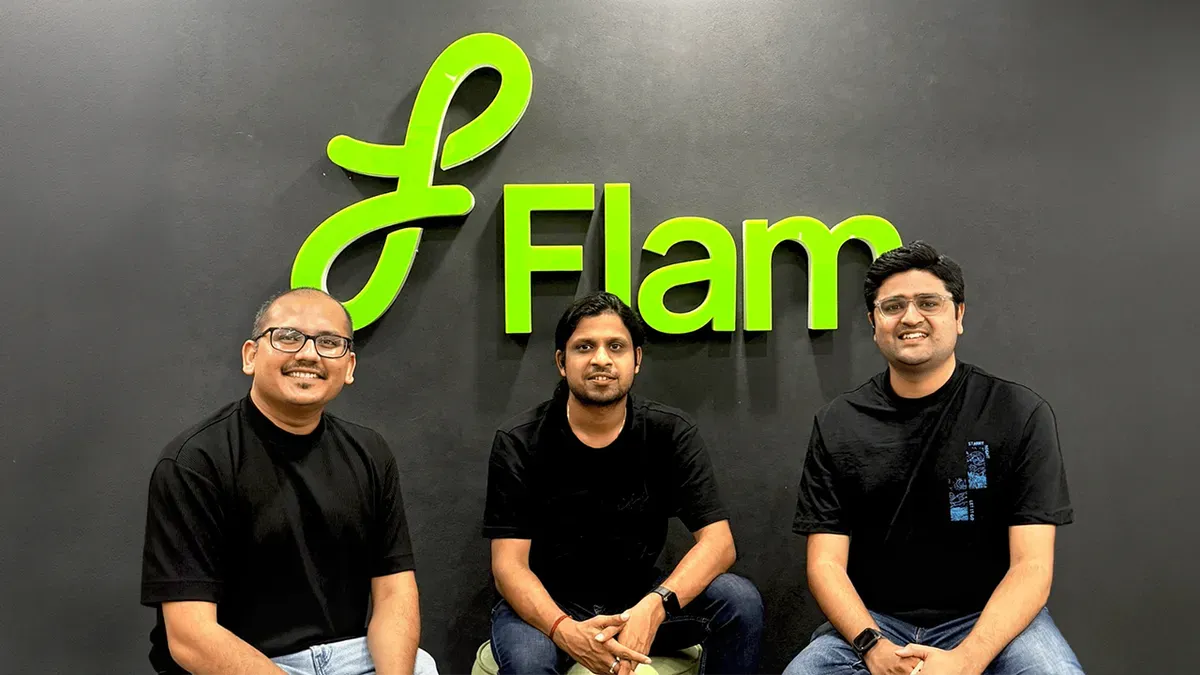
Flam, an Indian startup building tools that let brands and creators layer interactive, AI-generated content onto physical products, packaging and print media, has raised $40 million in a Series B funding round led by QED Investors, the global fintech-focused venture firm. The round drew an unusually eclectic investor base for an enterprise software company: alongside institutional backers Claypond Capital and existing investors RTP Global and Dovetail, the cap table now includes actor and producer Shah Rukh Khan, technology investor Martin Chavez, Datadog co-founder Olivier Pomel, and veteran Silicon Valley operator Venky Harinarayan.
The company, founded in 2021, has built what it describes as an AI-native layer for "phygital" experiences — technology that converts static packaging, posters, apparel tags and print advertisements into scannable, interactive surfaces that trigger video, augmented-reality overlays or shoppable content when viewed through a smartphone camera. Flam positions itself at the intersection of two fast-moving categories: generative AI content tooling and retail media, both of which have attracted heavy venture interest globally over the past two years as brands look for new ways to engage consumers beyond traditional digital advertising channels.
For QED Investors, the lead on this round, the investment marks a notable expansion beyond the firm's traditional fintech remit and into consumer-facing AI infrastructure — part of a broader pattern among fintech-focused funds diversifying into adjacent AI categories as generative tools reshape marketing, commerce and customer engagement. QED, founded in 2007 by Nigel Morris and Frank Rotman, has backed more than 200 companies globally, including a number of unicorns, and has built out a dedicated India and Southeast Asia practice in recent years, reflecting the firm's growing conviction in the region's technology ecosystem.
Flam said the fresh capital will be directed toward three priorities: deepening its research and development effort on AI-generated interactive content, expanding its enterprise sales organisation to court larger consumer brands, and broadening the platform's reach into new geographies and verticals beyond its initial India-heavy customer base. The company has not disclosed current revenue or customer numbers, but its rapid ability to attract high-profile individual investors alongside institutional venture capital suggests strong early traction with brand and marketing teams experimenting with AI-driven engagement tools.