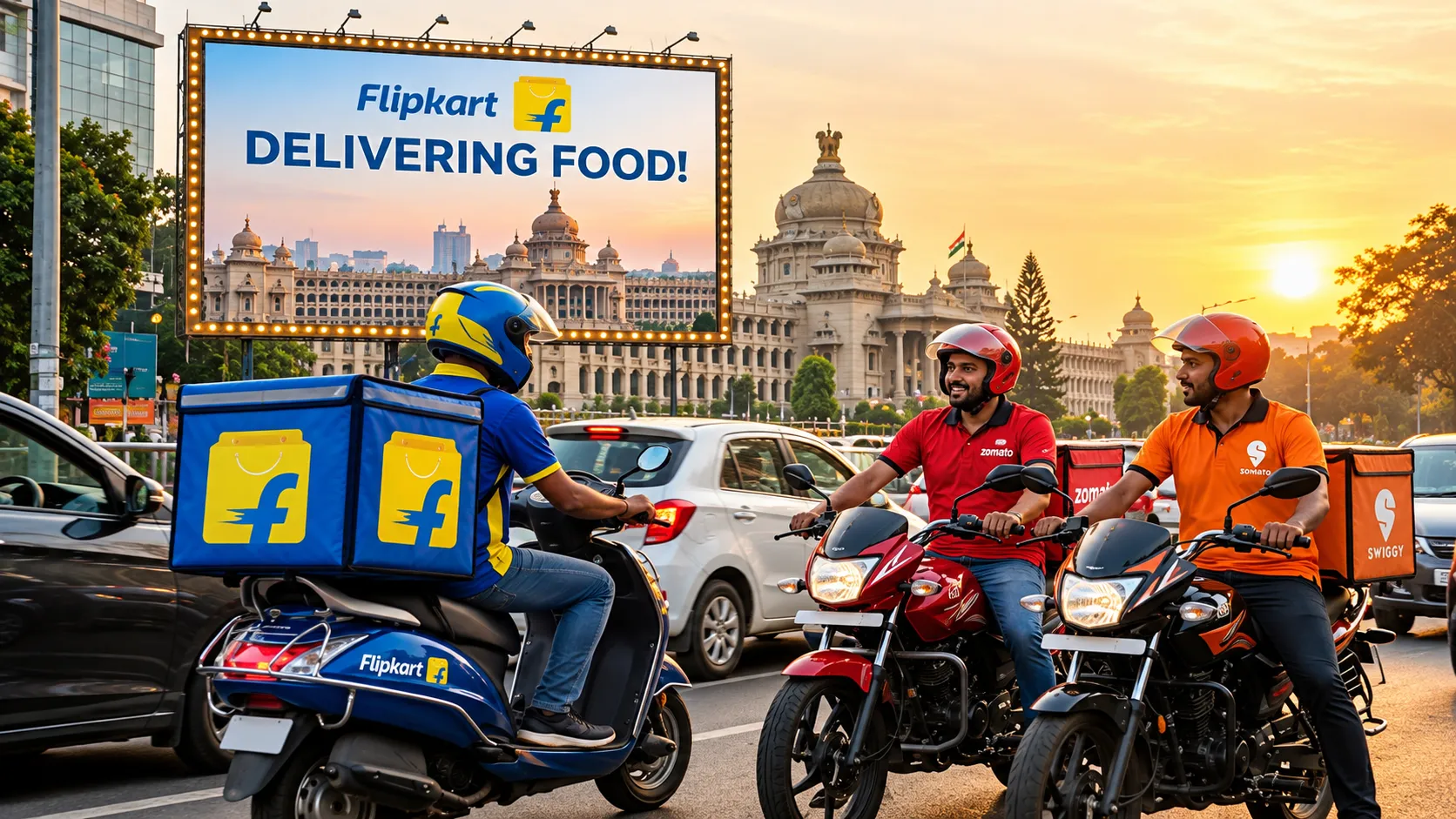
India's food delivery market, long dominated by two players, is about to get a heavyweight new challenger. Flipkart, the Walmart-owned e-commerce giant, is reportedly targeting a public launch of its food delivery service by the end of October, according to a report published by Inc42 on October 20.
The service, called "Eat-in by Minutes", has been tested in an internal pilot in Bengaluru that has grown to more than 8,000 Flipkart employees, according to Entrackr. The president of the National Restaurant Association of India said Flipkart had informed restaurant partners about its plans for an October-end launch. Flipkart plans to expand to five or six cities by the end of 2026.
Flipkart had not responded to queries about the launch at the time of the report, so the details have not been confirmed by the company.
A lower-cost pitch to restaurants
The most striking element of Flipkart's approach is its pricing for restaurants. The company has reportedly proposed a base commission of about 10%, compared with the 20% to 25% that restaurants typically pay established platforms. Restaurants also often pay additional costs for advertising, discounts and promotions on existing apps.
High commissions have been a long-running source of tension between restaurants and food delivery platforms in India. Restaurant owners argue that commissions, combined with discounting pressures, squeeze already thin margins, and the National Restaurant Association of India has repeatedly raised concerns about platform practices. A lower commission could make Flipkart an attractive alternative for restaurants seeking to reduce their dependence on the incumbents.
Restaurants will be onboarded through the Open Network for Digital Commerce (ONDC), the government-backed open e-commerce network, as well as through direct sign-ups. Using ONDC could help Flipkart build a restaurant network quickly while aligning with the government's push to make digital commerce more open and competitive.
Built inside the Flipkart app
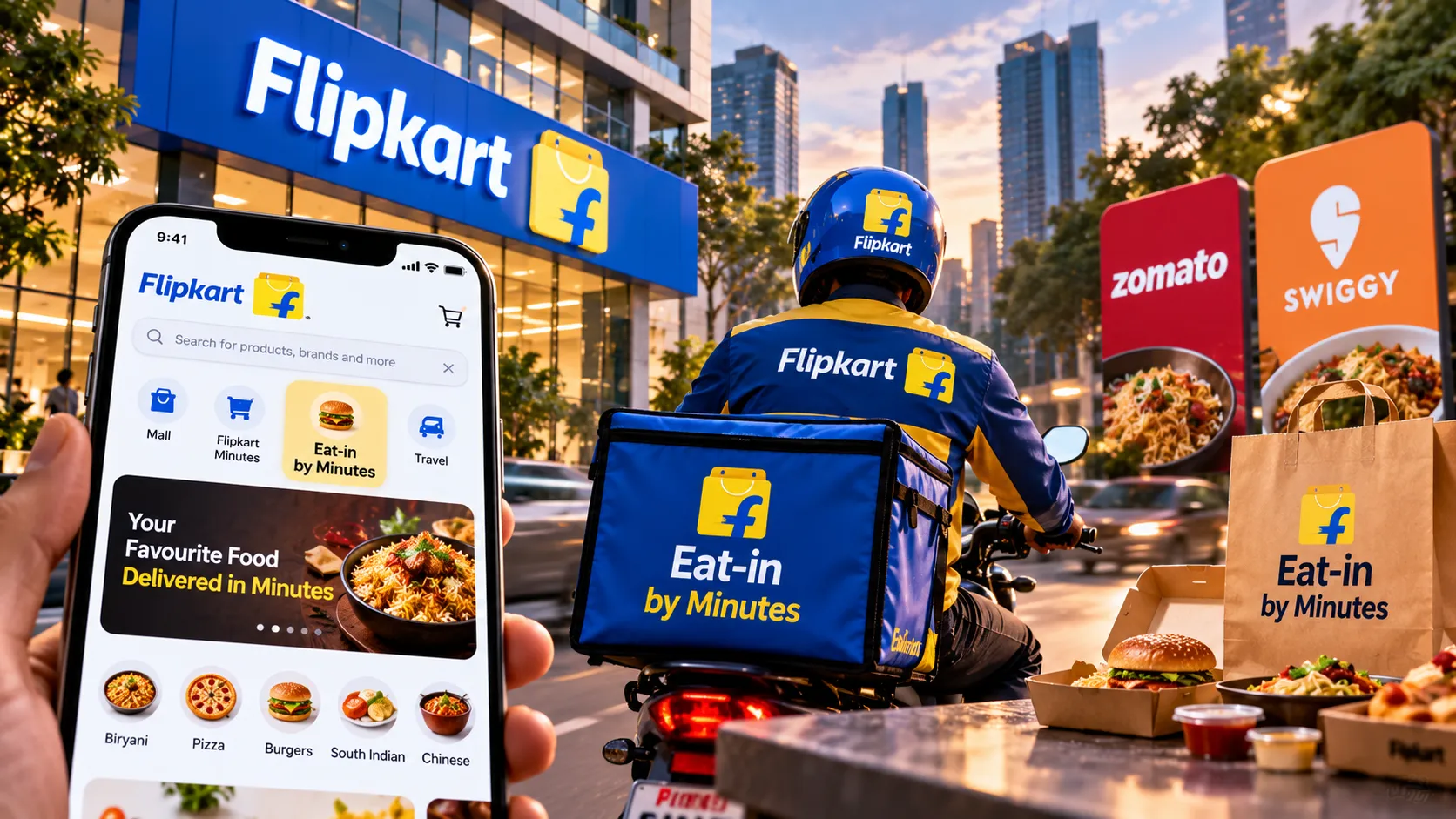
Rather than launching a standalone app, Flipkart is integrating food delivery into its main app as a separate tab, alongside Flipkart Minutes, its quick commerce service, and travel bookings. That allows the company to cross-sell food orders to its hundreds of millions of existing shoppers without spending heavily to acquire new users.
Deliveries will be handled by a dedicated fleet from Ekart, Flipkart's logistics arm, separate from the riders who deliver groceries and essentials for Flipkart Minutes. Food delivery requires different operations from quick commerce, with orders prepared on demand by restaurants and needing to be delivered hot within tight time windows.
The super-app approach mirrors strategies used by large consumer platforms elsewhere in Asia, where companies combine shopping, payments, food and travel to increase customer engagement and frequency.
Taking on a duopoly
India's food delivery market is dominated by Zomato, owned by Eternal, and Swiggy, both of which are listed on Indian stock exchanges. The two companies have spent more than a decade building restaurant networks, delivery fleets and customer loyalty, and they have become profitable or near-profitable in their core food delivery businesses after years of losses.
Several challengers have emerged recently. Rapido has launched Ownly, a food delivery service with a zero-commission model for restaurants. Swish is piloting Swish Go in select Bengaluru pincodes with no packaging or platform fees. Curefoods is piloting MegaBite in Bengaluru's HSR Layout, offering dishes priced at ₹49 to ₹199 with no delivery or platform fees.
None, however, has Flipkart's scale, brand recognition, logistics network or financial backing. Flipkart Group reported consolidated revenue of about ₹1.46 lakh crore in FY26, up 18%, although it remains loss-making, with a consolidated loss of ₹8,468 crore.
Flipkart's second attempt
This is not Flipkart's first foray into food. The company has explored food-related services in the past, and its entry into quick commerce with Flipkart Minutes in 2024 marked a renewed push into high-frequency, local delivery categories. Food delivery is one of the most frequently used services on Indian consumer apps, and capturing even a small share could significantly increase how often customers open the Flipkart app.
Frequency matters for e-commerce companies. Customers who use an app daily for food or groceries are more likely to buy other products there, increasing their lifetime value. That logic has driven Zomato and Swiggy into quick commerce through Blinkit and Instamart, and is now drawing quick commerce players into food.
Challenges ahead
Success is far from guaranteed. Building a reliable food delivery operation requires dense restaurant coverage, efficient dispatch systems, enough delivery partners at peak meal times and consistent quality. Incumbents have deep relationships with popular restaurants and loyalty programmes that keep customers engaged.
Lower commissions may attract restaurants, but customers choose platforms based on selection, speed, prices and offers. Flipkart may need to spend heavily on discounts to attract users, potentially adding to its losses. The economics of food delivery are notoriously thin, with profitability depending on order volumes, delivery efficiency and advertising revenue from restaurants.
Flipkart is also preparing for a long-awaited initial public offering, and investors will scrutinise how new ventures affect its path to profitability.
The economics of food delivery
Food delivery is a difficult business to make profitable. Platforms must recruit and retain delivery partners, invest in technology and marketing, and offer discounts to attract customers, while keeping commissions low enough to keep restaurants on board. Average order values in India are relatively small, which limits the revenue earned on each delivery.
Zomato and Swiggy took years to reach profitability in food delivery, achieving it through higher platform fees, better route efficiency and growth in order volumes. A new entrant with deep pockets can disrupt that balance by offering lower commissions and heavy discounts, potentially pressuring margins across the industry.
What it means for the market
For restaurants, Flipkart's entry could increase bargaining power and reduce commission costs across the industry if incumbents respond. For consumers, more competition could mean better offers and more choice. For Zomato and Swiggy, it adds pressure at a time when they are also competing intensely in quick commerce.
The October-end launch will be only the start. How quickly Flipkart scales beyond Bengaluru, how many restaurants it signs and whether customers adopt the service will determine whether India's food delivery market becomes a genuine three-way contest. For consumers, a new competitor could mean lower prices and more choice, at least in the near term, as platforms compete for orders during the festive season and beyond.