Flipkart Minutes has overtaken Swiggy Instamart in dark-store count across India's top ten cities, according to figures reported on August 26, 2026, marking a notable shift in the competitive balance of the country's rapidly expanding quick-commerce sector. As of August 2026, Flipkart Minutes operated 627 dark stores in these cities, compared with 615 for Instamart, and the platform has also surpassed its rival in pincode coverage, extending its delivery footprint to more localities across urban India.
The milestone underscores the aggressive pace at which Flipkart has scaled its quick-commerce arm since its launch, as the e-commerce giant seeks to defend and grow its share of a category that has fundamentally reshaped how urban Indian consumers shop for groceries, daily essentials and an expanding range of general merchandise. Quick commerce, which promises delivery of goods within ten to twenty minutes through a dense network of hyperlocal fulfilment centres known as dark stores, has become one of the most fiercely contested battlegrounds in Indian e-commerce over the past three years.
Flipkart's ability to overtake Instamart, long considered one of the pioneers and leaders of India's quick-commerce category alongside Zepto and Blinkit, reflects the scale of investment the company has directed toward the vertical as part of its broader strategy to defend its position against both dedicated quick-commerce startups and rival e-commerce platforms. Building out a dark-store network at this pace requires substantial capital expenditure on real estate, inventory, cold-chain infrastructure and last-mile delivery logistics, all of which must be replicated across dozens of dense urban micro-markets simultaneously.
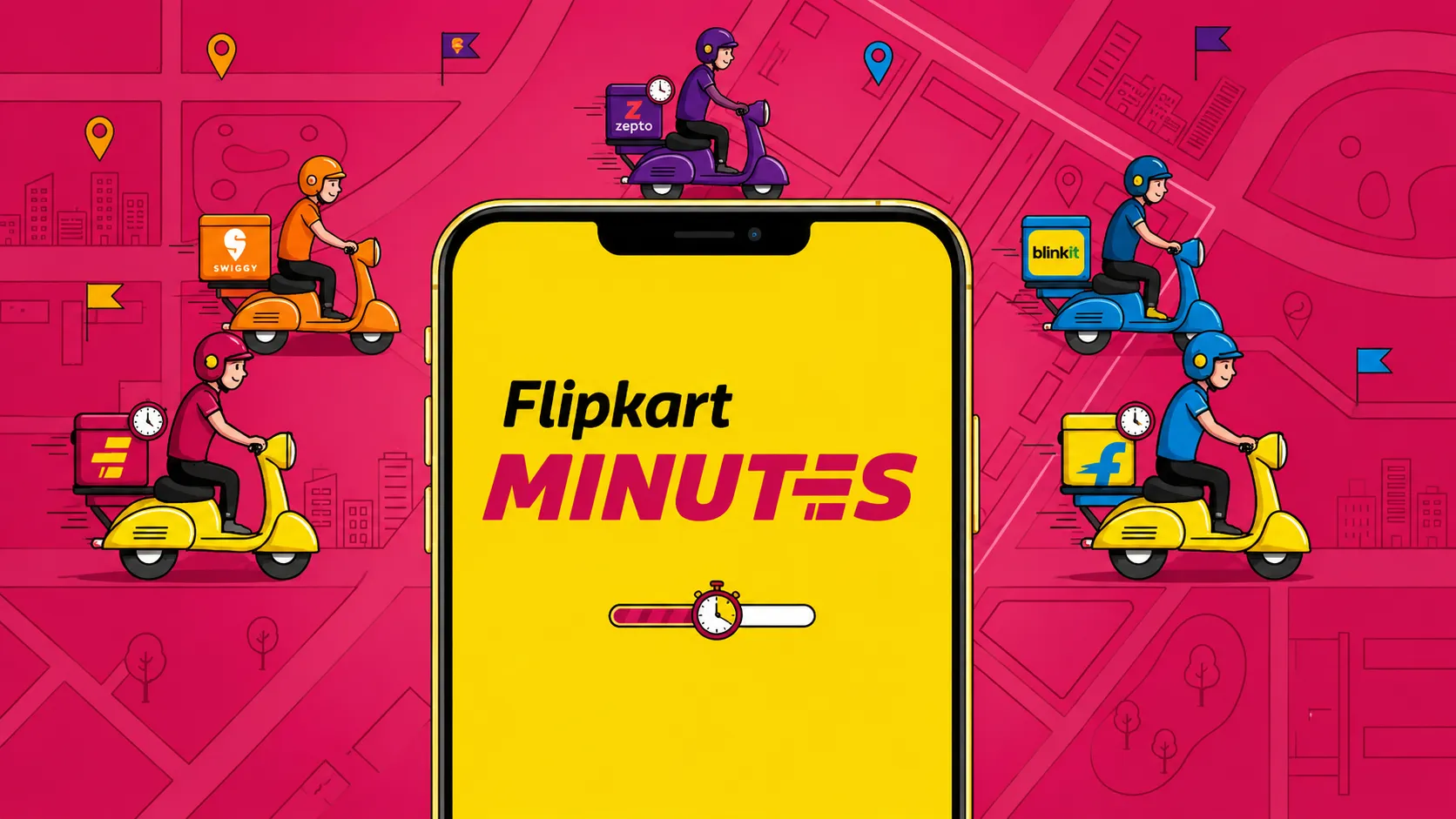
The competitive dynamics in India's quick-commerce sector have intensified further amid separate regulatory developments, with Karnataka authorities recently suspending the food licences of several major platforms, including Amazon, Instamart and BigBasket, over compliance concerns — a reminder that the sector's rapid physical expansion has also drawn closer scrutiny from state food-safety regulators as dark-store networks scale into new neighbourhoods and product categories.
For consumers, the intensifying rivalry between Flipkart Minutes and Swiggy Instamart is likely to translate into continued aggressive pricing, wider product assortments and further reductions in delivery times, as both platforms compete not just on infrastructure density but on the breadth of categories — from fresh produce to electronics and pharmacy items — that can be fulfilled within their expanding dark-store networks.
For investors and industry analysts, the shift in dark-store leadership offers an early data point in what is expected to be a prolonged battle for supremacy in Indian quick commerce, a category that has already attracted billions of dollars in capital and is projected to continue growing rapidly as urban consumers increasingly favour convenience-driven, on-demand shopping over traditional retail and even standard e-commerce delivery timelines.
Whether Flipkart Minutes can convert its newfound infrastructure lead into a durable market-share advantage will likely depend on execution at the operational level — order accuracy, delivery speed consistency, and unit economics — areas where the company's rivals have spent years refining their playbooks, and where the margin for error in India's cost-sensitive, high-frequency quick-commerce market remains notably thin.


