Flipkart Ventures, the corporate venture capital arm of the Walmart-owned e-commerce group, has invested in two Indian artificial intelligence start-ups that sit at opposite ends of the technology market. One helps city dwellers find something to do on a Saturday. The other helps software engineers catch bugs before they reach production.
The first, Alive App, raised $1 million in a seed round led by Powerhouse Ventures with participation from Flipkart Ventures. The second, Keploy, raised an undisclosed amount from Flipkart Ventures. Both deals were announced on 28 September 2026.
Alongside capital, Flipkart said the two companies would receive strategic mentoring, operational expertise and access to its wider ecosystem, the usual offer from a corporate investor whose value to founders often lies as much in distribution and know-how as in cash.
Alive: building supply for the experience economy
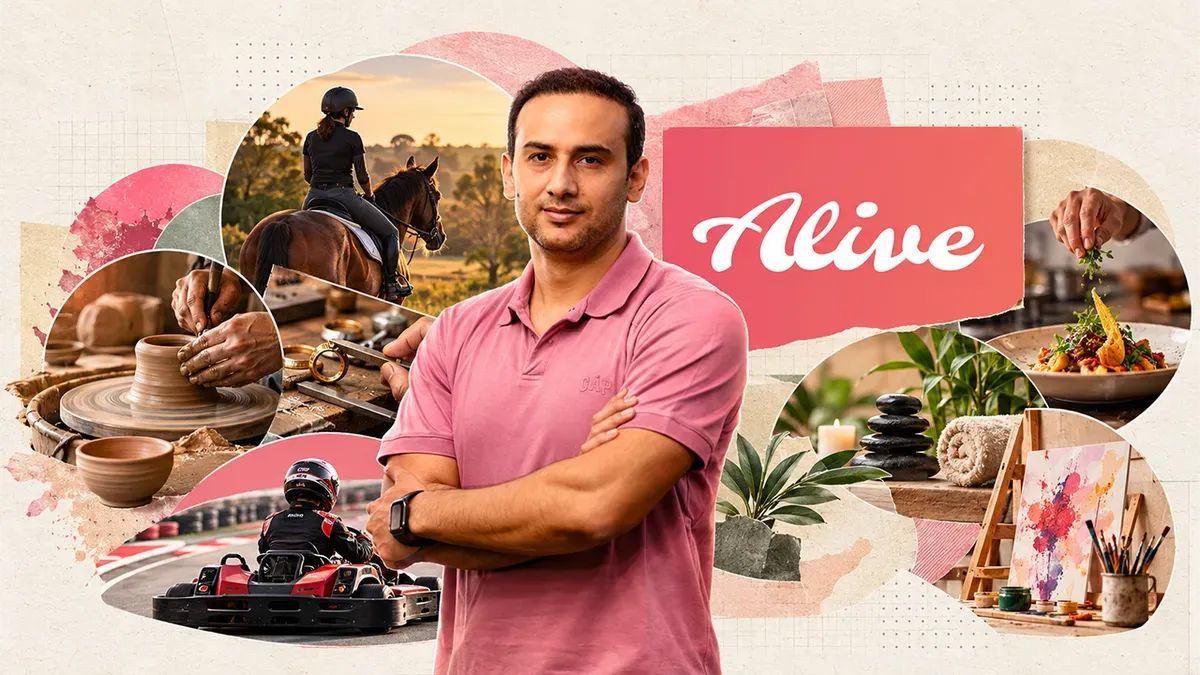
Bengaluru-based Alive was founded in 2023 by Vivek Kumar. It describes itself as an AI-powered experience-tech platform that helps users discover curated activities across adventure, food, wellness, art, culture and learning.
The company offers more than 500 experiences through more than 400 creators and partners across Bengaluru, Hyderabad, Mumbai, Chennai, Delhi and Goa. It says it recorded its first profitable quarter in Bengaluru, its home market, which is an early but useful sign for a category that has often struggled to turn enthusiasm into repeat purchases.
The seed round follows a ₹6 crore pre-seed round last year, also led by Powerhouse Ventures. Alive plans to use the new money to widen both its product and its supply of experiences, with the stated aim of increasing how often urban consumers book leisure activities.
That aim goes to the central problem of the business. Discovery platforms for events and activities tend to be used occasionally, for birthdays, anniversaries or visiting guests, rather than habitually. Getting a customer to book once is a marketing expense. Getting them to book monthly is what turns a platform into a business. Alive's bet is that AI-driven personalisation, which matches a user's past behaviour and stated interests to a pipeline of curated experiences, can shorten the gap between those two outcomes.
Supply is the other constraint. Unlike a marketplace for packaged goods, an experience cannot be warehoused. Every pottery workshop, trek or chef's table is run by an independent creator with limited capacity and uneven quality. Building a reliable catalogue city by city is slow, hands-on work, and it is one area where Flipkart's experience of managing large seller networks could prove directly relevant.
Keploy: testing software in an age of AI-written code
Keploy is a very different proposition. It is a native-AI software-testing platform that converts real application traffic into replayable regression tests and "digital twin" sandboxes. In plain terms, it records how an application actually behaves in production and turns that behaviour into tests that engineers can run automatically whenever the code changes.
Enterprises use the tool to reproduce production scenarios on a developer's machine and inside continuous integration and continuous delivery (CI/CD) pipelines. The goal is to catch regressions, cases where a new release breaks something that previously worked, before customers encounter them. The company was co-founded by Neha Gupta and Shubham Jain and has built much of its developer following through open-source distribution.
The timing is significant. AI coding assistants now generate a large and growing share of new code inside many engineering teams. That has increased output, but it has also raised a practical concern: code that looks correct can still behave differently from what the rest of the system expects. Keploy explicitly positions itself as a way to catch problems introduced by AI-generated code earlier in the release cycle.
For a company like Flipkart, which runs one of the largest transaction systems in India and has to survive extreme traffic peaks during its festive sales, the interest in automated regression testing is easy to understand. Corporate venture arms often back tools their parent companies could plausibly use, and developer infrastructure is a natural fit.

Flipkart's venture playbook
Flipkart Ventures was set up in 2022 with an initial corpus of $100 million to back early-stage start-ups. It has now invested in more than 20 early-stage companies across AI, consumer internet, logistics technology, e-commerce adjacencies and financial services.
Nishant Verman, Flipkart's senior vice president for corporate development and partnerships, said Indian entrepreneurs are "constantly coming up with innovative solutions to everyday problems", and cited Alive and Keploy as examples of that kind of innovation.
The pairing illustrates the two directions in which Indian applied AI is maturing. On the consumer side, founders are using machine learning to improve recommendation and matching in categories where search was never enough. On the enterprise side, a new generation of developer tools is emerging to manage the side-effects of AI itself, from testing and security to observability and cost control.
Corporate capital in a selective market
The deals come at a time when Indian early-stage funding has become more selective. Tracxn data show Indian technology companies raised $10.3 billion in the first nine months of 2026, 7 per cent more than a year earlier, but with fewer deals as investors concentrated on companies with clearer routes to revenue.
In that environment, corporate venture capital has become a more important source of early money. Strategic investors are often willing to write smaller cheques at earlier stages if a start-up fits their own roadmap, and they bring commercial relationships that financial investors cannot easily match. The trade-off, which founders weigh carefully, is the perception of being too closely tied to one large platform when courting partners that compete with it.
What comes next
For Alive, the next 12 months will test whether profitability in Bengaluru can be repeated in cities where it has less density of creators and a weaker brand. Its success will depend on booking frequency, creator retention and the cost of acquiring each new user.
For Keploy, the question is commercial conversion. Open-source developer tools can build large communities quickly, but turning that goodwill into paid enterprise contracts requires a sales motion, security certifications and dependable support. Backing from a company of Flipkart's scale could help with credibility in that process.
For Flipkart Ventures, the two investments add breadth to a portfolio that is increasingly focused on AI applications rather than foundation models. That is a pragmatic choice for India. Building frontier models demands capital on a scale few Indian investors can supply, but applying AI to specific problems, such as filling a weekend or protecting a codebase, is where many of the country's founders see the nearer-term opportunity.
The amounts involved are small, and neither company is yet a household name. Taken together, though, the two deals are a useful indicator of where one of India's most strategically positioned corporate investors expects AI to create value first.