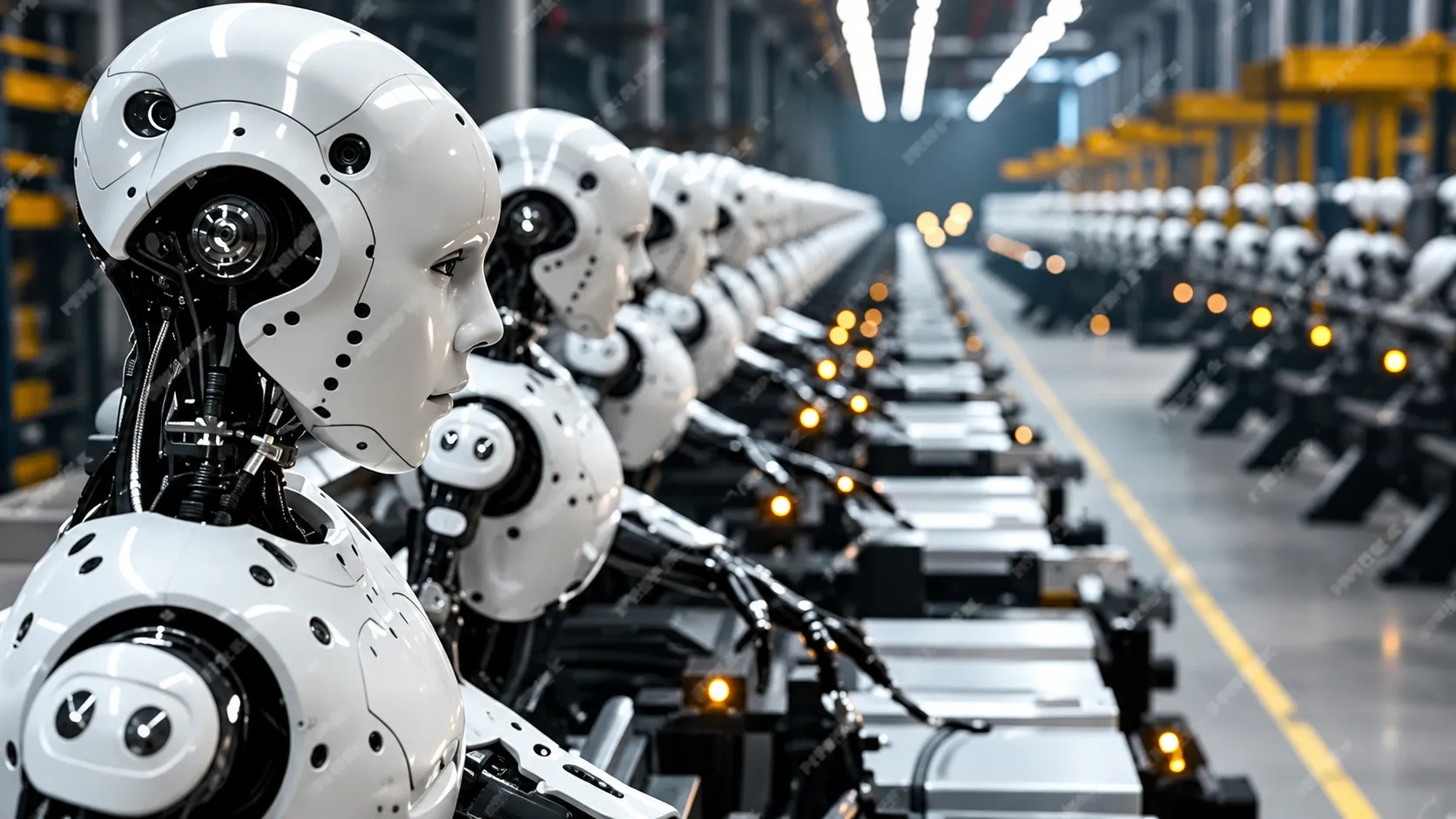
For decades, manufacturing has followed low labour costs, moving production to countries where factories could be staffed more cheaply. A new generation of startups is betting that artificial intelligence and robotics can change that equation, making it economical to build complex products in high-cost countries using highly automated factories.
Foundry Robotics, based in Emeryville, California, has raised $100 million in a Series A round led by Marlinspike Partners, according to Tech Startups on Thursday, October 29. Khosla Ventures, Red Glass Ventures, SE Ventures, Wing VC, Axiom Ventures, Hanabi and Zero Shot Fund also participated.
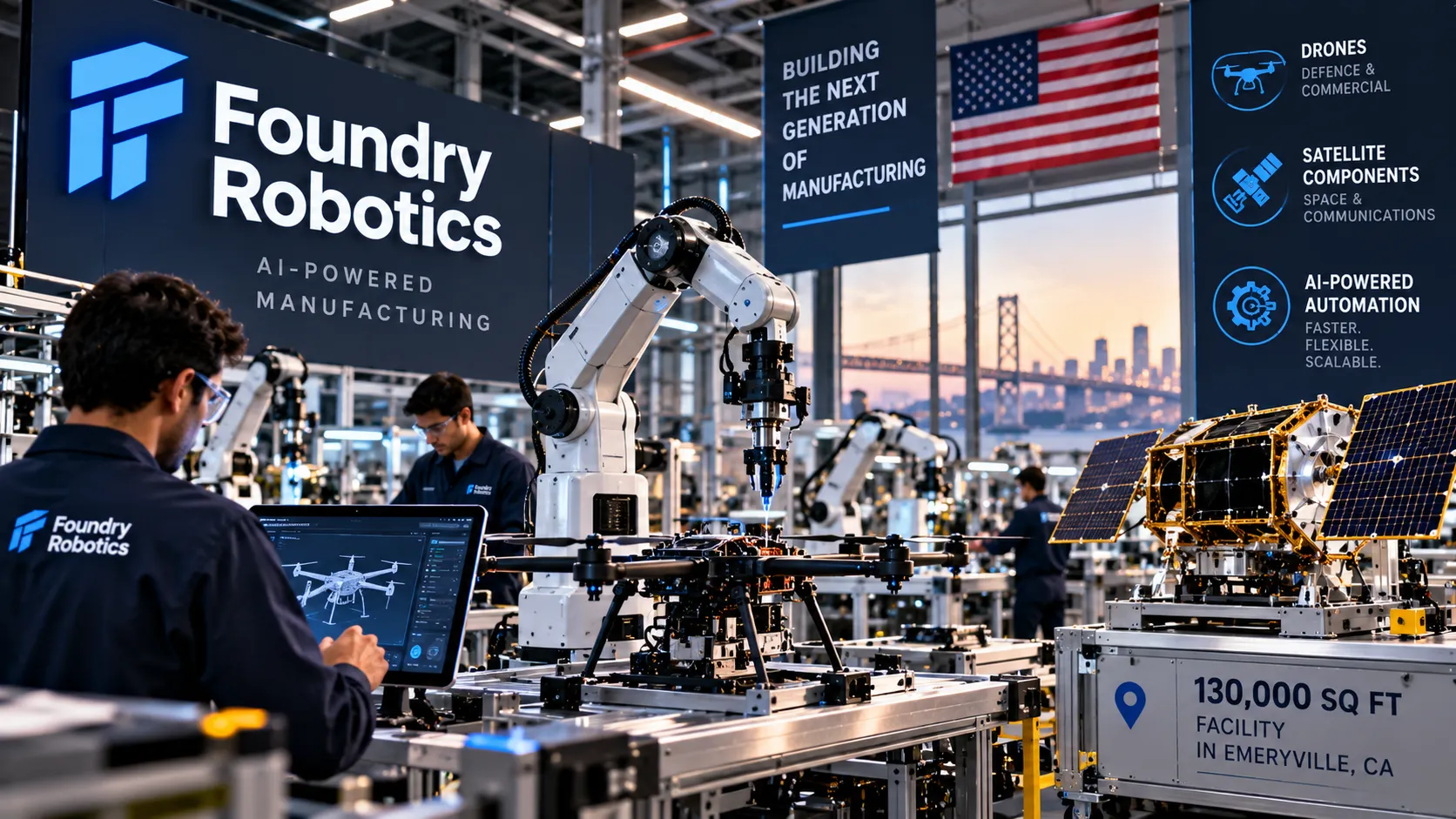
The company was co-founded by Adarsh Kulkarni and Emmanuel Lamacchia. It is expanding into a 130,000 square foot facility in Emeryville.
Manufacturing as a service
Foundry Robotics builds and operates AI-powered robotic assembly factories and offers them to customers as a service. Rather than selling robots to manufacturers, it runs the factories itself and assembles products on behalf of its clients. Its initial focus is on products such as drones and satellite components.
The model resembles contract manufacturing, in which companies such as Foxconn assemble products for brands like Apple. The difference is that Foundry aims to rely heavily on robots controlled by AI software, which could allow its factories to switch between different products more quickly and operate with fewer workers.
Why AI changes robotics
Traditional industrial robots are highly effective at performing the same task repeatedly, such as welding car bodies on an assembly line. However, programming them for new tasks is time-consuming and expensive, which makes them economical mainly for high-volume production of standardised products.
Advances in AI, including computer vision and machine learning models that can learn from demonstrations, are making robots more flexible. AI-powered robots can recognise parts, adapt to variations and learn new assembly tasks more quickly. This could make automation economical for smaller production runs and more complex products, such as drones and satellite components, which are often produced in lower volumes with frequent design changes.
Drones and satellites
The choice of drones and satellite components as early targets is strategic. Demand for drones has surged, driven by military needs, commercial applications such as delivery and inspection, and lessons from the war in Ukraine, where drones have played a central role. Governments, particularly in the United States, are seeking to build domestic drone manufacturing capacity and reduce reliance on Chinese suppliers, which dominate the commercial drone market.
The satellite industry has also grown rapidly, with companies launching large constellations of small satellites for communications, earth observation and other purposes. Satellite manufacturers need to produce components in growing volumes while maintaining high quality, creating demand for flexible, automated production.
The reshoring push
Foundry's funding comes amid a broader push to bring manufacturing back to the United States. Government policies, including tariffs on imports and incentives for domestic production, have encouraged companies to consider manufacturing in America. National security concerns, particularly regarding defence supply chains and dependence on China, have added urgency.
However, high labour costs and shortages of skilled manufacturing workers have made reshoring difficult. Highly automated factories could help address these challenges, allowing products to be built competitively in the United States with fewer workers.
The investors
Marlinspike Partners, which led the round, invests in companies focused on national security and critical technologies. Khosla Ventures, founded by Sun Microsystems co-founder Vinod Khosla, has backed numerous robotics and deep-tech companies. SE Ventures is the venture arm associated with Schneider Electric, the French energy management and automation company, while Wing VC focuses on enterprise and AI startups.
A $100 million Series A is large by historical standards, reflecting the capital required to build and equip factories. Hardware and manufacturing startups typically need more capital than software companies before they can generate significant revenue.
The physical AI boom
Foundry is part of a wave of investment in what is often called physical AI, applying AI to robots and machines that operate in the real world. Startups building humanoid robots, autonomous warehouses, robotic kitchens and automated factories have attracted billions of dollars in funding. Technology companies, including Nvidia, have identified robotics as one of the next major opportunities for AI.
Despite the enthusiasm, building reliable robotic systems that work in real-world conditions remains challenging. Many robotics companies have struggled to scale beyond pilot projects, and investors will look for evidence that Foundry can deliver consistent production at competitive costs.
Competition
Foundry competes with traditional contract manufacturers, which are themselves investing in automation, as well as with other startups developing AI-powered manufacturing. Large manufacturers in Asia have decades of experience and established supply chains. Foundry's advantage will depend on whether its AI-driven factories can deliver flexibility, speed and cost competitiveness that traditional manufacturers cannot match.
Lessons for India
India has ambitions to become a global manufacturing hub, supported by production-linked incentive schemes in electronics, drones, automobiles and other sectors. India's drone industry has grown with government support, including a ban on imports of foreign drones and incentives for domestic production.
While India's manufacturing strategy has relied partly on its large workforce, automation is becoming increasingly important for quality and competitiveness. Indian manufacturers and startups are investing in robotics and AI to improve productivity. The rise of AI-powered factories in the United States could also intensify competition for manufacturing investment, as companies weigh the benefits of automation in high-cost countries against lower labour costs in countries such as India.
Indian-origin founders and engineers play a significant role in the robotics and AI industries in the United States, and successes such as Foundry's highlight the global talent driving these technologies.
What comes next
Foundry Robotics will use the funding to build out its Emeryville facility, expand its robotic assembly capabilities and win more customers. Its progress will be watched as a test of whether AI-powered, robot-run factories can become a practical and economical way to manufacture complex products. If successful, the model could help reshape where and how products are made, with implications for global supply chains and manufacturing employment.
For the investors backing the company, the bet is that the factories of the future will look less like rows of workers on an assembly line and more like software platforms, able to switch from one product to another in days rather than months. If Foundry can prove that model in Emeryville, it could replicate its factories in other locations, close to customers and supply chains, and help redefine what modern manufacturing looks like.