FundingAnalysis5 MIN READ

France Reels After Its Worst Unrest in Years as Cost-of-Living Protests Turn Violent and the Euro Slips

Between 550,000 and 800,000 people joined cost-of-living protests across France on October 17. While most marches were peaceful, rioters set fire to public buildings and looted shops, including on the Champs-Élysées, leading to well over 1,000 arrests. The euro weakened as investors weighed the political fallout.

By Shaym Kumar · Author19 October 2026New
France Reels After Its Worst Unrest in Years as Cost-of-Living Protests Turn Violent and the Euro Slips

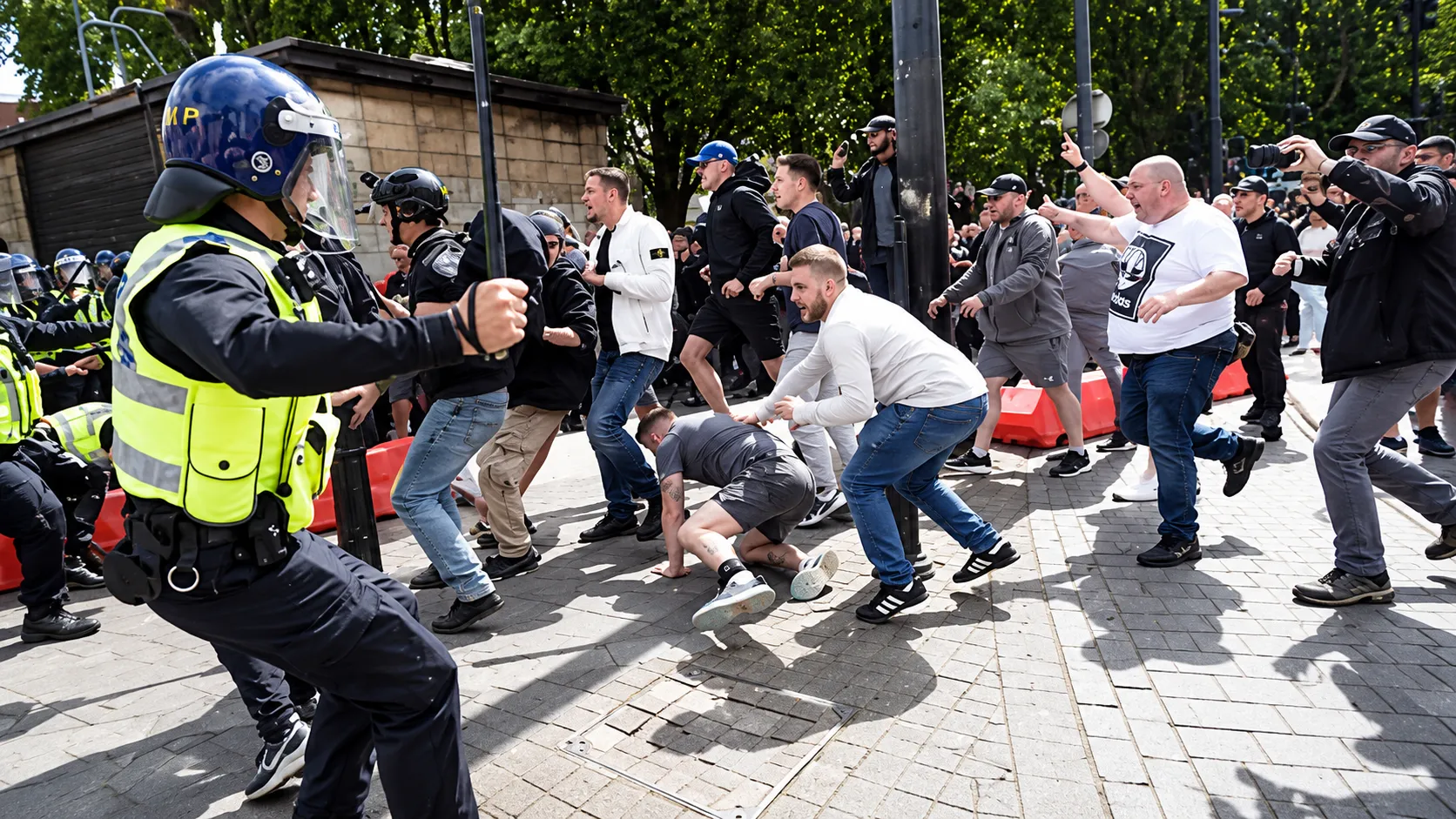
France woke up on Sunday, October 18, to scenes of destruction in several of its largest cities after a day of nationwide cost-of-living protests turned violent, in what French media described as the worst unrest the country has seen in years.

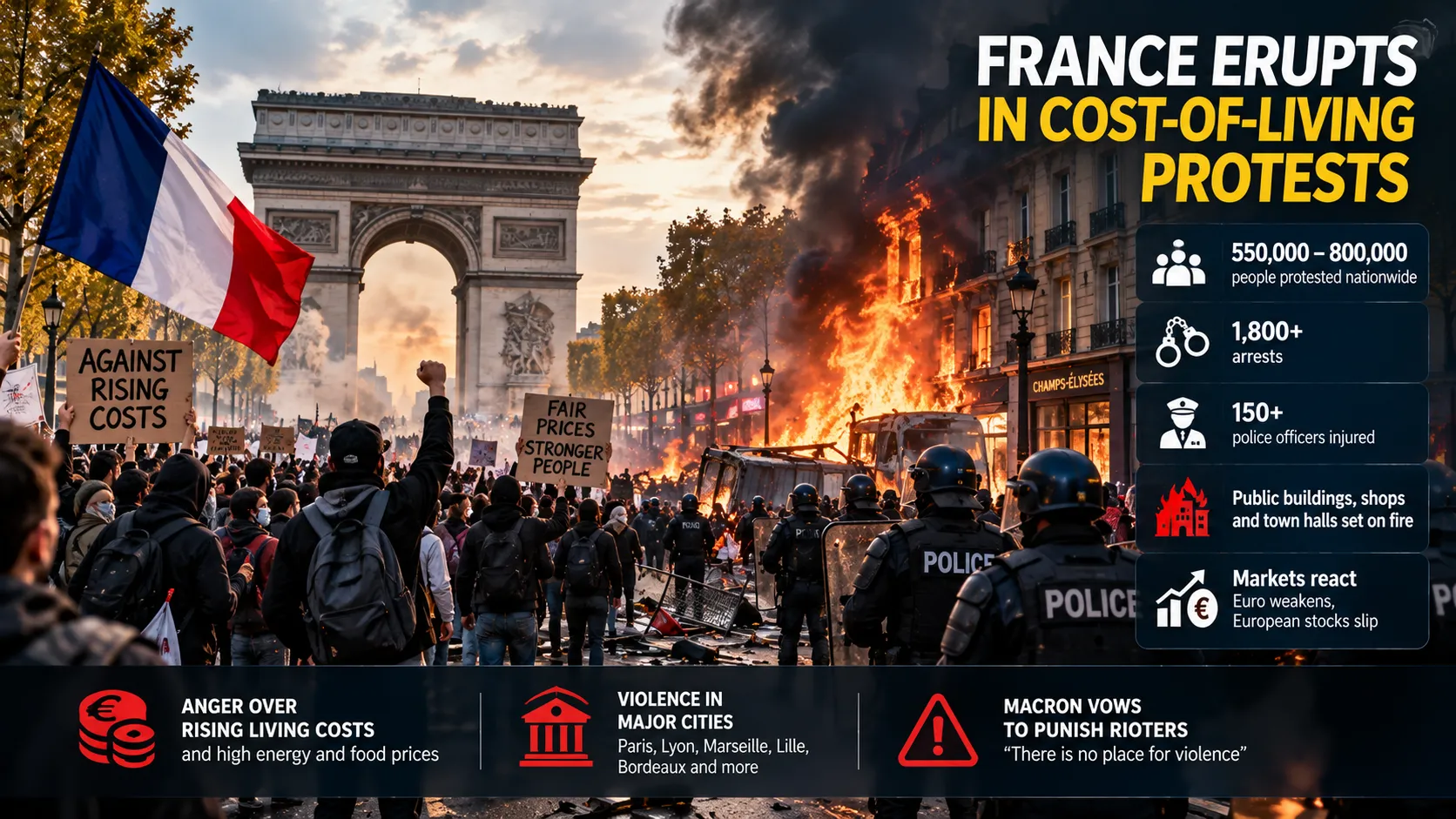
Between 550,000 and 800,000 people took part in demonstrations across France on Saturday, October 17, according to official and organiser estimates reported by Euronews. Most of the marches were peaceful, but violence erupted in Paris and several major cities as groups of rioters clashed with police, set fire to public buildings and looted shops.

The government initially reported about 1,200 arrests and 150 police officers and gendarmes injured. Later counts reported by international media put the number of arrests at more than 1,800. One resident quoted by France 24 compared the aftermath to the feeling of "like we had a war."

Public buildings targeted

The scale and targets of the violence shocked the country. In Limoges, the city hall was set on fire. In Lyon, the tourist office on Place Bellecour was torched. Vandals forced their way into town halls in Marseille, Lille and Angers, and the prefect's residence in Bordeaux was ransacked.

In Paris, clashes broke out at Place de la République, where emergency vehicles were burned. Groups of masked young people looted shops, including stores on the Champs-Élysées, one of the world's most famous shopping streets. Paris mayor Emmanuel Grégoire said "entire streets" had been "systematically devastated."

The protests were driven by anger over rising living costs, joined by student grievances. Like much of Europe, France has faced high energy and food prices this year, driven in part by conflict in the Middle East and disruptions to oil and gas supplies.

Macron vows to punish rioters

President Emmanuel Macron condemned the violence. "There is no place for violence," he said, vowing that those who vandalised and looted would be prosecuted and punished. He also pledged to hold accountable those who, he said, had "sought to bring down the Republic."

Interior Minister Laurent Nuñez blamed "groups of several hundred or even thousands of rioters, very clearly instigated by the far left." The unrest quickly became a political battleground. Far-right leader Marine Le Pen said legitimate social demands had been "taken hostage by the far left," while far-left leader Jean-Luc Mélenchon said those who shared his struggle had no place in looting and vandalism.

The political divisions matter because France faces a fragile parliamentary situation and an approaching presidential election in 2027, in which both Le Pen's National Rally and Mélenchon's France Unbowed hope to perform strongly. Episodes of unrest can shift public opinion and complicate efforts to pass budgets and reforms.
5c187779-3c51-4cf0-95f3-c7efb76f7587.png

Markets take note

Financial markets reacted cautiously. The euro weakened and the US dollar firmed in Asian trading on Monday, as investors weighed the risk that political instability in the eurozone's second-largest economy could complicate fiscal policy. European stock futures pointed lower, with Euro Stoxx 50 futures down about 0.3%, while political uncertainty in France was cited by analysts as one of the factors weighing on sentiment.

France has been under scrutiny from bond investors for several years over its high public debt and persistent budget deficits. Successive governments have struggled to pass spending cuts or tax increases through a divided parliament, and credit rating agencies have downgraded France's sovereign rating. Unrest over living costs makes it politically harder for any government to pursue austerity, which could keep deficits high and push borrowing costs up.


“There is no place for violence.”
— Emmanuel Macron, President of France

The cost to business

For businesses, the immediate impact falls on retailers, restaurants and tourism operators in the affected areas. Looting and vandalism cause direct losses and insurance claims, and images of burning buildings and riot police can deter visitors in the short term. Paris is one of the world's most visited cities, and the Champs-Élysées is home to flagship stores of global luxury and fashion brands.

Previous waves of unrest in France, from the "yellow vest" protests that began in 2018 to the pension reform demonstrations of 2023 and the riots that followed a police shooting that year, caused significant disruption to retail and tourism. Business groups typically call for rapid compensation and stronger security after such events.

The broader economic concern is consumer confidence. If households remain anxious about prices and social tensions persist, spending could weaken further, weighing on growth in the eurozone at a time when the European Central Bank is still fighting inflation. ECB officials have signalled that another rate increase could come as soon as December.

A European warning

France's unrest is part of a broader pattern of discontent across Europe as households struggle with high prices. Albania has also seen mass protests in recent days. For policymakers, the challenge is to support vulnerable households without fuelling inflation or stretching already strained public finances. At its meetings in Bangkok this month, the International Monetary Fund urged governments to replace broad energy subsidies with targeted support under the principle of "protect people, not prices."

For India and other economies with close trade and investment links to France, the immediate economic impact is likely to be limited. French companies are significant investors in India, in sectors from aerospace and defence to energy and retail. Engie, for example, plans to invest €3 billion in India's renewable energy sector by 2030. Prolonged instability in France, however, could weigh on European demand and corporate decision-making.

The economics behind the anger

The protests reflect a squeeze on household budgets that has built over several years. Energy prices surged after Russia's invasion of Ukraine in 2022, eased, and then rose again in 2026 as conflict in the Middle East disrupted oil and gas supplies. Food prices have also climbed, with global rice, wheat and soybean prices rising sharply this year, according to data cited at the IMF and World Bank meetings.

At the same time, governments across Europe have less room to cushion the blow than they did during the energy crisis of 2022, when many introduced costly price caps and subsidies. High public debt and rising bond yields have made such measures more expensive, leaving policymakers to choose between fiscal discipline and social support.

What comes next

In the days ahead, attention will turn to whether the government announces new measures to address living costs, and whether unions and student groups call further demonstrations. Investigations into the violence and prosecutions of those arrested will also shape the political debate.

For now, France faces the task of cleaning up its streets and rebuilding trust. The weekend's events have shown how quickly frustration over prices can spill into violence, and how closely markets are watching the political stability of Europe's major economies.

TagsFranceprotestscost of livingEmmanuel MacronParisChamps-ÉlyséesriotseuroEuropean marketsMarine Le PenJean-Luc MélenchonLaurent NuñezinflationstudentsretailtourismFrench politicseurozone economyCAC 40Europe

Reader reviews

Sign in to rate and review this article.
Loading reviews…
