Freshworks, the Nasdaq-listed software company that began life in Chennai and became a symbol of India's global software-as-a-service (SaaS) ambitions, reported record third-quarter results on November 3. Both revenue and profitability beat expectations.
Total revenue for the quarter ended September 30, 2026 rose 14% year on year to $245.4 million, the company said in its earnings release. Freshworks reported GAAP net income of $18.3 million and record adjusted free cash flow of $73.9 million, up 29% from a year earlier.
The company also said it had achieved the "Rule of 40" for the ninth consecutive quarter. The benchmark, widely used by software investors, holds that a healthy SaaS company's revenue growth rate plus its profit margin should add up to at least 40%.
The numbers
Revenue landed at the top end of the company's own forecast. In August, Freshworks had guided for third-quarter revenue of $244.5–245.5 million, implying roughly 14% growth. The non-GAAP operating margin reached 30%, according to chief executive Dennis Woodside.
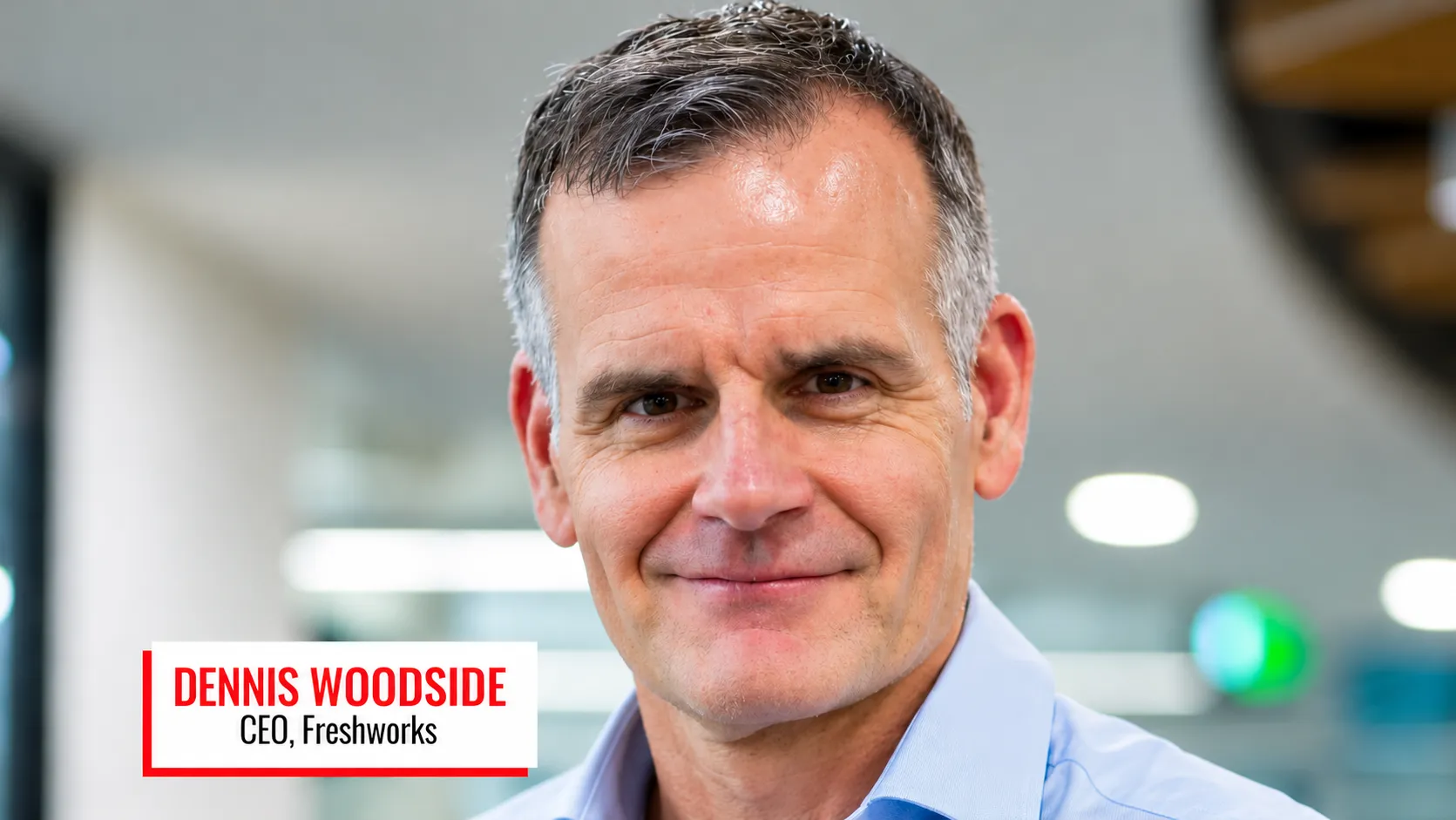
"Our upmarket strategy delivered another strong quarter," Woodside said, pointing to the 30% non-GAAP operating margin and the 29% growth in adjusted free cash flow. He said new multi-product deals in the company's employee experience (EX) business grew more than 35%, and that partners were involved in more than half of new business.
The profit figure marks a significant shift for a company that, for much of its history, prioritised growth over profitability. In the second quarter of 2026, Freshworks reported GAAP net income of just $3.2 million on revenue of $237.4 million. The jump to $18.3 million in the third quarter shows operating leverage taking hold as revenue grows faster than costs.
From Chennai to Nasdaq
Freshworks was founded in Chennai in 2010 by Girish Mathrubootham and Shan Krishnasamy as Freshdesk, a customer-support software product designed to be simpler and more affordable than the enterprise tools then dominating the market. It expanded into a suite of business software spanning customer service, IT service management, sales and marketing, and renamed itself Freshworks in 2017.
In September 2021, it became the first Indian-founded SaaS company to list on Nasdaq, a landmark for the country's software industry. The listing created significant wealth for employees, hundreds of whom held stock options, and demonstrated that Indian product companies could build global businesses from home.
The company is now headquartered in San Mateo, California, but retains a large engineering and operations presence in India. Dennis Woodside, a former Google and Dropbox executive, took over as chief executive in 2024, as the company shifted its focus towards larger customers and sustained profitability.
What 'going upmarket' means
The phrase "upmarket strategy" sits at the heart of the Freshworks story today. Historically, the company built its business on small and mid-sized businesses (SMBs), which are attracted by easy-to-use, reasonably priced software. SMB customers, however, tend to churn more and spend less.
Under Woodside, Freshworks has concentrated on winning bigger mid-market and enterprise customers. These accounts typically sign larger, multi-year contracts, buy multiple products, and are more likely to stay. Its employee experience business, built around IT service management software that competes with industry heavyweights such as ServiceNow, has been the spearhead of that push.
The strength of multi-product EX deals in the third quarter suggests the strategy is working. Rising partner involvement is also significant. Selling to larger organisations often requires system integrators and resellers to implement and customise software. When partners bring in more than half of new business, it can expand reach without proportionate increases in the company's own sales costs.
The AI factor
Like every software company, Freshworks is navigating the arrival of generative AI. AI presents both an opportunity and a threat for vendors of customer-service and IT-service software.
On the opportunity side, AI agents can resolve support tickets, answer employee queries and automate workflows. Vendors can then charge for higher-value capabilities and differentiate their products. On the threat side, if AI dramatically reduces the number of human agents a company needs, vendors that price software per user or "per seat" could see their revenue base shrink.
Freshworks has built AI capabilities into its products under its Freddy AI brand, and investors are watching closely how AI features translate into revenue. The company's ability to keep growing while expanding margins suggests that, so far, AI is adding more than it is taking away.
Market and investor context
The results come at a difficult moment for software stocks. Investors have been rotating between AI beneficiaries and companies seen as vulnerable to AI disruption, and the broader technology sector has been volatile amid concerns about valuations and heavy AI infrastructure spending. On November 3, US chip stocks rebounded but software sentiment remained mixed.
For Freshworks, consistent beats on revenue and profit, combined with strong cash generation, offer a measure of resilience. In August, the company raised its full-year 2026 revenue forecast to $963.5–966.5 million, implying about 15% growth.
Cash generation is particularly important in the current environment. Strong free cash flow gives Freshworks the flexibility to invest in AI product development, pursue acquisitions and return capital to shareholders without relying on external funding. Its 2026 financials include FireHydrant, an incident-management software business that complements its IT service management offering. Targeted acquisitions to fill product gaps are a common strategy for mid-sized software companies competing with larger platforms. For investors, the combination of mid-teens growth, a 30% non-GAAP operating margin and rising cash flow places Freshworks in a relatively small group of profitable, growing SaaS companies.
Why it matters for India's SaaS story
Freshworks remains one of the most important reference points for India's software product ecosystem. A generation of Indian SaaS founders has studied its playbook: building globally competitive products from India, selling primarily to international customers, and scaling to a US listing.
Its evolution, from a hyper-growth, loss-making startup to a profitable, cash-generating company focused on larger customers, mirrors the maturing priorities of investors worldwide. For Indian SaaS companies now preparing for their own public listings, at home or abroad, Freshworks' record third quarter shows that durable profitability and steady growth can coexist.
For the global Indian community, the company's journey from a Chennai office to a profitable Nasdaq-listed business with hundreds of millions of dollars in annual revenue remains one of the clearest examples of Indian technology talent shaping a global industry.