FundingAnalysis5 MIN READ

India's Top Financial Council Flags the AI Boom, Surging Global Bond Yields and Cyber Threats as Risks to Stability

The Financial Stability and Development Council, chaired by Finance Minister Nirmala Sitharaman, warned on October 23 of risks from the AI boom, a "steep rise in global bond yields" and cyber threats, urging regulators to coordinate and stay vigilant amid geopolitical uncertainty. The council also discussed tokenisation, digital KYC for NRIs and faster refunds of unclaimed financial assets.

By Shaym Kumar · Author26 October 2026New
India's Top Financial Council Flags the AI Boom, Surging Global Bond Yields and Cyber Threats as Risks to Stability

India's top financial policymakers have put artificial intelligence and soaring global borrowing costs on their list of threats to the country's financial stability, as volatile markets and conflict in West Asia test the resilience of the financial system.

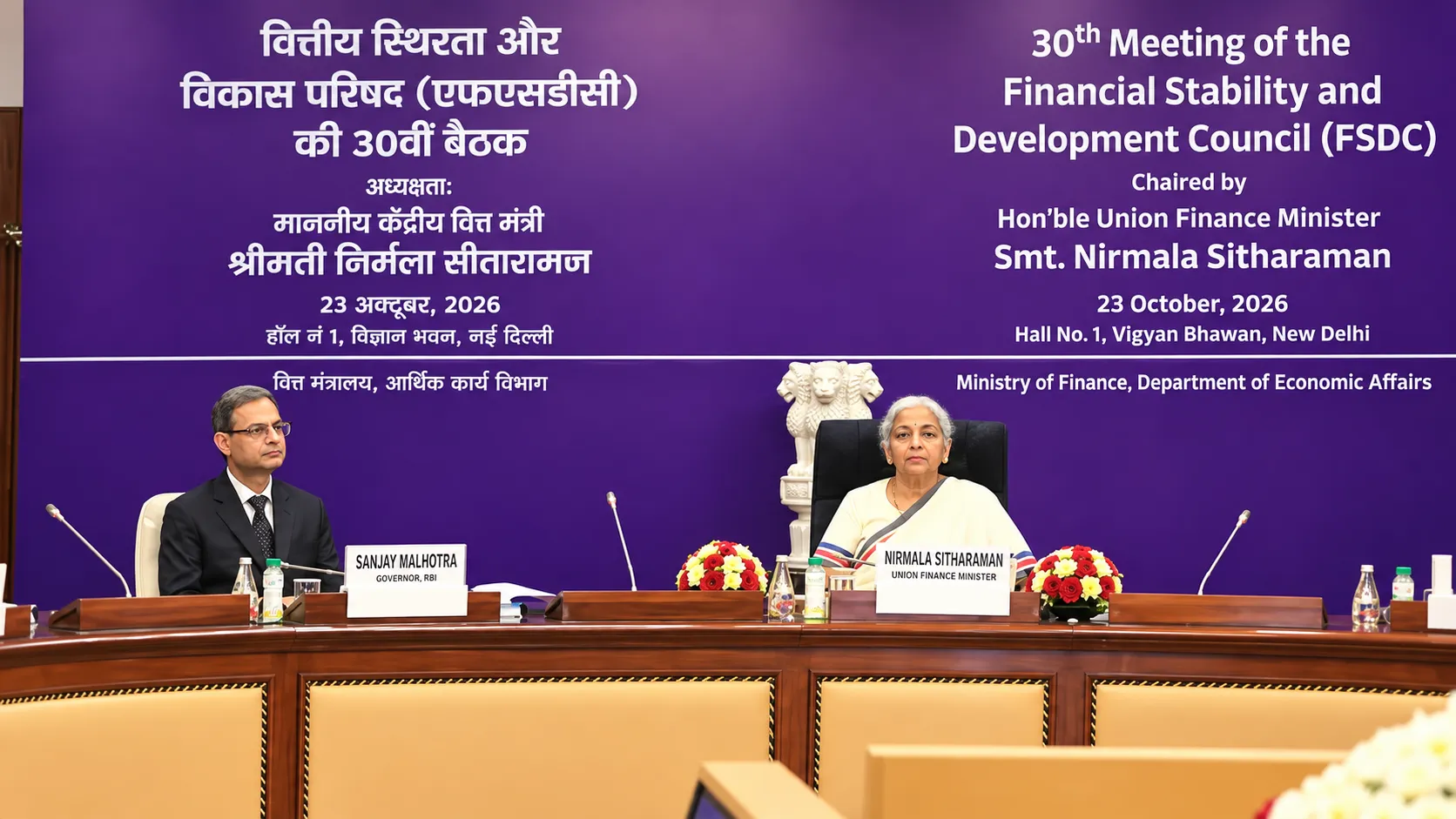
The Financial Stability and Development Council (FSDC), chaired by Finance Minister Nirmala Sitharaman, met in New Delhi on Friday, October 23, for its 30th meeting, Business Standard reported. The council flagged the AI boom, a "steep rise in global bond yields" and cyber threats as risks, and stressed "the need to be vigilant especially in view of the ongoing geopolitical uncertainties."

The council directed financial regulators to strengthen coordination and take proactive steps to mitigate risks to financial stability, while keeping safeguards in place for the system's resilience.

Who was at the table

The FSDC brings together the heads of India's financial regulators and senior government officials. Attendees included Reserve Bank of India Governor Sanjay Malhotra, who also chairs the FSDC's sub-committee; Economic Affairs Secretary Anuradha Thakur; Financial Services Secretary Sanjay Lohiya; Revenue Secretary Arvind Shrivastava; Chief Economic Adviser V Anantha Nageswaran; and the heads of other financial sector regulators, such as the securities, insurance and pension regulators.

Sitharaman urged that the council meet more frequently and on a fixed schedule.

Why the AI boom is a stability risk

The council's concern about the AI boom reflects worries that are being voiced by central banks and international institutions around the world. Massive investment in AI infrastructure, soaring valuations of AI-related companies and the growing use of debt to finance data centres have raised fears of a bubble that could unwind abruptly.

For India, the risks are indirect but real. A sharp correction in global AI stocks could trigger wider market turmoil, affect foreign investor flows and hit the valuations of Indian technology companies. The growing use of AI within financial institutions also creates new operational and cyber risks.

Speaking on the same day at a separate event, RBI Governor Malhotra said AI's implications for financial stability were real and should not be downplayed, citing data security and the risk of cyberattacks that could disrupt systems.

Bond yields and the rupee

The "steep rise in global bond yields" is already being felt in India. The US 10-year Treasury yield has climbed above 5%, its highest level in decades, as persistent inflation and expectations of further Federal Reserve rate increases weigh on bond markets.

Indian government bond yields have risen for ten consecutive weeks, the longest such streak in about three decades, with the benchmark 10-year yield settling at 7.47% on Friday. Higher yields raise borrowing costs for the government, companies and households, and reduce the value of bonds held by banks and other investors.

India's foreign exchange reserves have fallen by $65 billion in six weeks from a record high in early September, as the RBI has sold dollars to support the rupee.

The cyber threat

The council took note of a Financial Sector Cyber Security Strategy drafted by an inter-ministerial group, and discussed critical information infrastructure and the cybersecurity readiness of regional rural banks.

Cyber risk has risen sharply up the agenda in recent weeks. A global security crisis triggered by vulnerabilities in the PHP programming language forced banks and governments around the world to take systems offline, and Indian banks have reported customer data appearing on the dark web. Malhotra acknowledged these growing risks on Friday.
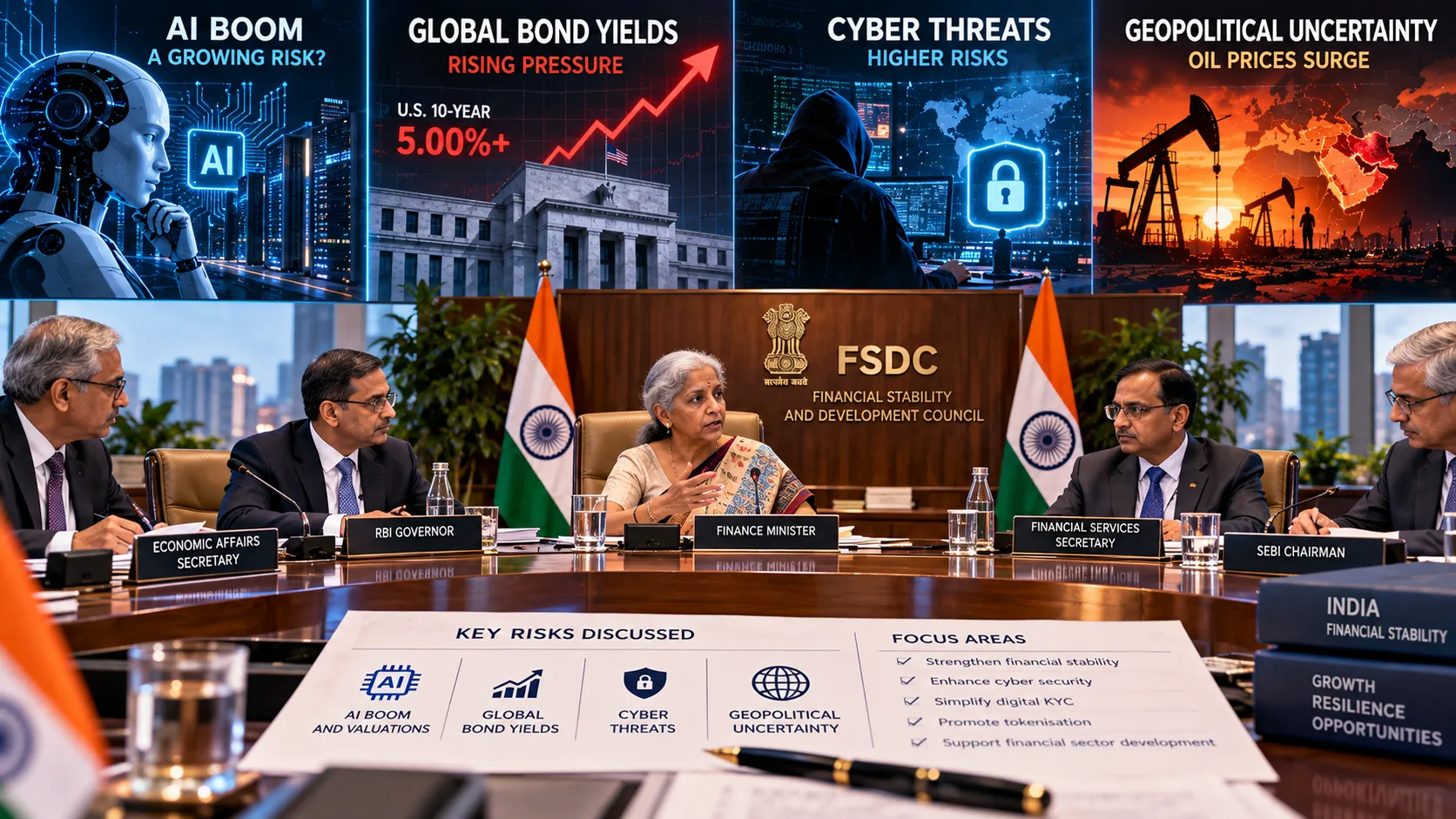

“The need to be vigilant especially in view of the ongoing geopolitical uncertainties.”
— Financial Stability and Development Council

Development agenda

Beyond risks, the council discussed several measures to deepen India's financial system. These included exploring the tokenisation of financial and real-world assets, simplifying and digitising know-your-customer procedures, including digital onboarding for non-resident Indians and foreign portfolio investors, and promoting resource flows through the GIFT International Financial Services Centre.

The council also discussed India's digital public infrastructure for finance, including the Account Aggregator framework, which lets individuals and businesses share financial data securely, and the Unified Lending Interface, with a focus on expanding credit access for small businesses. It also discussed making financial regulations more responsive and rationalising credit guarantee schemes.

3aeb89aa-c7a5-42c9-9b5b-3c985b34399a.png

Unclaimed assets

Sitharaman asked ministries and regulators to "expedite the refund of unclaimed financial assets to their rightful owners." Unclaimed assets in India include dormant bank deposits, unpaid dividends, unclaimed shares, post office accounts, insurance proceeds and pension funds, which together amount to large sums. The council noted district-level efforts under the "Your Money, Your Right" campaign to help people reclaim them.

What it means for the Indian diaspora

The emphasis on digital KYC for non-resident Indians is relevant for the global Indian diaspora, many of whom find it cumbersome to open and maintain financial accounts in India. Simpler digital onboarding could make it easier for NRIs to invest in Indian markets, open deposits and manage property and family finances. NRI deposits have surged this year, reaching $121.94 billion in April-August, after the RBI introduced incentives for banks to raise foreign currency deposits.

A council born from crisis

The FSDC was established in 2010, in the aftermath of the global financial crisis, to strengthen mechanisms for maintaining financial stability, enhance inter-regulatory coordination and promote financial sector development. It brings together the finance ministry and all the main financial regulators, including the RBI, SEBI, the Insurance Regulatory and Development Authority of India, the Pension Fund Regulatory and Development Authority and the International Financial Services Centres Authority.

Its sub-committee, chaired by the RBI governor, meets more frequently and handles detailed coordination among regulators. The council's meetings provide an opportunity to review emerging risks, from market volatility to cyber threats, and to align policy responses across the financial system.

What comes next

The FSDC's discussions will feed into policy decisions by regulators in the coming months, from cybersecurity standards to measures on market stability. Investors will watch for any specific steps on managing risks from global bond markets and AI-related exposures.

For now, the council's message is that India's financial system remains resilient, but that regulators must stay alert to a growing list of external threats. Market participants will also be looking for greater clarity on how regulators plan to monitor AI-related risks within financial institutions, from model governance to third-party technology dependencies, and on how the new cyber security strategy will be implemented across banks, insurers and market infrastructure. The next FSDC meeting is expected to review progress on these issues.

TagsFSDCNirmala Sitharamanfinancial stabilityRBISanjay MalhotraAI boombond yieldscybersecurityfinancial regulatorsSEBItokenisationGIFT IFSCKYCNRIsunclaimed assetsYour Money Your RightAccount AggregatorUnified Lending InterfaceMSMEsIndian economy

Reader reviews

Sign in to rate and review this article.
Loading reviews…

