FundingAnalysis5 MIN READ

FTC and 13 States Sue to Block Covetrus's $3.5 Billion Takeover of MWI Animal Health, Saying It Would Merge America's Two Largest Veterinary Distributors

The US Federal Trade Commission and attorneys general from 13 states filed a lawsuit on November 13 to block Covetrus's proposed $3.5 billion acquisition of MWI Animal Health from Cencora, arguing it would combine the two largest US veterinary distributors and raise prices for clinics. Covetrus, owned by Clayton, Dubilier & Rice and TPG, called the FTC's view "narrow and outdated" and said it would fight in court.

By Shaym Kumar · Author14 November 2026New
FTC and 13 States Sue to Block Covetrus's $3.5 Billion Takeover of MWI Animal Health, Saying It Would Merge America's Two Largest Veterinary Distributors

America's antitrust regulators are taking aim at a deal that would reshape the business of supplying the nation's veterinary clinics.

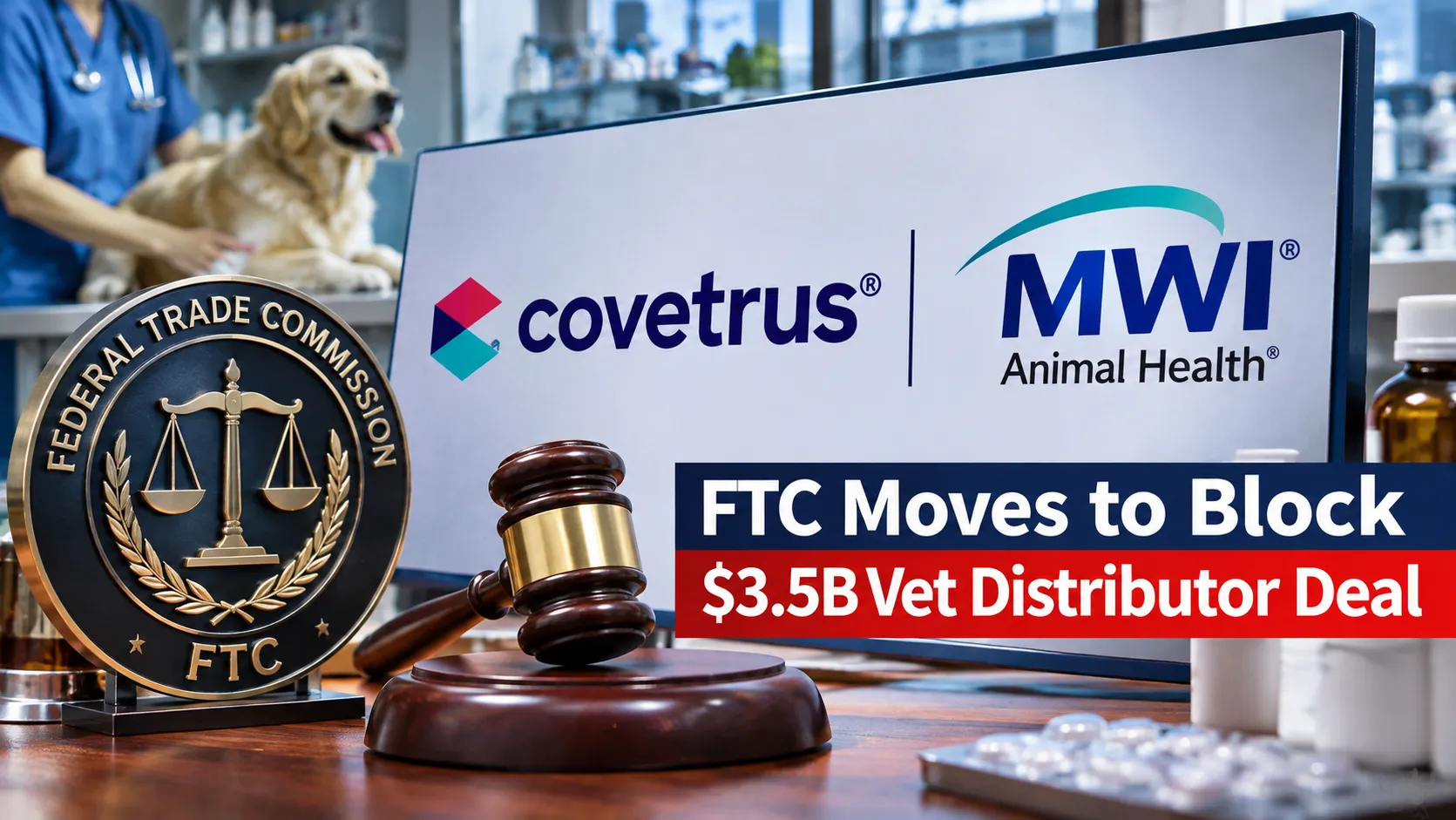
The Federal Trade Commission, joined by attorneys general from 13 states, sued on Friday, November 13, to block Covetrus's proposed $3.5 billion acquisition of MWI Animal Health, according to dvm360, a veterinary industry publication. The FTC said the deal would combine the two largest veterinary distributors in the United States.

The complaint was filed in the US District Court for the Southern District of New York. It names Covetrus and its owners, the private equity firms Clayton, Dubilier & Rice and TPG. The commission voted 2-0 to authorise the lawsuit.

The deal

The transaction was announced in February 2026. Cencora, the pharmaceutical distribution giant formerly known as AmerisourceBergen, agreed to sell MWI Animal Health to Covetrus. Under the terms, Cencora would receive $1.25 billion in upfront cash, $800 million in preferred equity and $1.45 billion in common equity, and would keep a 34.3% non-controlling stake in the combined company, according to dvm360.

The FTC's concerns

The FTC argues that Covetrus and MWI compete closely in distributing products to veterinary clinics and to large corporate veterinary groups, and that combining them would reduce competition and raise prices, according to dvm360. Veterinary distributors supply clinics with medicines, vaccines, medical supplies, equipment and pet food.

The agency's press release did not include market share figures. In merger challenges, the FTC typically argues that a deal would give the combined company enough market power to raise prices, reduce service quality or limit innovation.

Covetrus fights back

Covetrus said it was prepared to defend the deal in court, according to dvm360. The company called the FTC's view of the market "narrow and outdated," arguing that veterinary clinics have many purchasing options, including buying directly from manufacturers, using other distributors and ordering through online marketplaces.

The outcome will depend on how the court defines the relevant market. If the market is defined broadly to include direct purchases and online channels, the combined company's share would be smaller. If it is defined narrowly to include only full-line veterinary distributors, the deal would look more concentrated.

Why veterinary distribution matters

The US pet care market has grown rapidly, driven by rising pet ownership and spending on pet health. Veterinary clinics have consolidated, with private equity firms and large corporate groups buying independent practices. Distributors play a central role in this ecosystem, supplying products and services that clinics depend on.

Rising costs of veterinary care have become a concern for pet owners, and regulators have scrutinised consolidation across the veterinary industry, including clinics, pharmacies and distributors.

Private equity under scrutiny

The case is also part of increased antitrust scrutiny of private equity deals in healthcare. Regulators have expressed concern that private equity firms are consolidating fragmented industries, from physician practices to veterinary clinics, in ways that raise prices for consumers. Covetrus was taken private by Clayton, Dubilier & Rice and TPG in 2022.
3062ae14-0856-4acf-9e23-ab9f0e3f0cf8.png

Cencora's strategy

For Cencora, the sale of MWI was part of a strategy to focus on its core business of distributing pharmaceuticals to pharmacies, hospitals and clinics. A blocked deal would force it to keep MWI or seek another buyer.


“Narrow and outdated.”
— Covetrus, on the FTC's view of the market

The antitrust climate

The FTC's challenge shows that US antitrust enforcement remains active. Regulators have challenged mergers across industries, from technology and healthcare to consumer goods, although outcomes in court have been mixed. Companies facing challenges often abandon deals rather than fight lengthy legal battles, but some, like Covetrus, choose to defend their transactions.

Lessons for India

India's Competition Commission of India (CCI) reviews mergers above certain thresholds and has increased its scrutiny of deals in sectors such as healthcare, digital markets and pharmaceuticals. India introduced a deal-value threshold in 2024, requiring notification of large acquisitions even when the target's assets or turnover are small, a change aimed at capturing technology and healthcare deals. India's pet care market, though smaller than America's, is growing rapidly, attracting investment in veterinary clinics, pet food and pet health products.

How merger challenges unfold

When the FTC sues to block a merger, the case typically begins with a request for a preliminary injunction, which would prevent the companies from completing the deal until the court decides the case. Judges consider whether the agency is likely to succeed in showing that the merger would substantially reduce competition. The process can take several months and involve extensive evidence from customers, competitors and economic experts.

Many companies abandon deals after losing at the preliminary injunction stage, since the delay and uncertainty make it difficult to keep financing and business plans in place.

Possible remedies

In some cases, companies offer remedies to address regulators' concerns, such as selling parts of the combined business to a competitor. Whether such remedies would satisfy the FTC in this case is unclear, given the agency's view that the deal would combine the two largest distributors in the market.

Regulators have become more sceptical of remedies in recent years, arguing that divested businesses often struggle to compete effectively.

The view from veterinary clinics

Independent veterinary clinics, which have less bargaining power than large corporate groups, are likely to be most concerned about any reduction in competition among distributors. Their associations and customers may provide evidence in the case about how they buy products and how prices have changed.

Private equity owners, which typically aim to sell or list companies within a few years, may find that heightened antitrust scrutiny limits their ability to build scale through acquisitions. Deal-makers have increasingly factored regulatory risk into the price and structure of transactions, including through break-up fees that compensate sellers if deals are blocked.

The Covetrus case will add to the body of precedent that advisers use to assess the likelihood of approval for similar deals in healthcare distribution.

Shares of Cencora, a large and diversified company, are unlikely to be heavily affected by the outcome, but the case will matter for its strategic plans.

What comes next

The case will proceed in federal court in New York, where the FTC is likely to seek a preliminary injunction to prevent the deal from closing while the case is heard. Covetrus and Cencora will decide whether to fight, modify the deal or abandon it. The outcome will be closely watched as a test of how US regulators approach consolidation in specialised healthcare distribution markets.

TagsFTCFederal Trade CommissionantitrustmergerCovetrusMWI Animal HealthCencoraClayton Dubilier & RiceTPGveterinary distributionanimal healthpet careprivate equitycompetition lawM&Astate attorneys generalhealthcare distributionCCIIndia antitrustinvestors

Reader reviews

Sign in to rate and review this article.
Loading reviews…
