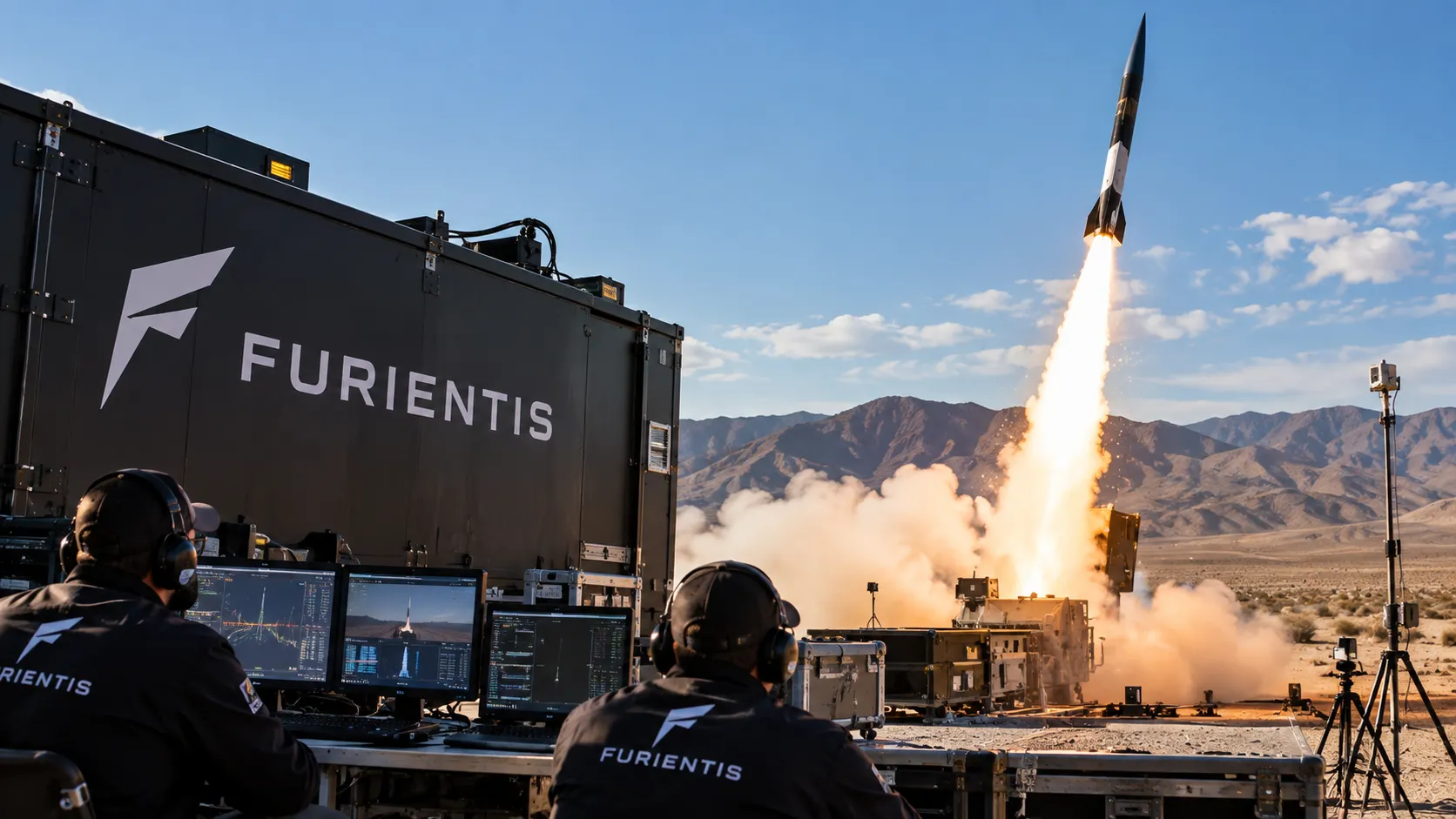
Furientis, a Los Angeles-based defence start-up building low-cost missile interceptors, has raised $25 million in a seed round led by Benchmark, the Silicon Valley venture firm best known for early bets on consumer internet companies, as investors pour money into companies promising to rebuild America's munitions supply chain.
The round values the company at $125 million and follows a $5 million pre-seed round announced in May. Furientis has already secured a funded contract with the US Pentagon, according to TechCrunch, which first reported the raise on 6 October.
The company is developing mid-range interceptor missiles designed for mass production using readily available components, with a target unit cost that it says will be a fraction of the roughly $3 million price of legacy interceptors.
Rocket engineers turn to defence
Furientis was co-founded by Brody Franzen, a former deputy chief engineer at Virgin Galactic who also worked at defence start-up Castelion, and Aris Simsarian, who led rocket-engine testing at Virgin Orbit, the satellite-launch company that collapsed in 2023. Their backgrounds reflect a wider migration of talent from the commercial space industry into defence, where demand for propulsion and flight-test expertise has surged.
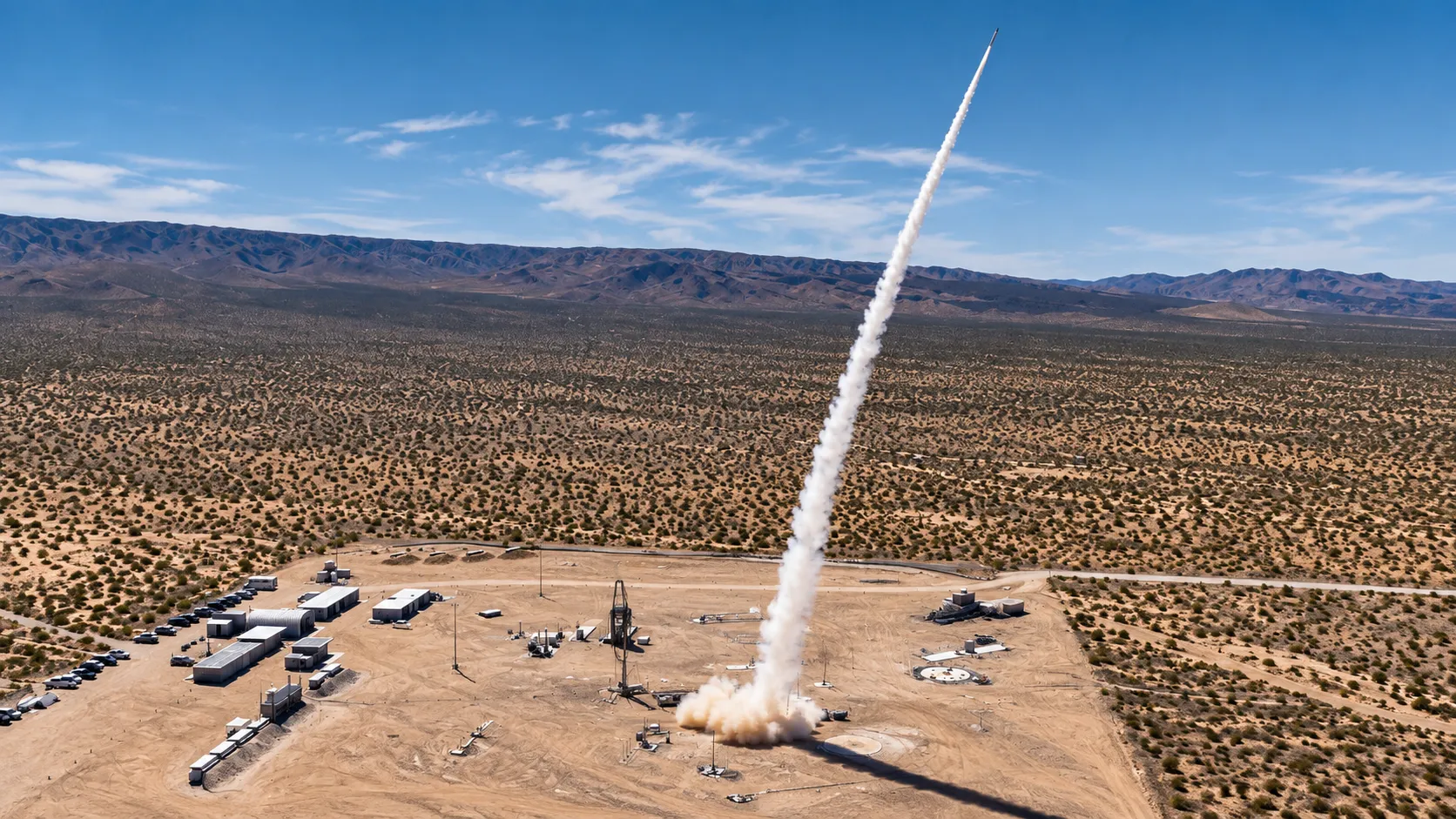
The company tests its systems at White Sands in New Mexico, home to one of the US military's principal missile ranges, and says it is conducting field trials every two weeks. That pace is far faster than traditional defence programmes, which can take years between major tests.
Rapid testing is a philosophy borrowed from the commercial space industry, where companies such as SpaceX demonstrated that frequent, iterative flight tests, accepting that some will fail, can accelerate development far more than long periods of analysis between infrequent launches. Furientis's founders are applying the same approach to interceptors, using each test to refine designs and manufacturing processes.
Its production goal is equally ambitious: 1,000 interceptor systems a year from each factory. The emphasis on manufacturing rather than on exotic performance is central to the company's pitch, and to the investment case.
Benchmark general partner Chetan Puttagutta said the founders' capital efficiency was a decisive factor. "They manufactured prototypes with just $5 million. They had already successfully done [a dozen] launches by the time we invested," he said.
The munitions gap
The company's founders frame their mission around a stark imbalance in production capacity. "We're being outproduced by a factor of 100 plus," Franzen said, pointing to estimates that the US Navy receives 300 to 500 interceptors a year, compared with claims that China can produce 3,000 anti-ship cruise missiles a month.
Those figures are contested and difficult to verify, but the underlying concern is widely shared in Washington. Conflicts in Ukraine and the Middle East have shown how quickly modern militaries can consume interceptors when facing sustained missile and drone attacks, and how long it takes to replenish stockpiles of expensive, slow-to-build systems.
The cost asymmetry is also a problem. Defending against cheap drones or missiles with interceptors costing millions of dollars each is financially unsustainable over a long conflict. Defence planners have increasingly called for cheaper, more plentiful munitions that can be produced at scale, even if each unit is less capable than the most advanced systems.
Industrial capacity has therefore become a strategic issue in its own right. US officials and lawmakers have repeatedly raised concerns that the defence industrial base, consolidated over decades into a handful of large prime contractors, lacks the surge capacity to sustain a prolonged high-intensity conflict. Shortages of key components, skilled workers and test facilities have constrained output even where funding has been available.
That shift has opened the door to venture-backed companies. Traditional defence contractors have built their businesses around small numbers of highly sophisticated systems procured over long cycles. Start-ups argue that commercial manufacturing techniques, off-the-shelf components and rapid iteration can deliver adequate performance at much lower cost and higher volume.
Well-funded rivals
Furientis is entering a competitive market. Anduril, the defence technology company co-founded by Palmer Luckey, Castelion, where Franzen previously worked, and Shield AI are among the companies developing mass-produced interceptors and related systems, several of them backed by some of the largest rounds in venture capital.
Competition is not purely a disadvantage. A busy field signals that the Pentagon and allied militaries see a genuine need, and the scale of demand being discussed is large enough to support several suppliers. Buyers also tend to favour multiple sources for critical munitions to avoid dependence on any single company.
Benchmark's involvement is itself a sign of how mainstream defence investing has become. For much of the past two decades, many Silicon Valley firms avoided defence altogether, citing ethical concerns, long sales cycles and the dominance of incumbent contractors. Shifts in geopolitics, combined with a more receptive Pentagon procurement environment, have changed that calculation, and defence technology has become one of the fastest-growing areas of venture investment.
The industry's growth has also prompted debate. Critics question whether venture capital's appetite for rapid scale is compatible with the testing, reliability and accountability required for weapons systems, and whether a proliferation of cheap munitions could lower the threshold for conflict. Supporters argue that credible, affordable defences strengthen deterrence and that the alternative, depleted stockpiles in a crisis, carries far greater risks.
For Furientis, the immediate challenge is execution. Moving from frequent test launches to factory-scale production of 1,000 units a year requires supply chains, quality systems and certification processes that have tripped up many hardware start-ups. Its funded Pentagon contract gives it a foothold, but larger procurement decisions will depend on performance in testing and on the Defense Department's willingness to shift money from legacy programmes to new entrants.
Allied governments are likely to follow the company's progress too. Countries in Europe, the Indo-Pacific and the Middle East face similar concerns about interceptor stockpiles, and several have begun exploring partnerships with US defence start-ups. If Furientis can demonstrate reliable performance at a fraction of legacy costs, it could find customers well beyond the Pentagon, subject to US export controls.
With $30 million raised in total and a valuation of $125 million, Furientis remains small by the standards of the defence sector. But its backers are betting that the combination of rocket-industry talent, rapid testing and a manufacturing-first approach can carve out a meaningful role in what is fast becoming one of the most strategically important parts of the defence industrial base.